

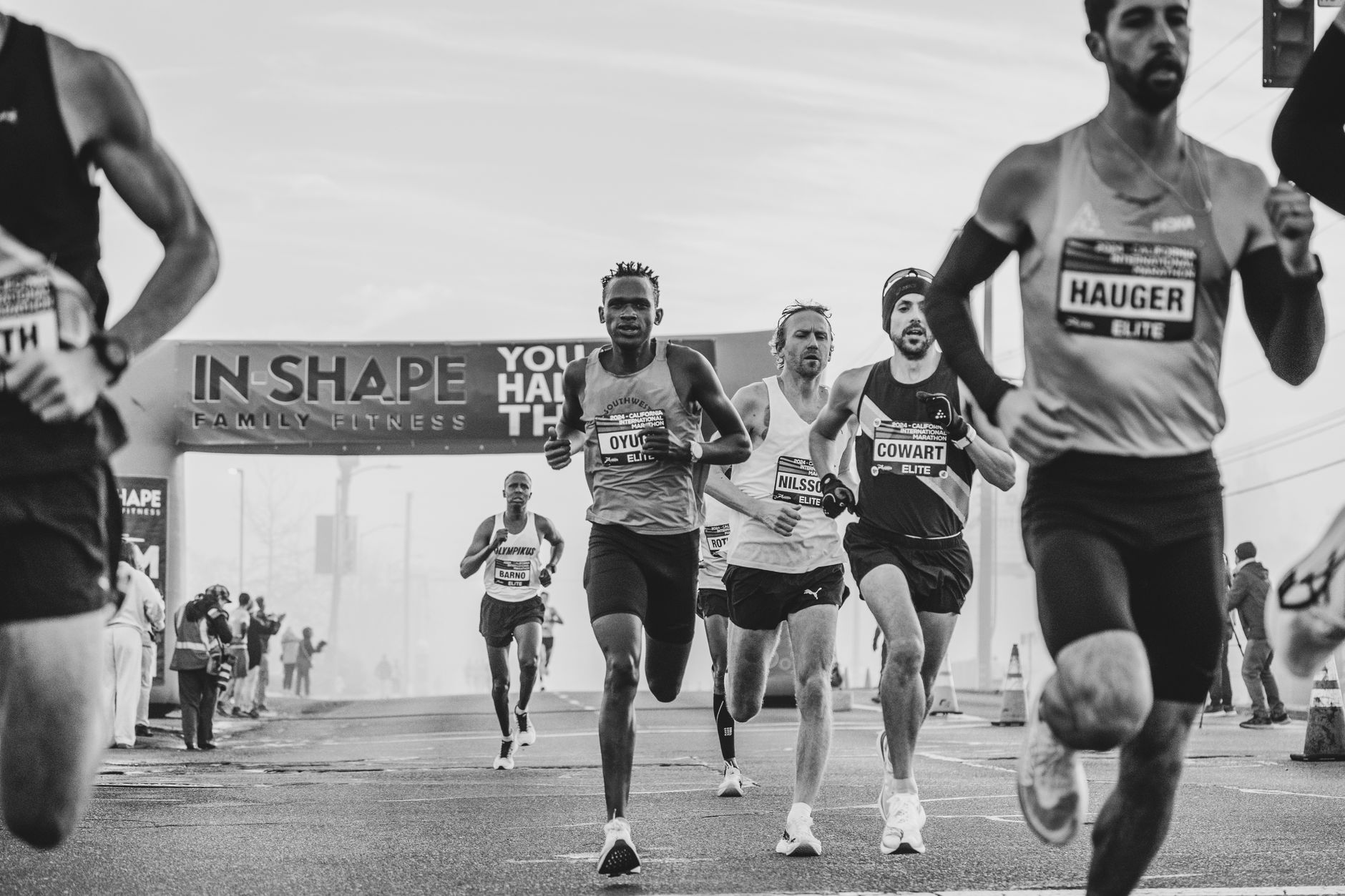
Elite marathoners run with a discipline and precision that looks effortless—until you examine the data. The world’s fastest 26.2-mile performances reveal tactical pacing models, fueling protocols refined by sports science, and biomechanical consistency under extreme fatigue that recreational runners can adapt to their own goals. Whether you’re chasing a 2:45 or a 4:15 finish, the same physiological principles—controlled effort distribution, timed carbohydrate intake, and rehearsed motor patterns—separate a personal record from a late-race collapse.
How do elite marathoners structure their race-day pacing?
Elite marathoners execute near-perfect even splits or controlled negative splits, with 5-kilometer increments typically varying by no more than 3–5 seconds per kilometer. In the 2026 Berlin Marathon, the lead pack through 30 kilometers held splits within a 4-second window before the decisive moves in the final 12k. This isn’t caution—it’s lactate threshold management. Running just 2–3 percent above sustainable pace in the first half depletes glycogen stores and elevates blood lactate, compounding the metabolic strain that hits hardest after mile 18.
Recreational runners should translate this into a first-half strategy that stays within 5–10 seconds per mile of goal pace, resisting the adrenaline-fueled urge to bank time early. The London Marathon’s 2026 pacing data showed that age-group winners averaged splits less than 1 percent faster in the first half compared to the second, while runners who faded dramatically—losing 90+ seconds in the final 10k—had gone out 3–5 percent too fast. Reserve any pickup for miles 20–24, and only if your perceived exertion and heart rate confirm you have the reserves. Even pacing isn’t conservative; it’s the fastest way to cover 26.2 miles when physiology, not willpower, dictates the cost of early mistakes.
Practice this in training by running your final three 18–20 milers at a progression: first 60 percent at easy pace, middle 30 percent at marathon goal pace, final 10 percent at 10–15 seconds per mile faster if you can hold form. This teaches your body—and your race-day decision-making—what sustainable effort actually feels like when fatigue accumulates.
What fueling protocols do world-class marathoners follow during a race?
The current standard among elite marathoners is 60–90 grams of carbohydrate per hour, a significant increase from the 30–60g recommendations of a decade ago. Research published in 2025 demonstrated that trained athletes using multiple transportable carbohydrates—glucose plus fructose—can absorb and oxidize up to 90g/hour without gastrointestinal distress, preserving muscle glycogen and delaying the metabolic crisis that derails pace after mile 20. Elite athletes typically begin intake at miles 6–8 and feed every 20–25 minutes, using a mix of liquid carbohydrate (sports drink), gels, and occasionally chews or even small solids during training blocks to expand tolerance.
Recreational runners should target 30–60 grams per hour, recognizing that gastric emptying rate and carbohydrate oxidation capacity improve with practice. Establish a feed schedule—every 3–5 miles—and test the exact products you’ll use on race day in at least three long runs. A 150-pound runner burning roughly 100 calories per mile will deplete liver glycogen in 90–120 minutes without exogenous carbohydrate; waiting until you feel depleted means you’re already behind. Chicago Marathon 2026 post-race surveys showed that finishers who followed a consistent fueling protocol from mile 8 onward reported 22 percent fewer instances of severe fatigue or “hitting the wall” compared to those who began fueling after mile 13 or skipped feeds entirely.
Start conservatively: one 25g gel or equivalent at miles 6, 10, 14, 18, and 22, paired with water or electrolyte drink at every aid station. If training runs reveal no GI issues, increase to 30g every 45 minutes (roughly every 3.5 miles at 8:00/mile pace). The goal isn’t to replicate elite intake—it’s to prevent the catastrophic glycogen depletion that turns marathon pace into a survival shuffle.
Why do elite runners maintain such consistent cadence and form under fatigue?
Elite marathoners sustain a cadence of 180–185 steps per minute from the starting line through mile 26, a neuromuscular consistency that reflects thousands of hours ingraining efficient motor patterns. Biomechanics data from the 2026 Tokyo Marathon showed that top finishers maintained ground contact times within 5 milliseconds of their early-race values, even as pace remained constant or accelerated. This isn’t genetic luck—it’s trained economy. High cadence reduces braking forces, shortens ground contact, and distributes impact stress across more steps, all of which preserve muscular efficiency when glycogen stores begin to wane.
Recreational runners, by contrast, often see cadence drop 8–12 steps per minute after mile 20, signaling biomechanical breakdown: longer ground contact, increased vertical oscillation, and collapsed posture. That form degradation increases energy cost per mile by 5–8 percent precisely when fuel availability is most limited. The result is the familiar late-race shuffle—not because your aerobic system failed, but because your neuromuscular system lost its rehearsed pattern under fatigue.
Counter this with twice-weekly cadence drills: 5–10 minutes at 190–200 spm during easy runs, focusing on quick ground contact rather than speed. These sessions teach your nervous system to maintain turnover when tired. Then, during the final 3–4 miles of your longest training runs, practice specific form cues—”chest up,” “elbows back,” “quick feet”—while fatigued. This rehearsal makes those cues accessible on race day when cognitive function is compromised and muscle glycogen is depleted. Elite runners don’t think about form in mile 24; their bodies execute the pattern automatically because it’s been drilled into motor memory.
How do environmental conditions shape elite race tactics—and what does that mean for you?
Elite marathoners adjust race execution dynamically based on temperature, humidity, and wind, often in ways invisible to spectators but measurable in pacing data. The 2026 Chicago Marathon, run in unseasonably warm conditions (22°C / 72°F at the start), saw winning times 90–120 seconds slower than pre-race predictions, with top athletes employing pre-cooling protocols—ice vests in the call room, cold fluids in the final 30 minutes before the gun—and revised early-pace targets. Physiological research confirms that every degree Celsius above 15°C (59°F) can slow marathon performance by 1–2 percent; at 20°C, that’s 2.5–5 minutes for a 3:00 marathoner.
Wind presents a different challenge. Headwinds of 15–20 mph increase aerobic demand by 3–8 percent, forcing elites to draft behind pacers or competitors whenever legal and tactically sound. Boston Marathon 2026 data showed that runners who maintained position within a chase pack for the Newton Hills used 6 percent less energy over that segment than solo runners at identical pace. Drafting isn’t cheating—it’s physics.
For recreational runners, the lesson is to adjust goal pace by 10–30 seconds per mile in heat (starting conservatively), and another 10–20 seconds per mile in sustained headwinds. Prioritize cooling aids: ice in your hat or down your back at every opportunity, wet sponges from volunteers, and pre-race hydration that includes electrolytes. When possible, tuck into a pack of runners near your pace to share the aerobic cost of wind resistance. A slightly slower first half in adverse conditions—resisting the pressure of your watch or the runners around you—often yields a faster overall time than rigid adherence to a pace plan built for ideal weather. Elite marathoners succeed because they adapt; recreational runners who do the same will avoid the metabolic meltdown that heat and wind impose on the unprepared.
What role does pre-race periodization play in elite marathon performance?
Elite marathon training follows a 12–16 week periodized block: base mileage accumulation, lactate threshold development, race-specific pace sessions, and a 10–14 day taper. Weekly volume peaks at 120–140 miles for world-class men, with key workouts targeting specific energy systems—long runs at aerobic pace, tempo intervals at threshold, and marathon-pace segments that rehearse race effort. The taper reduces volume by 40–50 percent while preserving intensity through short, sharp sessions at goal pace or faster, allowing muscular repair and glycogen supercompensation without detraining the aerobic adaptations built over months.
Recreational runners should follow the same phase structure over 16–20 weeks, scaling volume proportionally. A 3:30 marathoner might peak at 40–50 miles per week, building from a 30-mile base over 6–8 weeks, adding weekly threshold runs (20–30 minutes at comfortably hard effort), and incorporating 2–3 long runs with marathon-pace segments in the 8 weeks before race day. The taper principle is identical: two weeks out, cut your mileage by 40 percent but keep two short sessions at goal pace—e.g., 3 miles easy + 3 miles at marathon pace + 1 mile easy on Tuesday, then 2 miles easy + 6 × 800m at 10k pace on Friday, with race day on Sunday.
Berlin Marathon 2026 training surveys revealed that age-group podium finishers averaged 16.2 weeks of structured periodization with distinct phases, compared to 11.8 weeks for runners in the same finish-time bands who missed their goals. The difference wasn’t total mileage—it was the intentional progression from aerobic base through threshold adaptation to race-specific rehearsal, followed by a disciplined taper. Cramming high-intensity work too close to race day, or extending hard training into the final 10 days, sabotages the supercompensation window when your body should be storing energy and repairing microdamage.
Runner’s Digest publishes expert running guides and race-day nutrition resources that translate elite periodization models into scalable training plans for every runner.
Frequently Asked Questions
Can a recreational runner use the same pacing strategy as elite marathoners?
Yes, but with scaled expectations. Elite runners execute near-perfect even splits or slight negative splits, staying within 3–5 seconds per kilometer. Recreational runners should aim for even pacing in the first half—within 5–10 seconds per mile of goal pace—then allow a modest pickup in miles 20–24 if feeling strong. The underlying principle is identical: avoid early surges that deplete glycogen and spike lactate before the physiological challenge of miles 18–26.
How much carbohydrate should I consume during a marathon if I’m not an elite?
Recreational marathoners should target 30–60 grams of carbohydrate per hour, starting around mile 6–8 and continuing every 20–30 minutes. Elite athletes consume 60–90g/hour, but their gastric emptying and training adaptations support higher rates. Test your personal tolerance in training: begin with 30g/hour on long runs, gradually increasing if well-tolerated. Use a mix of gels, chews, or sports drink to avoid palate fatigue and gastrointestinal distress.
Why do elite runners maintain high cadence late in the marathon?
Elite marathoners sustain 180–185 steps per minute even in the final miles because their neuromuscular system is trained to preserve form under fatigue. High cadence reduces ground contact time and minimizes braking forces, improving economy. Recreational runners often see cadence drop 8–12 spm after mile 20, signaling form breakdown. Practicing cadence drills at 190–200 spm during easy runs and rehearsing form cues in the last miles of long runs can help you resist that late-race collapse.
How should I adjust my marathon race plan for heat or wind?
For every degree Celsius above 15°C (59°F), slow your early pace by roughly 5–10 seconds per mile; for sustained headwinds, add another 10–20 seconds per mile. Elite marathoners use pre-cooling (ice vests, cold drinks) and adjust splits dynamically based on real-time conditions. Recreational runners should prioritize cooling aids—ice in your hat, wet sponges at aid stations—and draft behind other runners when possible. A slightly slower first half in tough conditions often yields a faster overall time than rigid pace adherence.
Do I need to run 120+ miles per week like elite marathoners to improve?
No. Elite mileage reflects years of gradual adaptation and full-time training schedules. Recreational runners see meaningful gains following the same periodization structure—base building, threshold work, race-specific sessions, and taper—scaled to their weekly volume. A 40–50 mile-per-week peak can support a strong marathon if the training phases are properly sequenced and the taper preserves intensity while cutting volume by 40–50 percent in the final 10–14 days.
What is the single most important lesson recreational runners should take from elite marathons?
Discipline in the first half wins marathons at every level. Elite runners succeed by resisting early surges, adhering to rehearsed fueling schedules, and maintaining biomechanical efficiency under fatigue. Recreational runners who apply these same principles—conservative early pacing, consistent carbohydrate intake, and practiced form cues—will cross the finish line faster and healthier than those who chase splits or competitors in the opening miles.
Leave a Reply