

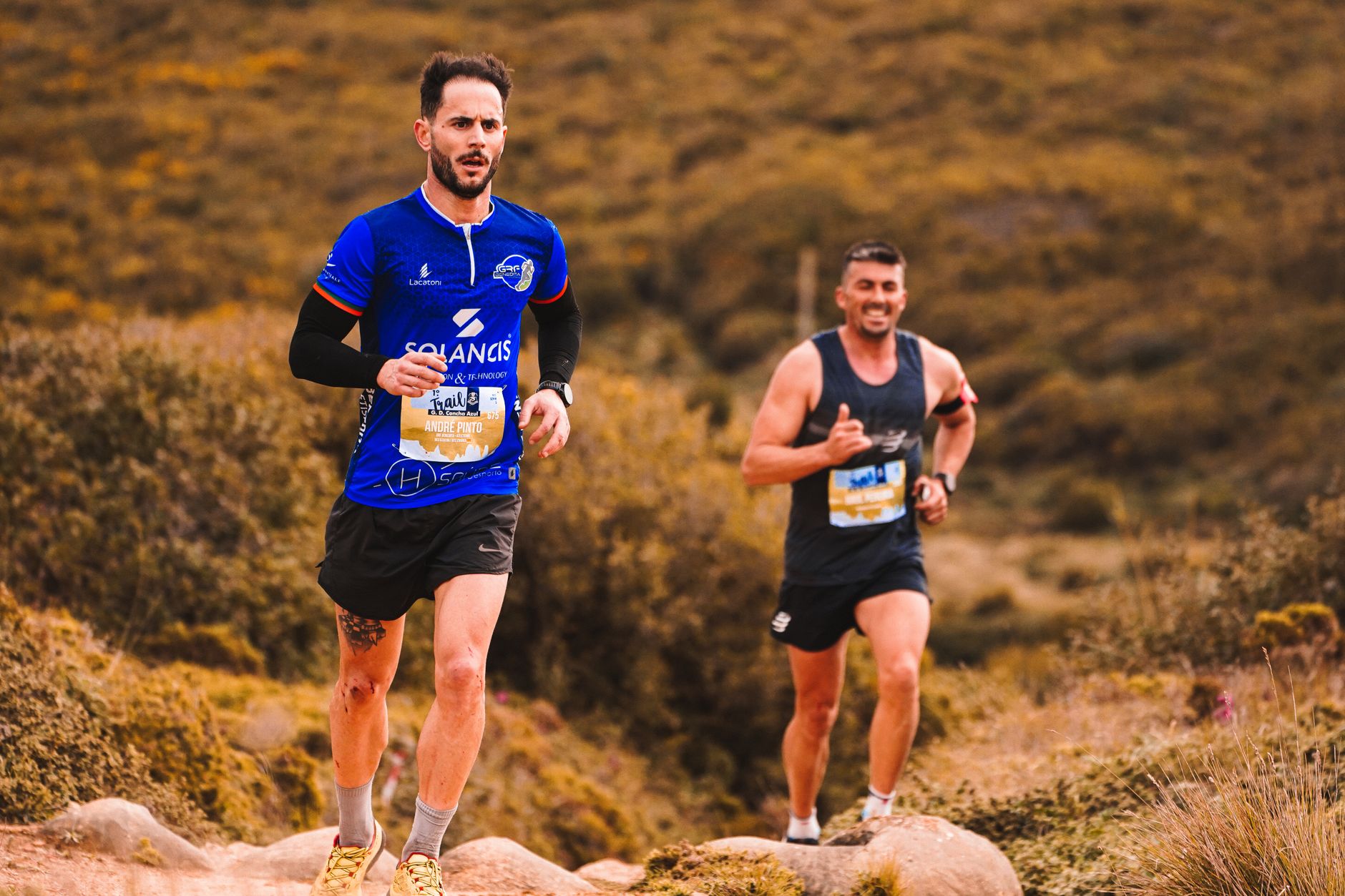
Neither surface is objectively better—trail running develops proprioception and eccentric leg strength on varied terrain, while road running enables precise pacing and faster turnover for speed development. Your optimal mix depends on your race goals, injury history, and the specific training adaptations you need most right now.
What Are the Biomechanical Differences Between Trail and Road Running?
Trail and road running impose fundamentally different mechanical demands on your body. On trails, stride length typically decreases by 5-12% compared to roads due to obstacles and elevation changes, while vertical oscillation increases as you navigate uneven surfaces. Road running promotes consistent stride mechanics with predictable push-off angles and cadences typically ranging from 170-185 steps per minute, compared to 160-175 on technical trails where footwork variability is necessary.
The primary biomechanical distinction lies in movement predictability. Road surfaces allow your central nervous system to automate stride patterns, reducing the cognitive and neuromuscular cost of each step. Trail terrain forces constant micro-adjustments in ankle position, knee flexion, and hip stability—recruiting smaller stabilizer muscles with every stride. Research on gait mechanics shows that ground reaction force variability increases by 15-40% on trail surfaces compared to asphalt, meaning your muscles and connective tissues experience a wider range of loading patterns.
These mechanical differences translate directly to training stimulus. Road running is biomechanically efficient for developing specific race pace and refining aerobic systems with minimal interference. Trail running functions as built-in strength and proprioception work, challenging your neuromuscular system in ways that transfer to injury resilience and all-terrain capability.
How Trail Terrain Changes Your Gait Mechanics
Roots, rocks, and elevation changes force shorter, more variable ground contact times and recruit stabilizer muscles—particularly the peroneals and posterior tibialis—that road running largely bypasses. Technical trail running demands reactive proprioception: your foot placement decisions happen in milliseconds based on visual scanning 2-3 meters ahead. This neural training improves ankle stability and whole-body coordination in ways that hours on flat pavement cannot replicate.
Grade variance amplifies these demands. Moderate trails typically feature ±8-15% gradient swings within short distances, compared to less than 2% on most roads. Each uphill step requires greater hip flexion and glute engagement, while descents impose eccentric quadriceps loading that can exceed three times your body weight per foot strike. The cumulative effect over a long trail run builds significant leg strength—essentially free resistance training embedded in your cardio work.
Trail running also forces you to shorten your stride when fatigued, which inadvertently teaches better running economy. Many recreational runners overstride on roads, but you cannot maintain excessive stride length when navigating a rock garden or root section. This constraint builds neuromuscular patterns that often carry over to more efficient road running form.
Why Road Running Optimizes Speed and Pace Consistency
Flat, predictable surfaces allow longer stride extension, consistent push-off mechanics, and repeatable split times—ideal conditions for threshold and tempo work. Sub-elite marathoners can hold pace windows of ±2-5 seconds per kilometer on roads, enabling precise lactate threshold and VO2max interval sessions. On trails, that same effort might vary by ±15-30 seconds per kilometer based on terrain undulation and technical sections, making it difficult to train specific energy systems with the accuracy required for race-day performance.
Road running also enables higher sustained cadence, which correlates with improved running economy at faster paces. When your foot strikes a consistent surface at a predictable angle every 340-360 milliseconds (at 170-180 spm), your Achilles tendon and calf complex can store and release elastic energy more efficiently than on variable terrain where ground contact timing fluctuates. This elasticity advantage becomes measurable at paces faster than marathon effort—exactly where road-specific training delivers the greatest returns.
For runners targeting road race PRs, the surface specificity matters. Your neuromuscular system adapts to the exact demands you impose on it. Training on roads builds the precise muscle firing patterns, joint angles, and sensory feedback loops required for race-day execution on asphalt. While trail running builds valuable general fitness and strength, it cannot fully replicate the biomechanical requirements of holding 4:00/km pace for 21.1 kilometers on flat pavement.
Which Surface Carries Higher Injury Risk?
Both surfaces carry injury risk, but the injury types differ significantly. Road running shows higher incidence of impact-related overuse injuries—tibial stress fractures, plantar fasciitis, and Achilles tendinopathy—due to repetitive loading on hard surfaces with minimal mechanical variation. Trail running carries higher rates of acute ankle sprains and fall-related contusions, but lower prevalence of chronic overuse injuries. Injury surveillance data suggests that training load management and weekly mileage progression matter more than surface choice alone.
The key insight: surface hardness affects cumulative stress, while terrain variability affects acute injury events. Asphalt and concrete generate peak impact forces 10-25% higher than dirt or gravel trails, and those forces accumulate identically with every stride. Over weeks and months, this repetitive identical loading creates the conditions for stress-related bone and tendon injuries in runners who progress volume too quickly or lack adequate recovery.
Trail surfaces reduce peak impact but introduce instability. Softer ground absorbs more shock, lowering the mechanical stress on bones and tendons—but uneven footing increases the probability of ankle inversion, knee torque, or a misstep that leads to a fall. For most recreational runners, mixing surfaces provides the best risk profile: enough trail volume to reduce cumulative loading, enough road volume to maintain speed and avoid excessive ankle strain on technical terrain.
Road Running Injury Patterns: Overuse and Impact
Stress fractures, iliotibial band syndrome, and plantar fasciitis dominate the road running injury landscape. Research tracking recreational road runners shows that 30-50% report an overuse injury annually, with the tibia, metatarsals, and Achilles tendon as the most common sites. These injuries develop when tissue damage from repetitive loading exceeds the body’s repair capacity—typically during rapid mileage increases or inadequate recovery between hard efforts.
The mechanism is straightforward: asphalt does not forgive biomechanical inefficiency. If you overstride, land heavily on your heel, or lack hip stability, every foot strike on hard pavement amplifies those flaws. A runner logging 60 kilometers per week at 180 steps per minute takes roughly 324,000 steps weekly—each one generating nearly identical stress on the same tissue structures. Even small form inefficiencies compound into significant cumulative load.
Road running also concentrates force through predictable joint angles. Your ankle dorsiflexes to nearly the same degree, your knee flexes through an identical range, and your hip extends to the same endpoint on every stride. This consistency is excellent for performance but problematic for tissue resilience. Tendons and bones adapt best to varied loading—something road running inherently lacks.
Trail Running Injury Patterns: Acute vs Chronic
Ankle sprains account for 15-20% of trail running injuries, with fall-related contusions and lacerations making up another significant portion. These acute injuries happen in moments—a root catch, a wet rock, a fatigued misstep on a technical descent—and their incidence correlates with terrain difficulty and runner fatigue state. Unlike chronic overuse injuries that develop over weeks, acute trail injuries occur suddenly and often sideline runners immediately.
However, trail running shows lower rates of chronic tendinopathy and stress-related bone injuries. Softer surfaces reduce peak impact force by 10-25% compared to asphalt, and the variable terrain ensures that no single tissue structure absorbs identical loading on consecutive steps. Your left Achilles tendon might experience 2.5 times body weight on one foot strike and 2.1 times body weight on the next, with different ankle angles and push-off vectors. This natural load variability appears to protect against repetitive strain injuries.
The trade-off becomes evident on long technical descents, where proprioceptive fatigue increases acute injury risk. After 90-120 minutes of varied terrain, the small stabilizer muscles around your ankles begin to fatigue, reaction times slow, and the probability of a misstep increases. This is why many trail ultrarunners report ankle sprains in the final third of races—not from a single dramatic event, but from accumulated neuromuscular fatigue reducing protective reflexes.
How Do Training Adaptations Differ Between Trail and Road?
Trail running delivers greater eccentric quadriceps and glute demand through descents, improved balance and ankle stability from uneven surfaces, and higher perceived exertion at equivalent heart rates due to elevation gain and technical footwork. Road running enables precise VO2max and lactate threshold development through consistent pacing, makes structured interval sessions easier to execute, and provides superior marathon-specific pace rehearsal. Neither surface is universally superior—each drives distinct physiological adaptations.
The adaptation divergence matters most when you consider training goals. If you need to develop the ability to hold 4:30/km pace for 42.2 kilometers on asphalt, trail running builds valuable aerobic fitness and leg strength but cannot replicate the specific neuromuscular and metabolic demands of that task. Conversely, if you need to descend 1,200 meters of technical singletrack late in a 50-kilometer trail race, road intervals will sharpen your VO2max but leave your quads unprepared for sustained eccentric loading.
Understanding these adaptation differences allows strategic surface selection throughout your training cycle. Base-building phases benefit from trail volume that builds resilience and general strength. Race-specific blocks require higher volume on your goal surface to rehearse exact movement patterns and pacing strategies. Most training tips for every runner emphasize this periodization approach—vary stimulus during base phases, increase specificity as race day approaches.
Trail Running Builds Strength and Resilience
Uneven terrain functions as a natural plyometric stimulus, forcing rapid stretch-shortening cycles in your leg muscles and building reactive strength without dedicated gym work. Every technical section recruits hip abductors to stabilize your pelvis laterally, ankle stabilizers to control foot position on uneven surfaces, and core muscles to maintain torso position during rapid direction changes. Research on trail runners shows improved single-leg balance scores and ankle proprioception compared to road-only runners, even when controlling for total training volume.
Elevation gain quantifies one of trail running’s most valuable adaptations. Climbing 1,000 meters of vertical gain is roughly 10-15% harder metabolically than running an equivalent flat distance, requiring greater recruitment of type II muscle fibers and imposing significant eccentric load during the corresponding descent. A trail long run with 800-1,200 meters of elevation gain builds quadriceps eccentric strength, glute power, and cardiovascular resilience that transfers directly to all running contexts—including road racing.
The reactive strength index improvement from trail running shows up in laboratory testing. Runners who incorporate regular trail volume demonstrate better force development rates during plyometric tests and faster ground contact times when returning to road running. This suggests that the constant micro-adjustments required on trails enhance the neuromuscular system’s ability to generate force rapidly—a quality that benefits all running speeds and surfaces.
Road Running Sharpens Speed and Aerobic Precision
Road surfaces enable sub-threshold intervals with less than 3% pace variability, allowing precise targeting of specific heart rate zones and metabolic intensities. This accuracy matters enormously for VO2max development, where the training stimulus occurs in a narrow window—typically 3-5 minutes at 95-100% of maximum heart rate. On trails, maintaining that exact intensity becomes nearly impossible due to terrain variation; on roads, you can dial it in within 2-3 seconds per kilometer.
Time-at-intensity accuracy drives adaptation specificity. A lactate threshold session prescribing 20 minutes at 85-88% of maximum heart rate trains your body to buffer lactate and sustain faster paces. On roads, you can hold that effort with minimal variance, ensuring consistent stimulus. On trails, effort fluctuates with terrain—you might hit 90% on climbs and drop to 80% on descents, diluting the specific adaptation you’re targeting. For runners chasing road race performance, this precision matters.
Road running also develops turnover efficiency—the ability to maintain high cadence with minimal wasted motion. When you run 8 x 1,000 meters at 5K pace on a track or flat road, your neuromuscular system learns to coordinate hip drive, knee lift, and foot strike timing at a specific rhythm. That motor pattern becomes automatic, allowing you to sustain race pace with lower perceived effort. Trail running builds strength and resilience, but road running builds speed through precise, repeatable stimulus.
Which Surface Should You Prioritize Based on Your Goals?
Road marathon or half-marathon goal: run 70-80% of weekly volume on roads during race-specific training blocks. Trail race goal: aim for 60-70% trail-specific volume with targeted vertical gain sessions. Injury-prone runner: favor a 50/50 split or even 60% softer surfaces during base phases. New runner building foundational mileage: prioritize softer surfaces—trails, gravel, dirt paths—at 60%+ of weekly volume to reduce cumulative impact stress while tissues adapt.
This framework acknowledges that adaptation is specific. Your body becomes efficient at what you repeatedly ask it to do. If your goal is a 1:30 half-marathon on asphalt, you need substantial road volume to train the exact muscle firing patterns, pacing feel, and metabolic demands of that performance. If your goal is a 50-kilometer trail ultra with 2,500 meters of elevation gain, you need trails with climbs and descents to prepare your quadriceps, test your fueling strategy on uneven terrain, and build confidence in technical footwork.
The injury-prone and new-runner categories deserve special attention. If you have a history of tibial stress fractures or Achilles tendinopathy, the repetitive identical loading of roads poses significant risk. Shifting toward trails, gravel, or grass for 50-60% of your volume reduces peak impact forces and introduces beneficial load variability. Similarly, runners in their first 6-12 months of consistent training benefit from softer surfaces that allow tissue adaptation without excessive cumulative stress—then gradually introduce more road volume as resilience builds.
If You’re Training for a Road Race
Prioritize roads for quality sessions: tempo runs, interval work, and long runs at goal race pace. These sessions build the specific fitness and pacing accuracy your race demands. Use trail running 1-2 times per week for easy recovery runs or general strength endurance work—the softer surface aids recovery while the variable terrain builds complementary fitness that reduces injury risk.
A sample week for a road marathoner 8 weeks from race day might include:
- Monday: Easy 8 km recovery (trail or gravel)
- Tuesday: 12 km tempo at marathon pace +10-15 sec/km (road)
- Wednesday: Easy 10 km (trail)
- Thursday: 10 km with 6 x 800m at 10K pace, 400m recovery (road or track)
- Friday: Rest or easy 6 km (any surface)
- Saturday: Easy 10 km (trail)
- Sunday: 28 km long run, final 10 km at marathon pace (road)
This structure dedicates roughly 70% of volume to roads while using trails strategically for recovery and variety. As race day approaches, that road percentage may climb to 80% to maximize surface-specific adaptation.
If You’re Training for a Trail Race or Ultra
Specificity matters even more for trail racing because the terrain variability, elevation profiles, and technical demands cannot be replicated on roads. Your training should include weekly vertical gain targets—500 to 1,500 meters depending on your race’s profile—and regular exposure to the terrain features you’ll encounter: steep climbs, technical descents, sustained rolling hills.
A sample week for a trail ultra runner 10 weeks from a 50K with 1,800 meters of gain:
- Monday: Rest or easy 6 km on flat trail
- Tuesday: 14 km with 400m gain, incorporating hill repeats (trail)
- Wednesday: 10 km tempo on road (maintains turnover and speed)
- Thursday: Easy 8 km recovery (any surface)
- Friday: Easy 10 km on technical trail (footwork practice)
- Saturday: 16 km with 600m gain, practice race nutrition (trail)
- Sunday: Long run 30-35 km with 800-1,000m gain (trail)
Notice the single road tempo session—this maintains leg speed and VO2max while the majority of volume builds trail-specific strength, downhill quad resilience, and technical confidence. As you progress closer to race day, dial in your exact race-day gear, nutrition timing, and pacing strategy on terrain that closely mimics your event.
If You’re Injury-Prone or Building Base Mileage
Soft trail surfaces reduce cumulative loading significantly during the base-building phase when weekly volume increases but intensity remains low. Aim for 50-60% trail volume during the initial 8-12 weeks of a training cycle, allowing your bones, tendons, and connective tissues to adapt gradually. As you transition into race-specific work and increase intensity, shift toward more road volume if your goal race is on pavement—but maintain at least 20-30% softer surface volume for recovery runs.
Injury-prone runners benefit from asking a simple question before each run: What is this session’s purpose? If the answer is “build aerobic base” or “recovery from yesterday’s workout,” choose trails or gravel. If the answer is “practice race pace” or “develop lactate threshold,” choose roads. This decision framework ensures you get the specific adaptation each session targets while minimizing injury risk.
Practical base-building volume progression for an injury-prone runner returning from 4 weeks off:
- Week 1: 25 km total (60% trail, 40% road)
- Week 2: 28 km total (60% trail, 40% road)
- Week 3: 32 km total (55% trail, 45% road)
- Week 4: 28 km total—recovery week (65% trail, 35% road)
- Week 5: 36 km total (50% trail, 50% road)
- Week 6: 40 km total (50% trail, 50% road)
This progression limits weekly increases to 10-15%, maintains high trail volume early when injury risk is greatest, and gradually introduces more road running as tissue resilience improves.
Can You Combine Trail and Road Running in the Same Training Plan?
Yes—most evidence supports mixed-surface training for recreational runners aiming to reduce injury risk and maintain varied neuromuscular stimulus. Combining trails and roads in the same week reduces repetitive strain on identical tissue structures, prevents training monotony, and builds complementary fitness adaptations. A typical mixed-surface week might include two road quality sessions, two trail easy runs, and one long run that alternates surface every 4-6 weeks based on training phase.
The periodization approach matters. During base-building phases, higher trail percentages (50-60%) build strength and resilience with lower injury risk. As you enter race-specific training blocks, shift toward more volume on your goal surface—70-80% road for road marathons, 60-70% trail for trail races. This progression allows general fitness development on forgiving surfaces, then sharpens specific adaptations as race day approaches.
Many competitive runners use trails strategically for recovery runs between hard road sessions. A Tuesday track workout followed by Wednesday easy trail miles allows active recovery while the softer surface reduces impact stress on fatigued legs. This approach maintains training frequency and weekly volume while managing cumulative load more effectively than running every session on asphalt.
Sample mixed-surface week for a recreational runner maintaining fitness:
- Tuesday: 10 km tempo on road
- Thursday: 12 km easy on trail
- Saturday: 8 km easy on road
- Sunday: 18 km long run alternating road/trail every 3 km
This structure provides quality road work for speed development, recovery trail miles for lower-impact aerobic volume, and a long run that exposes you to surface transitions—a valuable skill when fatigue affects your gait mechanics.
Practical Tips for Transitioning Between Surfaces
Gradual volume increases prevent injury when adding trail mileage—limit weekly trail volume increases to 10-15% even if your total running volume is stable. Strengthen your ankles with single-leg balance exercises, calf eccentrics, and lateral band walks before increasing trail exposure. Adjust your pace expectations immediately: trail pace will be 15-30 seconds per kilometer slower than road pace at the same effort level, and even more on technical or steep terrain.
Footwear choice matters significantly during surface transitions. Trail shoes with aggressive lugs, rock plates, and reinforced uppers provide necessary traction and protection on technical terrain but feel clunky and heavy on roads. Road shoes with responsive foam and minimal outsole grip excel on pavement but offer inadequate stability and durability on trails. Own both, and choose based on the session’s primary surface—or invest in hybrid shoes if you frequently mix surfaces within single runs.
Recovery considerations differ after long trail runs. Eccentric muscle damage from sustained downhill running creates delayed-onset soreness that peaks 48-72 hours post-run, longer than the 24-36 hour window typical after road long runs. Plan accordingly: schedule easy days or cross-training after long trail efforts, and avoid stacking hard sessions within 72 hours of a mountainous trail run. Your muscles need time to repair the micro-damage from eccentric loading before absorbing another high-quality stimulus.
Ankle strengthening protocol for runners adding trail volume:
- Single-leg balance: 3 x 45 seconds per leg, eyes closed, 3-4 times weekly
- Calf eccentrics: 3 x 12 reps, standing on step, lowering slowly over 3-4 seconds
- Lateral band walks: 3 x 20 steps each direction, mini-band above ankles
- Wobble board work: 2-3 minutes daily, multidirectional tilting
Implement this work during the first 4-6 weeks of increasing trail volume, then maintain 2-3 sessions weekly as your trail percentage stabilizes.
Pace adjustment requires discipline. When you first transition to trails, your ego will resist running 30 seconds per kilometer slower than your normal easy pace. Monitor effort by heart rate or perceived exertion instead—if your road easy pace sits at 140-150 bpm, maintain that same heart rate on trails regardless of pace. After 4-6 weeks of consistent trail running, you’ll develop better economy on uneven terrain and your trail pace will naturally improve while effort remains constant.
Frequently Asked Questions
Is trail running harder than road running?
Trail running is typically harder at the same pace due to elevation change, uneven footing, and increased energy cost of stabilization. Research shows that trail running at a given heart rate feels 10-20% more difficult than road running, and pace is usually 15-30 seconds per kilometer slower on moderate trails. However, softer surfaces reduce impact stress, which can make trail running easier on joints over time despite higher muscular demand.
Does trail running reduce injury risk compared to road running?
Trail running reduces chronic overuse injuries like stress fractures and tendinopathy because softer surfaces lower repetitive impact forces by 10-25%. However, trails increase the risk of acute injuries—particularly ankle sprains and falls—due to uneven terrain. Overall injury rates are similar between surfaces; the key difference is injury type. Mixing both surfaces in your training plan offers the best balance of load variability and injury prevention.
Can I train for a road marathon by running mostly on trails?
You can build strong aerobic fitness and leg strength on trails, but race-specific preparation requires road volume. For optimal road marathon performance, run 70-80% of your weekly mileage on roads during the final 8-10 weeks before race day. This ensures you practice goal pace on the actual surface, dial in footwear and pacing, and reduce the eccentric load that trails impose, allowing fresher legs on race day.
How should I adjust my pace when switching from road to trail?
Expect your trail pace to be 15-30 seconds per kilometer slower than your road pace at the same effort level, and even slower on technical or steep terrain. Rather than fixating on pace, monitor effort by heart rate or perceived exertion. A useful rule: if your road easy pace is 6:00/km, your trail easy pace may be 6:20-6:40/km depending on elevation and technicality. Use Grade Adjusted Pace tools to compare efforts accurately.
What are the main biomechanical differences between trail and road running?
Trail running requires shorter stride length (5-12% reduction), greater ankle range of motion, higher vertical oscillation, and more variable ground contact time to navigate roots, rocks, and elevation changes. Road running allows longer, more consistent strides, predictable push-off mechanics, and higher cadence (typically 170-185 steps per minute vs 160-175 on technical trails). These differences mean trail running recruits more stabilizer muscles, while road running optimizes speed and aerobic precision.
Should beginners start with trail or road running?
Beginners benefit from starting with softer surfaces—gravel paths, dirt trails, or grass—because they reduce impact stress during the adaptation phase when injury risk is highest. Avoid highly technical trails with steep descents or rocky terrain until you build ankle strength and proprioception. A 60/40 split favoring easy trails and gravel for the first 8-12 weeks helps build resilience, then gradually introduce road running as fitness and running economy improve.
How often should I mix trail and road running in my weekly training?
Most recreational runners benefit from a mixed approach: 2-3 road sessions per week for quality work (tempo, intervals, race pace), and 1-2 trail sessions for easy recovery or strength endurance. A sample week might include two road quality runs, two trail easy runs, and one long run alternating surfaces. During base-building phases, favor 50-60% trail volume; shift toward more road volume (70-80%) in race-specific training blocks.
Leave a Reply