

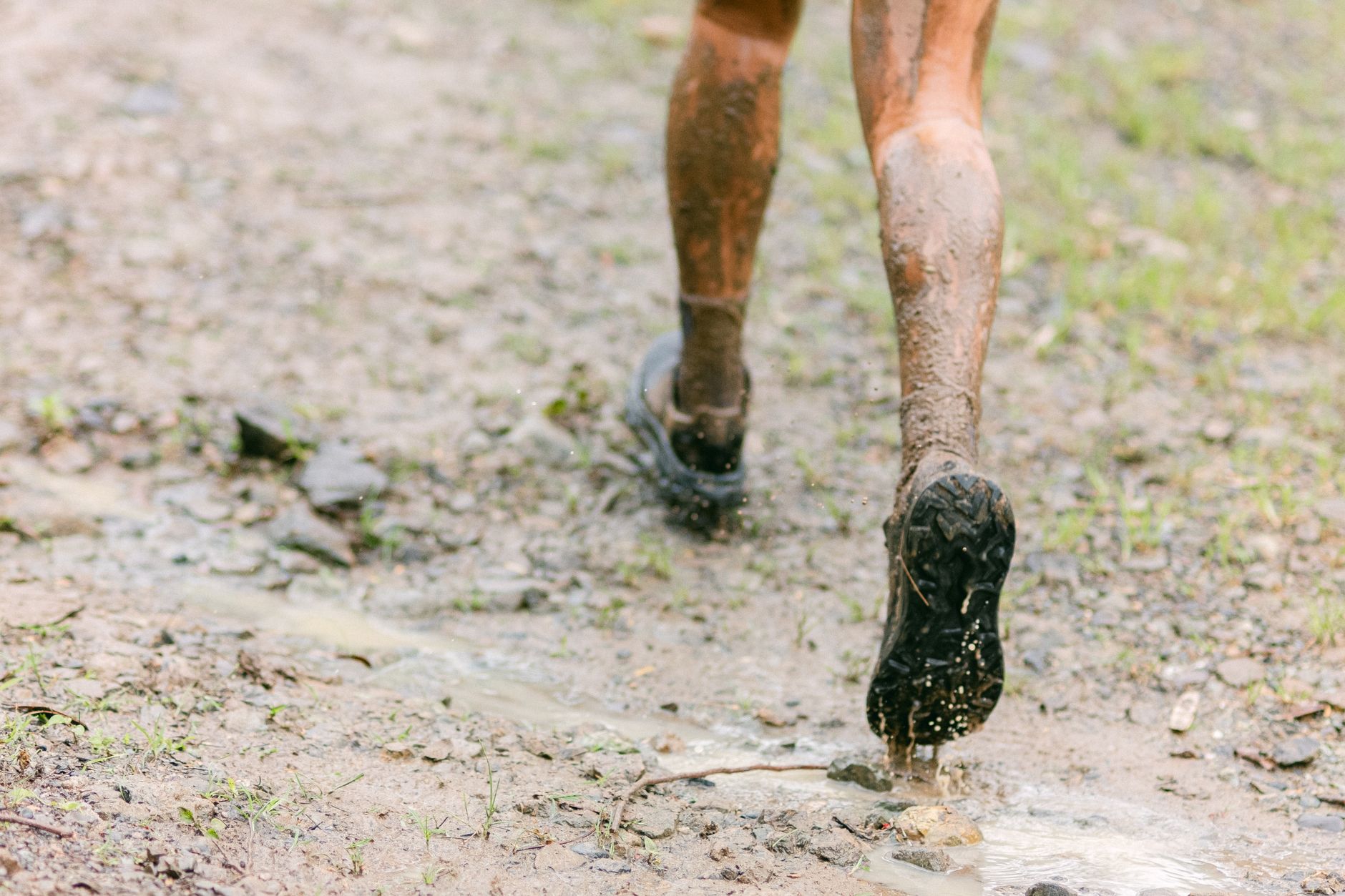
Trail running shoes and road running shoes differ primarily in outsole design, midsole protection, upper durability, and weight. Trail shoes feature 4–6 mm multidirectional lugs, rock plates, reinforced toe caps, and weigh 20–40 grams more per shoe to handle loose dirt, mud, roots, and scree. Road shoes optimize for smooth pavement with 2–3 mm lugs or flat rubber, lighter breathable uppers, and responsive foam that delivers 70–85% energy return. Most recreational runners benefit from dedicated pairs only when logging 30+ miles per month on their non-primary terrain—below that threshold, a single pair matched to your dominant surface handles the majority of training demands.
What are the four mechanical differences between trail and road running shoes?
Trail and road running shoes diverge in four load-bearing design elements that directly impact traction, protection, weight, and feel. Understanding these differences helps you match shoe features to the surfaces you actually run.
Outsole lug depth and pattern represent the most visible distinction. Trail shoes deploy 4–6 mm lugs arranged in multidirectional patterns to bite into loose dirt, mud, and uneven ground. Compounds like Vibram Megagrip or Continental rubber maximize friction on wet rocks and roots. Road shoes use 2–3 mm lugs or nearly flat rubber optimized for predictable hard surfaces, where deeper tread reduces ground contact area and sacrifices efficiency.
Midsole stack height and rock plate presence deliver underfoot protection on technical terrain. Trail models often insert a 2–4 mm thermoplastic polyurethane (TPU) or carbon-fiber plate between the midsole and outsole to deflect sharp stones and roots. This adds rigidity and raises total stack height, sometimes exceeding 45 mm in ultra-cushioned trail designs. Road shoes prioritize flexibility and ground feel, with World Athletics capping racing-shoe stack at 40 mm to preserve biomechanical advantage without excessive cushioning.
Upper construction reflects each category’s environmental demands. Trail uppers feature reinforced toe caps (often TPU-coated), gaiter attachment points, and water-resistant membranes to shed mud and debris. Road shoes emphasize breathable engineered mesh with minimal overlays, shedding weight and heat during high-tempo efforts on pavement. The trail approach sacrifices ventilation for durability; road uppers prioritize airflow over abrasion resistance.
Weight differential stems from cumulative protection features. A typical men’s road trainer weighs 260–290 grams per shoe, while a comparable trail model runs 280–320 grams—a 20–40 gram penalty per shoe. Over a marathon distance, that translates to lifting an extra 2–3 kilograms total, though the impact on recreational pace is negligible compared to the confidence and injury-prevention gains on appropriate terrain.
When does outsole grip actually matter for performance and safety?
Aggressive outsole grip becomes non-negotiable on loose dirt, mud, wet roots, scree, and slopes exceeding 10% grade. On these surfaces, 4–6 mm lugs and sticky rubber compounds reduce slip risk, maintain pace on descents, and lower the cognitive load of foot placement—freeing attention for navigation and effort management.
The terrain breakpoint sits around 30 miles per month on trails. Runners logging less than that volume can often use road shoes with heightened caution, accepting slower descents and avoiding wet or technical sections. Above 30 monthly trail miles, dedicated trail shoes measurably reduce ankle-sprain incidence by improving lateral stability and preventing the micro-slips that accumulate into overuse injuries. One biomechanics analysis found that inadequate traction on variable surfaces increases ground-contact time variability by 8–12%, forcing compensatory muscle recruitment that fatigues stabilizers faster.
Conversely, aggressive lugs underperform on dry hardpack, gravel roads, and pavement. Deeper tread reduces the rubber surface area contacting the ground, creating a less stable platform on predictable flat surfaces. Runners wearing trail shoes on long road segments report a “mushy” or disconnected feel as lugs compress unevenly, and outsole durability suffers—softer trail rubber compounds abrade 15–25% faster on asphalt than on dirt.
The practical takeaway: if your regular routes feature sustained wet conditions, roots, or slopes, grip is a performance and safety essential. If you occasional venture onto moderate trails in dry weather, road shoes with careful foot placement suffice until your trail volume justifies the investment.
How does cushioning and responsiveness change between the two categories?
Road running shoes optimize midsole foam for energy return on predictable, hard surfaces. Modern road trainers and racers deploy PEBA-based foams (e.g., Nike ZoomX, Saucony PWRRUN PB) or expanded thermoplastic polyurethane beads that deliver 70–85% rebound, converting vertical impact into forward propulsion. Softer, more responsive midsoles amplify each stride’s efficiency when ground reaction forces arrive consistently and predictably—the hallmark of pavement running.
Trail running shoes prioritize stability and protection over maximum bounce. Midsoles use firmer EVA blends or dual-density construction to dampen irregular impacts from roots, rocks, and off-camber terrain. This controlled cushioning prevents the ankle roll that softer, rebounding foam can exacerbate on uneven ground. The trade-off is a less lively feel: trail midsoles intentionally absorb rather than return energy, because unpredictable landings demand a stable platform more than propulsive snap.
Stack-height regulations further differentiate the categories. World Athletics caps road racing shoes at 40 mm total stack to limit performance advantages from extreme cushioning, while trail racing has no governing limit. Some trail models exceed 45 mm stack, pairing deep cushioning with rock plates to handle long ultra distances over rugged terrain. These maximalist trail designs feel plush but sacrifice the ground feedback many runners prefer for technical navigation.
Ultra-cushioned road shoes (Hoka Clifton, Altra Torin) blur the boundary for groomed trail use. Their tall, soft midsoles handle moderate dirt paths well but lack the lateral rigidity and plate protection for rocky or rooty trails. Runners who split time between pavement and non-technical trails often find these high-stack road shoes versatile enough to cover both, saving the cost and rotation complexity of a second pair—until terrain demands true trail-specific grip and armor.
Can one pair handle both surfaces, and what are the trade-offs?
Hybrid or all-terrain running shoes attempt to bridge the gap with 3–4 mm lugs, moderate stack height (typically 28–35 mm), and reinforced but breathable uppers. Models like the Salomon Sense Ride or Nike Pegasus Trail occupy this middle ground, offering enough traction for light trails and sufficient efficiency for road training. They suit runners whose weekly mileage splits roughly 50/50 between surfaces, or those seeking one versatile pair for varied routes.
Quantifiable compromises emerge in both directions. On roads, trail-oriented shoes feel less snappy due to firmer midsoles and deeper lugs that increase rolling resistance; outsole rubber wears 15–25% faster on pavement than on dirt. On technical trails, road-oriented shoes sacrifice grip on wet or steep sections and offer no rock-plate protection, raising puncture risk and forcing slower, more cautious descents. Energy-cost studies suggest aggressive trail lugs can increase metabolic demand by 2–3% on flat pavement compared to road-specific outsoles—a marginal but real penalty over marathon distances.
A decision matrix clarifies when one pair suffices and when specialization pays off:
- 80%+ mileage on one surface: Optimize for your dominant terrain. A road-focused runner who occasionally hikes dirt paths needs road shoes; a trail runner who commutes on pavement to trailheads needs trail shoes.
- 60/40 or closer split: Hybrid models minimize compromise and simplify rotation. Accept slightly less road snap and trail grip in exchange for convenience and cost savings.
- Training for surface-specific races: If your goal event is a road marathon or technical trail ultra, dedicate at least 70% of race-pace and long-run volume to surface-matched shoes. Racing in your training shoe maximizes confidence and reduces variables.
Many competitive runners maintain two or three pairs and rotate based on the week’s terrain plan. This approach extends each shoe’s lifespan by 20–30%, since neither pair endures exclusively harsh conditions, and reduces injury risk by matching footwear to ground-reaction-force patterns. For recreational runners under 40 miles per week total, one well-chosen pair—road or trail based on your 70%+ surface—handles the majority of needs until goals or volume justify expansion.
What should recreational runners prioritize when choosing between trail and road shoes?
Start with a numbered decision framework that maps your actual running patterns to footwear features:
- Map monthly mileage by surface type. Track four weeks of training to establish your road-versus-trail split. If 30+ miles per month occur on trails, dedicated trail shoes reduce injury exposure and improve confidence. If trail miles are sporadic or under 20 per month, road shoes cover your needs.
- Assess local terrain’s technical demand. Groomed rail-trails and packed dirt paths don’t require aggressive lugs; wet roots, loose scree, and slopes over 10% do. Terrain technicality outweighs raw mileage—15 monthly miles on rugged trails justify trail shoes more than 25 miles on smooth gravel.
- Evaluate injury history and biomechanics. Runners with chronic ankle instability, plantar fasciitis, or prior stress fractures benefit from trail shoes’ lateral support and rock plates even on moderate terrain. Conversely, those with Achilles sensitivity may prefer road shoes’ lower heel-toe drop and softer landings. Surface-specific shoes should complement, not conflict with, your injury-management strategy.
- Consider your race calendar. Training for a spring road marathon demands road-shoe volume to adapt legs and feet to pavement’s repetitive impact. Preparing for a fall trail ultra requires trail shoes for the quad-pounding descents and proprioceptive demands of uneven ground. Surface specificity in training reduces race-day variables and builds confidence in your footwear choice.
Fit and comfort override marketing. A well-fitted road shoe on moderate trail outperforms an ill-fitted trail shoe every time. Prioritize toe-box width, heel lockdown, and midfoot security before optimizing for lug depth or stack height. Most specialty running retailers allow short test runs; use them to verify comfort under effort, not just standing.
The practical baseline: runners under 40 miles per week total can begin with one pair matched to their dominant surface (road if 60%+ pavement, trail if 60%+ dirt). As volume, terrain variety, or race goals expand, add a second surface-specific pair to extend shoe lifespan, reduce injury risk, and optimize performance. The incremental gains from matched footwear compound over months of consistent training—but only after you’ve dialed in fit, weekly mileage progression, and recovery fundamentals that matter more than any single gear decision.
For more evidence-based guidance on training, gear, and performance, explore expert running guides and gear reviews at Runner’s Digest.
Frequently Asked Questions
Can I use trail running shoes on pavement without damaging them?
Yes, but trail shoes wear faster on pavement because softer rubber compounds and deeper lugs (4–6 mm) abrade more quickly on hard surfaces. Expect 15–25% shorter lifespan compared to use on dirt. The larger issue is feel: trail shoes often feel less responsive and slightly unstable on flat roads due to aggressive tread and firmer midsoles designed for variable terrain.
Do road running shoes work on groomed trails or packed dirt paths?
Road shoes handle groomed, dry trails and packed dirt well if the surface is stable and free of loose rocks or mud. You lose traction on wet roots, steep descents, and technical sections where 4+ mm lugs provide grip. If more than 20% of your route involves those features, or if you run trails in wet conditions regularly, dedicated trail shoes reduce slip risk and improve confidence.
How much heavier are trail running shoes compared to road shoes?
Trail running shoes typically weigh 20–40 grams more per shoe than equivalent road models, due to rock plates, reinforced uppers, and deeper outsole rubber. A men’s road trainer averages 260–290 g per shoe, while a trail counterpart runs 280–320 g. The difference is noticeable over long distances but matters less than fit, protection, and grip for most recreational runners.
What is a hybrid or all-terrain running shoe, and who should consider one?
Hybrid running shoes blend 3–4 mm lugs, moderate stack height, and durable uppers to handle both road and light trail. They suit runners who split mileage roughly 50/50 between surfaces or who want one pair for varied routes. Trade-offs include slightly less road responsiveness and reduced technical-trail grip compared to dedicated models. They’re practical for budget-conscious runners or those logging under 30 miles per week total.
Does outsole lug depth affect running economy or speed?
Deeper lugs (5–6 mm) can reduce running economy on hard, flat surfaces by decreasing ground-contact area and increasing rolling resistance. One biomechanics study found 2–3% higher energy cost on pavement with aggressive trail outsoles versus road-specific rubber. On soft or technical terrain, the grip and stability gains outweigh any small economy loss. For racing on roads, choose road-specific shoes; for trail ultras, prioritize traction.
When should I invest in a second pair of running shoes for different terrain?
Add a second pair when you consistently run 30+ miles per month on your non-primary surface, or when training for a race on different terrain than your usual routes. Rotating surface-specific shoes extends each pair’s lifespan, reduces injury risk from inappropriate traction or support, and improves performance. If you run fewer than 25 total miles per week, one well-chosen pair matched to your main surface is usually sufficient.
Leave a Reply