

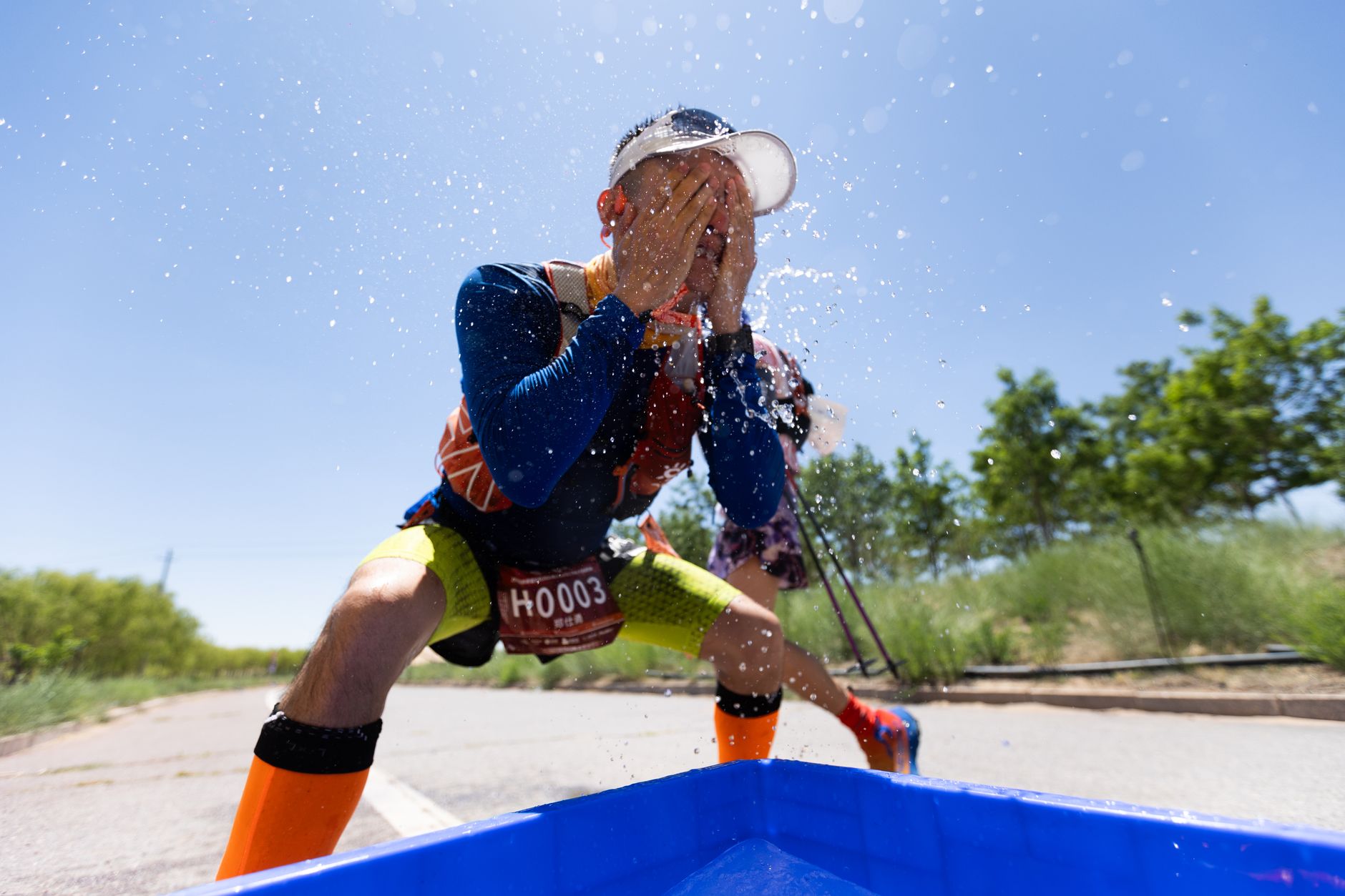
Heat training requires a deliberate 10–14 day acclimatization protocol, during which runners should reduce pace by 15–20% and prioritize 60–90 minute moderate-intensity sessions in warm conditions. Once adapted, expect to maintain 2–5% slower paces than cool-weather equivalents, consume 150–250 mL of fluid every 15–20 minutes on runs exceeding 60 minutes, and schedule high-intensity sessions during the coolest part of the day—typically 5–7 AM—to optimize both performance and safety.
Why does heat slow you down, and what’s actually happening in your body?
When you run in heat, your cardiovascular system faces a double workload: delivering oxygen to working muscles while simultaneously pumping blood to your skin for cooling. This competition triggers cardiovascular drift—your heart rate climbs 10–15 beats per minute for the same pace you’d hold comfortably in cool conditions. Stroke volume (the amount of blood pumped per beat) decreases as blood pools in dilated surface vessels, forcing your heart to beat faster to maintain cardiac output.
Your body diverts 15–25% of total cardiac output to skin blood flow during hot-weather running, blood that would otherwise support muscular performance. Core temperature becomes the limiting factor: once you approach 38.5–39°C internally, your brain begins protective downregulation—perceived effort spikes, muscle recruitment drops, and pace deteriorates even if your legs feel strong.
Sweat rates vary dramatically between individuals, ranging from 0.5 to 2.5 liters per hour depending on fitness, acclimatization status, and genetics. Dehydration of just 2% body weight (roughly 1.4 kg for a 70 kg runner) elevates core temperature by 0.3–0.4°C and increases cardiovascular strain. Heat also accelerates glycogen depletion—your body burns through carbohydrate stores 15–20% faster in warm conditions as metabolic efficiency drops and you rely more heavily on anaerobic pathways even at aerobic paces.
How long does heat acclimatization take, and what protocol works best?
Meaningful physiological adaptation to heat requires 10–14 consecutive days of deliberate exposure, with measurable changes appearing in stages. Plasma volume expansion occurs first—by days 3–5, your blood volume increases 6–8%, improving cardiovascular efficiency and heat dissipation capacity. Sweat rate and composition improvements follow by days 7–10: you begin sweating earlier and more profusely, while sodium concentration in sweat decreases, conserving electrolytes. By days 12–14, core temperature regulation optimizes—you maintain lower internal temperatures at given work rates, and heart rate responses normalize.
The most effective protocol involves 60–90 minute sessions at moderate conversational intensity during the hottest part of the day, ideally when ambient temperature exceeds 27°C. You need a minimum of five consecutive days to trigger adaptation, though 10–14 days produces more complete acclimatization. The intensity sweet spot sits at 60–70% VO₂ max—hard enough to elevate core temperature and stimulate adaptation, easy enough to sustain the required duration.
Passive heat exposure through sauna use provides a partial substitute when outdoor heat training isn’t feasible. Post-run sauna sessions of 20–30 minutes at 80–100°C, performed 3–4 times weekly, trigger plasma volume expansion and improved thermoregulation. Research suggests this delivers roughly 60–70% of the benefit of active heat training, making it valuable for pre-race preparation or maintenance during cooler months.
Deacclimatization happens faster than you’d hope: you’ll lose approximately 50% of your heat adaptations within two weeks of returning to cool conditions. Maintain at least two weekly heat-exposed sessions to preserve acclimatization throughout racing season.
What pace and effort adjustments should you make during the adaptation window?
During days 1–5 of heat exposure, reduce your target paces by 15–20% or shift to heart rate zone training, staying 10–15 bpm below your normal threshold heart rate. A runner who typically holds 8:00/mile for tempo runs should expect 9:15–9:30/mile during initial heat adaptation. Days 6–10 allow modest progression—scale back to 10–15% slower than cool-weather paces as cardiovascular adaptations begin supporting performance. By days 11–14, you can increase to 5–10% slower than baseline pacing.
Even after full acclimatization, maintain realistic expectations: heat will still cost you 2–5% of your cool-weather pace due to the unavoidable cardiovascular tax of thermoregulation. A 40-minute 10K runner should plan for 41–42 minutes in warm conditions even after adaptation. This isn’t fitness loss—it’s physics.
Shift interval sessions from pace-based to effort-based targets. Instead of 5 × 1 km at 4:00/km, run 5 × 4 minutes at RPE 7–8 out of 10, accepting whatever pace that effort produces in heat. This prevents the overexertion and incomplete recovery that comes from chasing arbitrary splits in challenging conditions. Extend recovery intervals to 2:1 or 3:1 work-to-rest ratios (versus the typical 1:1) to allow heart rate and core temperature adequate recovery between efforts.
Morning training exploits a physiological advantage: your core body temperature sits roughly 0.5°C lower at 6 AM than 6 PM. Schedule your hardest workouts and longest runs during the coolest hours—typically 5–7 AM in summer months. Save easier aerobic runs for deliberate afternoon heat exposure when acclimatization is your training goal.
Know when to abort a session: confusion, nausea, chills despite ambient heat, or cessation of sweating signal dangerous core temperature elevation. Walking and seeking shade is always the correct choice when these symptoms appear. Learn more about structuring your training across varying conditions through expert running guides that account for environmental stressors.
What hydration and fueling strategies offset heat-related performance loss?
Pre-hydration sets the foundation for heat performance. Consume 400–600 mL of fluid two hours before running—early enough that you’re not sloshing but close enough to maximize starting hydration. Urine should be pale yellow; clear indicates overhydration (which dilutes sodium), while dark yellow means you’re starting behind.
During runs exceeding 60 minutes, target 150–250 mL every 15–20 minutes, adjusting based on personal sweat rate. Calculate your needs with a simple test: weigh yourself naked before and after a one-hour run in similar conditions, accounting for any fluids consumed. Each kilogram lost represents one liter of sweat. A runner losing 1.4 kg in 60 minutes needs roughly 210 mL every 15 minutes (1,400 mL ÷ 4 quarters) to maintain hydration. Remember that complete replacement during running isn’t necessary—staying within 2% of body weight prevents performance decline.
Sodium becomes critical on efforts exceeding 90 minutes or for heavy sweaters (those who finish runs with visible salt crusting on skin or clothing). Target 300–600 mg of sodium per hour through electrolyte drinks, gels, or salt tablets. Standard sports drinks provide roughly 200–300 mg per 500 mL, requiring supplementation on longer efforts.
Carbohydrate needs persist in heat but require cautious delivery. Heat increases intestinal permeability and reduces gut blood flow, raising the risk of GI distress. Start with 30–60 grams per hour on runs exceeding 90 minutes, using the same products and timing you’ll employ on race day. Practice your nutrition strategy during training—heat magnifies any fueling mistakes you’ll make in competition.
Post-run rehydration should reach 150% of fluid losses within four hours: if you lost 1 kg, consume 1.5 liters along with sodium-rich foods (pretzels, pickles, broths) or electrolyte drinks to optimize retention.
Cooling strategies compound hydration benefits. Ice slurry ingestion—7.5 grams per kilogram of body weight (525 grams for a 70 kg runner)—consumed 20–30 minutes pre-run can reduce core temperature by 0.3–0.5°C, buying valuable thermal headroom. Cold towels on neck and wrists during long runs provide temporary relief. A cold shower within 10 minutes post-run rapidly lowers core temperature, accelerating recovery.
How should you modify your training plan structure and recovery during hot months?
Restructure your weekly training template to acknowledge heat as a legitimate stressor equivalent to added mileage or intensity. Reduce total weekly volume by 10–15% during the first two weeks of heat exposure—if you typically run 80 km per week, plan for 68–72 km while your body adapts. This isn’t fitness loss; it’s strategic stress management.
Replace one quality session per week with a dedicated heat-acclimatization aerobic run: 60–90 minutes at conversational pace during the day’s warmest hours. This session’s purpose is adaptation, not pace or heart rate targets. Consider it infrastructure work that enables better performances once acclimatized.
Schedule your highest-intensity sessions—track workouts, tempo runs, race-pace efforts—during the coolest available window. For most locations, this means 5–7 AM, when ambient temperature and core body temperature both sit at daily nadirs. Long runs can start early and extend into warming conditions, providing both quality aerobic work and heat stimulus.
Recovery becomes the training variable most runners undervalue in heat. Sleep disruption increases as core temperature stays elevated longer post-run and ambient overnight temperatures remain high. Heat interferes particularly with REM sleep, the stage crucial for neuromuscular recovery and skill consolidation. Aim for bed 30–60 minutes earlier than usual, use fans or air conditioning to lower bedroom temperature, and avoid heavy meals within three hours of sleep.
Monitor resting heart rate each morning before rising—a reliable marker of recovery status. An elevation of 5+ beats per minute above your 7-day average signals inadequate recovery and warrants either a rest day or reduced intensity that day. Heat amplifies cumulative fatigue in ways that aren’t always perceptually obvious until overtraining symptoms appear.
Include deliberate active cooling in your post-session routine: cold showers, ice baths (10–15 minutes at 10–15°C), or air-conditioned recovery spaces. Prioritize electrolyte-rich whole foods—potatoes, bananas, leafy greens, yogurt—over relying solely on sports drinks for sodium and potassium replenishment.
Know the safety thresholds: when wet-bulb globe temperature (WBGT) exceeds 28°C or heat index surpasses 105°F (40.5°C), moving quality sessions indoors to a treadmill or track with climate control becomes the smart choice. Your training plans for every runner should flex around environmental conditions, not ignore them in service of rigid periodization.
Frequently Asked Questions
How much slower should I run in hot weather?
During the first 10-14 days of heat exposure, reduce your pace by 15-20% to allow physiological adaptation. Even after acclimatization, expect to run 2-5% slower than in cool conditions due to increased cardiovascular demand and core temperature regulation. Use effort-based pacing (heart rate or perceived exertion) rather than rigid pace targets during heat training.
How long does it take to adapt to running in the heat?
Meaningful heat acclimatization takes 10-14 consecutive days of 60-90 minute moderate-intensity sessions in hot conditions. Plasma volume expands by days 3-5, sweat efficiency improves by days 7-10, and core temperature regulation optimizes by days 12-14. You’ll lose about 50% of these adaptations within two weeks if heat exposure stops, so maintain at least two weekly heat sessions.
What should I drink during hot weather runs?
Start with 400-600 mL of fluid two hours before running. During runs over 60 minutes, consume 150-250 mL every 15-20 minutes, adjusting based on your sweat rate. For efforts exceeding 90 minutes or if you’re a heavy sweater, include 300-600 mg of sodium per hour. Practice your hydration strategy in training, as heat increases gut sensitivity and individual needs vary significantly.
Should I run in the morning or evening during summer?
Morning runs (5-7 AM) offer the coolest temperatures and your core body temperature is naturally 0.5°C lower, making it ideal for hard workouts and long runs. Evening runs face higher ambient heat but can support heat acclimatization if that’s your goal. Schedule your most demanding sessions during the coolest available window and save easier aerobic runs for deliberate heat adaptation.
When is it too hot to run safely outside?
Consider moving indoors when the wet-bulb globe temperature exceeds 28°C or the heat index surpasses 105°F. Abort any outdoor run immediately if you experience confusion, nausea, chills despite heat, or cessation of sweating. Even in safe conditions, monitor your resting heart rate daily; an elevation of 5+ bpm suggests inadequate recovery and warrants a rest day or reduced intensity.
Can I heat acclimatize without running in the heat?
Partial acclimatization is possible through passive heat exposure: 20-30 minutes in a sauna (80-100°C) immediately post-run, 3-4 times per week, can trigger plasma volume expansion and improved thermoregulation. However, this provides only 60-70% of the benefit of active heat training. Combine passive heat with at least two outdoor heat-exposed runs weekly for optimal adaptation before racing in hot conditions.
Leave a Reply