

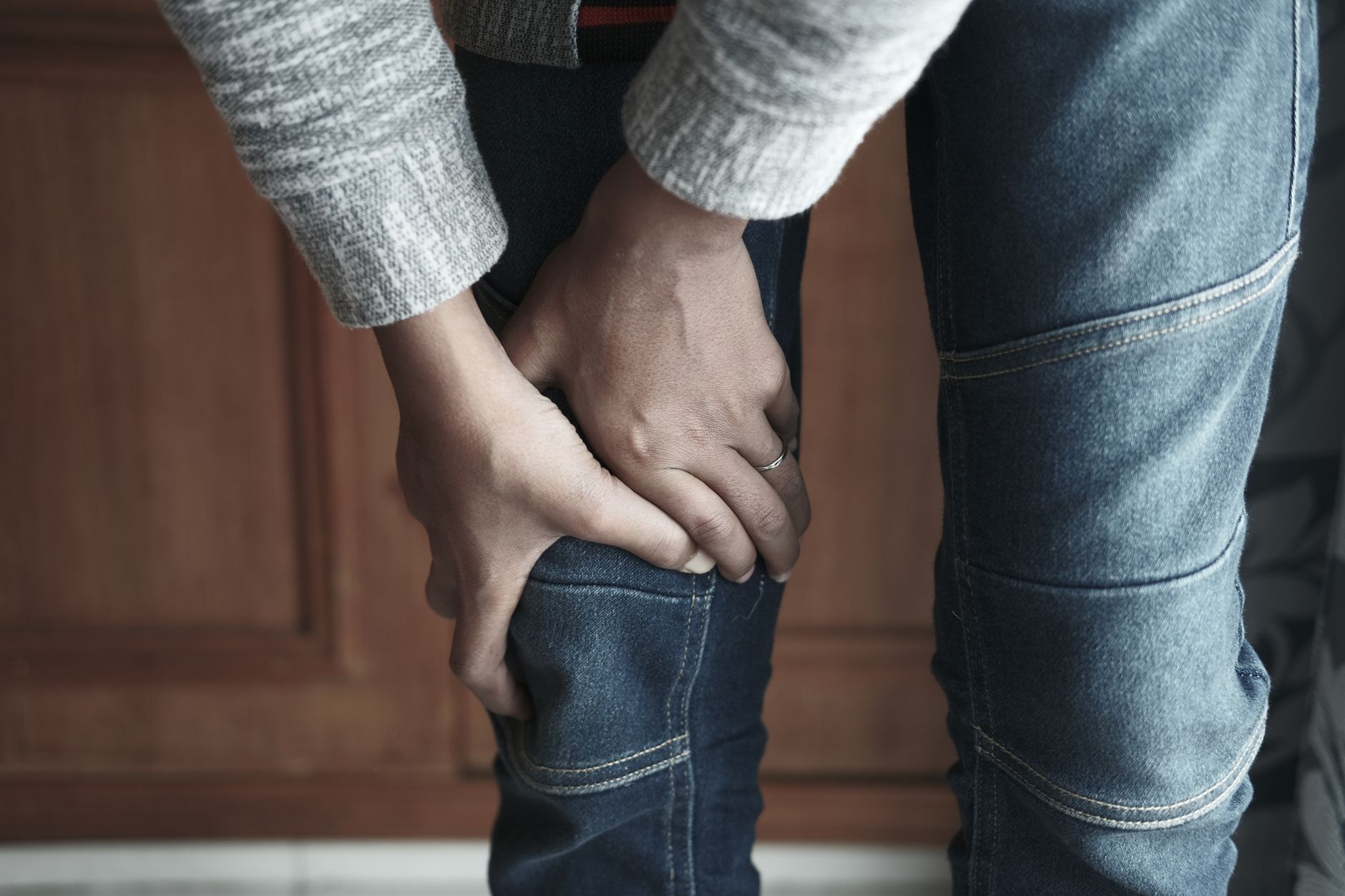
Runner’s knee (patellofemoral pain syndrome, or PFPS) causes diffuse pain beneath or around the kneecap due to poor patellar tracking, while IT band syndrome (ITBS) produces sharp, pinpoint pain 1-2 cm above the lateral knee joint from friction of the iliotibial band over the femoral epicondyle. The clearest differentiator: runner’s knee hurts going downstairs and after sitting; IT band syndrome triggers at consistent mileage during runs and pinpoints to a dime-sized spot on the outer knee.
What is the key anatomical difference between runner’s knee and IT band syndrome?
Patellofemoral pain syndrome involves irritation of the cartilage beneath the patella (kneecap) as it glides through the femoral groove during knee flexion, while iliotibial band syndrome results from the IT band compressing against the lateral femoral epicondyle—a bony prominence on the outer thigh bone—during the repetitive flexion-extension cycle of running. PFPS affects 22-25% of runners annually as of 2026 data, making it nearly twice as common as ITBS, which impacts 8-12% of the running population.
Runner’s knee: anterior knee pain from tracking issues
The patella sits in a groove on the femur and should track smoothly up and down as you bend and straighten your knee. When the vastus medialis oblique (VMO)—the teardrop-shaped quad muscle above your inner knee—is weak relative to the lateral quadriceps, the kneecap pulls laterally and grinds against the femoral groove instead of gliding through it. Contributing factors include:
- Quadriceps strength imbalances, especially VMO weakness
- Hip abductor (glute medius) weakness allowing the femur to rotate inward
- Overpronation exceeding 8 degrees of calcaneal eversion
- Rapid mileage increases or high volume on cambered roads
Pain presents as diffuse, aching discomfort beneath, around, or behind the kneecap. You typically cannot point to a single painful spot with one finger.
IT band syndrome: lateral friction at the knee joint
The iliotibial band is a thick tendon running from your hip down the outside of your thigh, inserting at Gerdy’s tubercle on the tibia just below the knee. During the midstance phase of running—when your knee flexes to roughly 20-30 degrees—the IT band compresses against the lateral femoral epicondyle with each footstrike. Weak hip abductors (glute medius and minimus) allow excessive hip adduction and internal rotation, intensifying this friction. Contributing factors include:
- Hip abductor weakness causing pelvic drop on the stance leg
- Tight tensor fasciae latae (TFL) increasing IT band tension
- Training predominantly on cambered roads or running track turns in one direction
- Sudden increases in downhill running or speed work
Pain manifests as sharp, burning discomfort you can pinpoint to a spot 1-2 cm above the lateral joint line, directly over the bony knob on the outside of your knee.
How does the pain pattern differ between the two conditions?
Runner’s knee produces variable, activity-dependent anterior pain that worsens with knee flexion under load, while IT band syndrome triggers at predictable mileage intervals with sharp lateral pain that forces you to stop mid-run. Recognizing these distinct patterns allows you to self-diagnose with reasonable accuracy before seeking formal evaluation.
Runner’s knee pain pattern: stairs, sitting, and variable mileage
Patellofemoral pain typically worsens during activities that increase compression between the kneecap and femoral groove. Descending stairs loads the joint with 3.5 times body weight and consistently aggravates PFPS. The “theatre sign”—anterior knee pain and stiffness after sitting with bent knees for 30+ minutes in a movie theater, airplane, or car—is 70-80% specific for runner’s knee according to 2024 diagnostic studies.
During runs, pain:
- Often affects both knees, though one side may dominate
- Feels like aching, grinding, or pressure rather than sharp stabbing
- Can begin at any mileage and fluctuates run-to-run
- Worsens on downhill sections and cambered surfaces
- May persist as dull soreness for hours post-run
Other aggravating activities include squatting, kneeling, and prolonged standing. Straightening the leg typically provides relief.
IT band syndrome pain pattern: consistent mileage trigger and lateral sharpness
ITBS presents with remarkable consistency: runners report pain beginning at nearly the same mileage every run (e.g., “always starts at mile 3”). The sharp or burning sensation appears on the outer knee and intensifies if you continue running, often forcing you to stop. Pain onset correlates with cumulative knee flexion-extension cycles rather than time, which is why it triggers at similar distances regardless of pace.
During runs, pain:
- Almost always unilateral (one knee only)
- Begins as mild awareness that rapidly escalates to sharp, limiting pain
- Worsens on downhill running due to increased eccentric loading
- Improves or disappears within minutes of stopping
- Rarely occurs during warm-up or first mile
Outside of running, ITBS rarely causes pain during normal walking or daily activities. Some runners experience discomfort with deep single-leg knee bends or when sleeping on the affected side.
What are the biomechanical risk factors for each injury?
Both injuries stem from strength deficits and training errors, but the specific mechanical breakdowns differ. Understanding measurable risk factors allows targeted intervention before pain sidelines your training.
Runner’s knee: quadriceps imbalance and foot mechanics
The primary driver of patellofemoral pain is an imbalance between the medial and lateral quadriceps muscles. When the VMO generates less than 1:1 force compared to the vastus lateralis, lateral patellar tracking increases cartilage stress. A 2025 prospective study of 400 runners found these measurable risk factors predicted PFPS onset:
- VMO to VL strength ratio below 1:1 on isokinetic testing
- Hip abductor strength less than 80% of body weight in side-lying abduction test
- Q-angle (the angle between the quadriceps and patellar tendon) exceeding 15 degrees in women, 12 degrees in men
- Overpronation with rearfoot eversion greater than 8 degrees
- Running cadence below 160 steps per minute, which increases patellofemoral joint load by 20-30%
- Weekly mileage increases exceeding 10%
Downhill running and high-volume stair training amplify these risk factors because eccentric quad contractions under load magnify tracking dysfunction.
IT band syndrome: hip control and training surface
ITBS biomechanics center on the hip rather than the knee. When hip abductors fail to stabilize the pelvis during single-leg stance, the femur adducts and internally rotates, stretching the IT band tighter across the lateral femoral epicondyle. Research from 2024-2026 identifies these measurable predictors:
- Hip abductor weakness with single-leg pelvic drop exceeding 5 degrees (Trendelenburg sign)
- Excessive hip adduction during midstance, typically more than 10 degrees from neutral
- Positive Ober test indicating IT band and TFL tightness
- Training volume concentrated on cambered roads or track intervals in one direction
- Sudden introduction of hill repeats, tempo runs, or race-pace efforts without progressive buildup
Women develop ITBS at 1.5-2 times the rate of men, primarily because wider pelvic anatomy increases the femoral angle and magnifies hip adduction during gait. A 2024 study of 1,200 injured runners found 89% of women with ITBS demonstrated hip abductor weakness below 90% of body weight.
How can you perform a self-assessment to distinguish the two?
A structured three-step protocol using pain location mapping and specific movement tests allows runners to differentiate these injuries at home with 80-85% accuracy compared to clinical diagnosis. Perform these tests when symptoms are present but not severe.
Step 1: Map your pain location with one finger
Stand and reproduce your typical running pain by doing a few single-leg squats or hopping in place. Point to the most painful spot using only your index finger.
Runner’s knee: You cannot pinpoint a single spot. Pain spreads beneath the kneecap, around its borders, or feels deep inside the knee joint. Some runners describe it as “behind” the kneecap or diffusely across the front of the knee.
IT band syndrome: You can place your fingertip on a dime-sized area of maximum pain, located 1-2 cm above the lateral joint line on the outer knee. The spot sits directly over the lateral femoral epicondyle—you can feel the bony prominence through the skin.
If you can draw a circle smaller than a quarter around your pain, suspect ITBS. If pain spreads across the entire front of your knee, suspect PFPS.
Step 2: Test pain with the single-leg squat and step-down
Single-leg squat: Stand on your affected leg, arms crossed over chest. Squat down to approximately 60 degrees of knee flexion (thigh about 45 degrees from vertical), then return to standing. Perform 5 repetitions.
- Runner’s knee response: Anterior knee pain during the squat, often accompanied by visible inward knee collapse (dynamic valgus). Pain may persist after straightening.
- IT band syndrome response: Lateral knee pain is possible but less common. Watch for pelvic drop on the stance side, indicating hip abductor weakness that contributes to both conditions.
Step-down test: Stand on an 8-inch step or stair with your affected leg. Lower your opposite foot toward the floor in a controlled descent, then return to starting position. Perform 10 repetitions.
- Runner’s knee response: Anterior pain during the lowering phase, worsening with repetitions. This replicates the stair-descent pain pattern characteristic of PFPS.
- IT band syndrome response: Typically no lateral knee pain unless the condition is severe or you’re also developing PFPS.
Step 3: Assess the theatre sign and Noble compression test
Theatre sign for PFPS: Sit in a chair with knees bent to 90 degrees. Remain seated for 10 minutes (read, watch something, work). Stand and immediately walk or descend stairs.
- Positive result: Anterior knee pain and stiffness appear or worsen when you stand and move. The pain may feel like your knee needs to “crack” or warm up. This is 70-80% specific for runner’s knee.
Noble compression test for ITBS: Lie on your back on a firm surface. Flex your affected knee to 90 degrees, then place your thumb over the lateral femoral epicondyle (the bony outer knee prominence). Apply moderate pressure and slowly straighten your leg.
- Positive result: Sharp pain at the compression point when your knee reaches approximately 30 degrees of flexion during extension. This angle corresponds to the impingement zone where the IT band maximally compresses the epicondyle during running gait.
If the theatre sign is positive and Noble test is negative, runner’s knee is likely. If Noble test is positive and you have no anterior pain, ITBS is the diagnosis. Positive results on both tests suggest coexisting injuries requiring comprehensive hip and quad strengthening, and you should explore Runner’s Digest training guides for integrated rehabilitation protocols.
What are the evidence-based recovery timelines and return-to-run protocols?
Runner’s knee typically requires 6-8 weeks for full resolution with structured eccentric quadriceps loading and gait modification, while IT band syndrome responds faster—4-6 weeks—when hip strengthening is prioritized. Both conditions demand progressive loading; simply resting until pain disappears then resuming prior mileage results in 60-70% recurrence rates within three months.
Runner’s knee recovery: 6-8 weeks with eccentric quadriceps loading
A 2025 randomized controlled trial of 240 runners with PFPS found eccentric quadriceps exercises combined with gait retraining reduced pain by 65% at four weeks and achieved pain-free running in 78% of participants by eight weeks.
Phase 1 (weeks 1-2): Relative rest and VMO activation
Cease or dramatically reduce running volume. Cross-train with activities that minimize patellofemoral load:
- Pool running with flotation belt (maintains cardiovascular fitness with near-zero joint load)
- Cycling if pain remains below 2/10 (seated position reduces kneecap compression)
- Swimming (avoid breaststroke kick which loads the knee in deep flexion)
Daily VMO-focused exercises:
- Terminal knee extensions with resistance band: 3 sets of 20, focusing on the final 15 degrees of extension
- Wall sits at 60 degrees: 3 sets of 30-45 seconds (deeper squats increase pain)
- Straight leg raises with toes pointed inward to bias VMO recruitment: 3 sets of 15
Progress to Phase 2 when pain during daily activities drops below 2/10 and you pass the theatre sign without significant discomfort.
Phase 2 (weeks 3-4): Eccentric loading and walk-run progression
Add eccentric step-downs from an 8-inch step, controlling the descent over 3-4 seconds: 3 sets of 15 repetitions every other day. This specifically strengthens the quad in its lengthening phase, which replicates running demands.
Begin a walk-run progression:
- Week 3: 1 minute running, 4 minutes walking, repeat 5 times, every other day
- Week 4: 2 minutes running, 3 minutes walking, repeat 5 times, every other day
Rules for progression:
- Pain must stay below 3/10 during the run
- No increase in pain for 24 hours post-run
- No return of theatre sign or night pain
Increase running cadence to 170-180 steps per minute using a metronome app. A 2024 biomechanics study found each 5% cadence increase reduces patellofemoral joint load by 8-10%.
Phase 3 (weeks 5-8): Return to continuous running and strength progression
Progress walk-run intervals toward continuous running, adding 5 minutes of continuous running every third session. Run on flat, even surfaces only. Continue eccentric step-downs and add:
- Bulgarian split squats: 3 sets of 10 per leg
- Single-leg leg press to 60 degrees: 3 sets of 12, building to 1.5x body weight
Test single-leg quadriceps strength weekly with a hand-held dynamometer or gym leg extension machine. Target ≥90% of the uninvolved leg before returning to full volume.
Return-to-running criteria:
- Pain-free single-leg squat to 60 degrees for 15 repetitions
- No theatre sign after 30 minutes of sitting
- Three consecutive pain-free runs at 80% of pre-injury weekly volume
- VMO strength within 10% of contralateral side
Resume hill training, speed work, and long runs only after maintaining base mileage pain-free for two weeks.
IT band syndrome recovery: 4-6 weeks with hip strengthening and gait modification
IT band syndrome responds faster than runner’s knee when the rehabilitation focus shifts from the knee to the hip. A 2024 systematic review of 15 studies found hip-focused strengthening reduced ITBS pain by 60% within four weeks, while IT band stretching and foam rolling showed no significant benefit.
Phase 1 (weeks 1-2): Hip strengthening foundation
Stop running at the distance that triggers pain. If pain begins at mile 3, do not attempt to “run through” to mile 4. Cross-train with:
- Pool running or elliptical (no lateral knee compression)
- Cycling with feet slightly externally rotated
Hip abductor strengthening, performed daily:
- Side-lying hip abduction: 3 sets of 20, with 3-second hold at top
- Clamshells with resistance band: 3 sets of 20
- Single-leg glute bridges: 3 sets of 12 per leg, focusing on glute activation rather than hamstring
Critical note on foam rolling: Do NOT foam roll the IT band itself. The iliotibial band is dense connective tissue that does not meaningfully lengthen under roller pressure. Instead, release the tensor fasciae latae (TFL) at the front of your hip with targeted massage or a lacrosse ball. A 2025 study found TFL release improved hip abduction range of motion by 12%, while direct IT band rolling showed zero improvement.
Progress when single-leg pelvic drop improves to less than 3 degrees and hip abduction strength reaches 100% of body weight.
Phase 2 (weeks 3-4): Gait retraining and short runs
Add gait modifications to reduce hip adduction and IT band tension:
- Increase step width by 5-10% (approximately 1-2 inches wider than natural gait). Mark lines on a treadmill or use floor tape for feedback.
- Visual feedback drills: Run beside a mirror or record yourself to ensure your knee tracks vertically without inward drift during midstance.
- Maintain upright posture with slight forward lean from ankles, not hips, to reduce lateral trunk sway.
Begin short test runs:
- Week 3: Run 50% of your typical trigger distance (e.g., 1.5 miles if pain usually starts at 3 miles) on flat, non-cambered surfaces, every third day
- Week 4: Run 75% of trigger distance if pain remains below 2/10
Add eccentric single-leg control:
- Eccentric step-downs from 8-inch step: 3 sets of 12
- Single-leg Romanian deadlifts: 3 sets of 10, emphasizing hip control
Phase 3 (weeks 5-6): Progressive mileage build
Resume regular running schedule with strict 10% weekly mileage increase cap. Alternate run direction on cambered roads or avoid them entirely. If you train on a track, reverse direction every 4 laps.
Continue hip strengthening twice per week:
- Side plank with hip abduction: 3 sets of 10 per side
- Monster walks with resistance band: 3 sets of 20 steps
- Single-leg squats to 60 degrees: 3 sets of 10
Test hip abduction strength with side-lying isometric holds against resistance. Target force production of at least 100% body weight before adding high-intensity workouts.
Return-to-running criteria:
- Hip abduction strength ≥100% body weight on hand-held dynamometry
- Single-leg pelvic drop <3 degrees during single-leg stance
- Pain-free running at your previous trigger mileage plus 20%
- Negative Noble compression test
Reintroduce tempo runs, hill repeats, and long runs one session per week, monitoring for any return of lateral knee pain. If symptoms recur, you progressed volume or intensity too quickly—return to Phase 2 for another week.
For comprehensive training plans that integrate injury prevention with performance goals, visit Runner’s Digest for injury prevention frameworks built on the latest biomechanics research.
When should you see a physical therapist or sports medicine doctor?
Self-directed rehabilitation succeeds in 60-70% of runner’s knee and IT band syndrome cases when started early and followed consistently. Seek professional evaluation if you experience any of these red flags or fail to improve with two weeks of modified training and targeted exercises.
Immediate evaluation warranted:
- Pain exceeding 6/10 at rest or during normal walking
- Night pain that wakes you from sleep
- Visible knee swelling within 2-4 hours post-run
- Knee locking, catching, or giving way during movement
- Pain accompanied by clicking or popping sensations you can reproduce
Professional assessment beneficial after two weeks if:
- Pain has not decreased by at least 30% despite modified training and daily strengthening
- You cannot identify a clear pain pattern matching either PFPS or ITBS
- Both self-assessment tests are positive (theatre sign AND Noble test)
- Pain migrates or changes character week to week
A sports-focused physical therapist provides measurable value through formal gait analysis. Two-dimensional video analysis costs $75-150 and identifies hip adduction angles, pelvic drop, and cadence metrics you cannot assess alone. Three-dimensional motion capture—available at university biomechanics labs and some PT clinics—quantifies knee flexion angles, patellofemoral joint loading, and IT band strain with research-grade precision. These data allow targeted intervention rather than generic strengthening.
Isokinetic dynamometry testing objectively measures quadriceps and hip strength ratios, eliminating guesswork about whether your VMO:VL ratio has reached 1:1 or your hip abduction strength hits 100% body weight. This testing typically costs $100-200 and provides a strength baseline and clear return-to-sport benchmarks.
Imaging becomes necessary in atypical presentations. X-rays rule out structural issues like patellar alta (high-riding kneecap), femoral torsion, or early osteoarthritis that predispose runners to PFPS. MRI identifies occult stress fractures, meniscus tears, or cartilage defects that may present similarly to runner’s knee or ITBS but require different treatment.
If you have modified training, completed six weeks of progressive strengthening, and still cannot run pain-free, the diagnosis may be incomplete or a structural factor requires medical intervention. The longer you delay evaluation past eight weeks, the higher the risk of chronic pain patterns and compensatory injuries developing.
Frequently Asked Questions
Can you have both runner’s knee and IT band syndrome at the same time?
Yes, though uncommon, dual presentation occurs in approximately 8-12% of runners with chronic knee pain. Both conditions share the same root cause—hip abductor weakness—so runners with poor glute medius strength and high weekly mileage can develop patellofemoral pain and iliotibial band friction simultaneously. In this case, you’ll feel diffuse anterior knee pain plus a sharp lateral pinpoint above the joint line. Address hip and quad strength together, and prioritize the more limiting injury in your return-to-run progression. If lateral pain prevents you from running at all, treat ITBS as primary and incorporate PFPS exercises concurrently.
Does foam rolling the IT band help IT band syndrome?
No credible evidence supports foam rolling the IT band itself for ITBS recovery. The iliotibial band is dense connective tissue that does not meaningfully lengthen under foam roller pressure—biomechanical studies show the band’s elastic modulus requires forces exceeding 2,000 Newtons to deform, far beyond what body weight on a roller generates. Instead, focus on strengthening the hip abductors (glute medius and minimus) and releasing tension in the tensor fasciae latae (TFL) at the hip using targeted massage or a small ball. A 2025 systematic review of 12 randomized trials found hip strengthening reduced ITBS pain by 60% in four weeks, while isolated IT band stretching and rolling showed no benefit.
Why does runner’s knee hurt more going downstairs than upstairs?
Descending stairs loads the patellofemoral joint with 3.5 times body weight compared to 2.5 times when ascending, according to 2024 biomechanics research using instrumented force plates. Eccentric quadriceps contraction during the descent phase increases compression between the patella and femoral groove while simultaneously creating shear forces that irritate sensitized cartilage. Ascending requires concentric contraction with less total joint reaction force and minimal shear. This is why the step-down test is more sensitive than the step-up for diagnosing patellofemoral pain syndrome—it reproduces the mechanical loading pattern that aggravates PFPS.
How long after runner’s knee clears can I return to hill repeats and speed work?
Wait a minimum of four weeks after achieving pain-free easy running at 80% of your prior volume before reintroducing high-intensity sessions. Hill repeats and track intervals spike patellofemoral joint stress by 40-60% compared to flat, steady running due to increased knee flexion range and higher ground reaction forces. Reintroduce one quality session per week, limit hills to 4-6% grade initially, and maintain cadence above 170 steps per minute to minimize load per stride. Monitor for any return of the theatre sign, post-run anterior pain, or delayed-onset soreness exceeding 24 hours. If symptoms recur, you need another 2-3 weeks of base building before intensity.
Is IT band syndrome more common in women or men?
IT band syndrome affects women at roughly 1.5 to 2 times the rate of men among distance runners, primarily due to biomechanical factors. Women typically have a wider pelvis, greater Q-angle, and increased femoral adduction during running gait, all of which increase lateral knee compression forces and IT band tension. A 2024 retrospective study of 1,200 injured runners presenting to sports medicine clinics found ITBS prevalence of 14% in women versus 9% in men, with hip abductor weakness present in 89% of female cases compared to 71% of male cases. This gender disparity disappears when hip strength is normalized to body weight, suggesting targeted glute strengthening in female runners could close the injury gap.
Should I stop running completely if I have mild runner’s knee?
Not necessarily. If pain remains below 3 out of 10 during and after running, and you experience no theatre sign or night pain, you can continue modified training while addressing the underlying quad and hip weakness. Reduce mileage by 30-50%, avoid downhill and cambered surfaces, increase cadence to 170+ steps per minute, and run every other day rather than consecutive days. Incorporate daily VMO-focused exercises like terminal knee extensions and eccentric step-downs. Cross-train with pool running or cycling on non-running days to maintain aerobic fitness. Complete rest is only necessary if pain exceeds 4/10, persists for more than two hours post-run, or worsens weekly despite modification—at that point, you risk developing chronic patellofemoral pain that takes months to resolve.
What is the theatre sign and why does it indicate runner’s knee?
The theatre sign is anterior knee pain and stiffness that develops after sitting with knees bent for 30 minutes or more, then worsens upon standing or descending stairs. It occurs because prolonged knee flexion compresses the patella into the femoral groove at constant pressure, and sensitized or inflamed cartilage becomes stiff and painful from sustained loading. When you stand, the sudden demand for knee extension against body weight on already-irritated cartilage triggers sharp pain. The sign is 70-80% specific for patellofemoral pain syndrome according to clinical diagnostic studies, meaning if you test positive, there is a 70-80% probability you have PFPS rather than another knee condition. If you experience this after a movie, long drive, or flight, along with running-related anterior knee pain, runner’s knee is the likely diagnosis and you should find more evidence-based running advice at Runner’s Digest.
Leave a Reply