

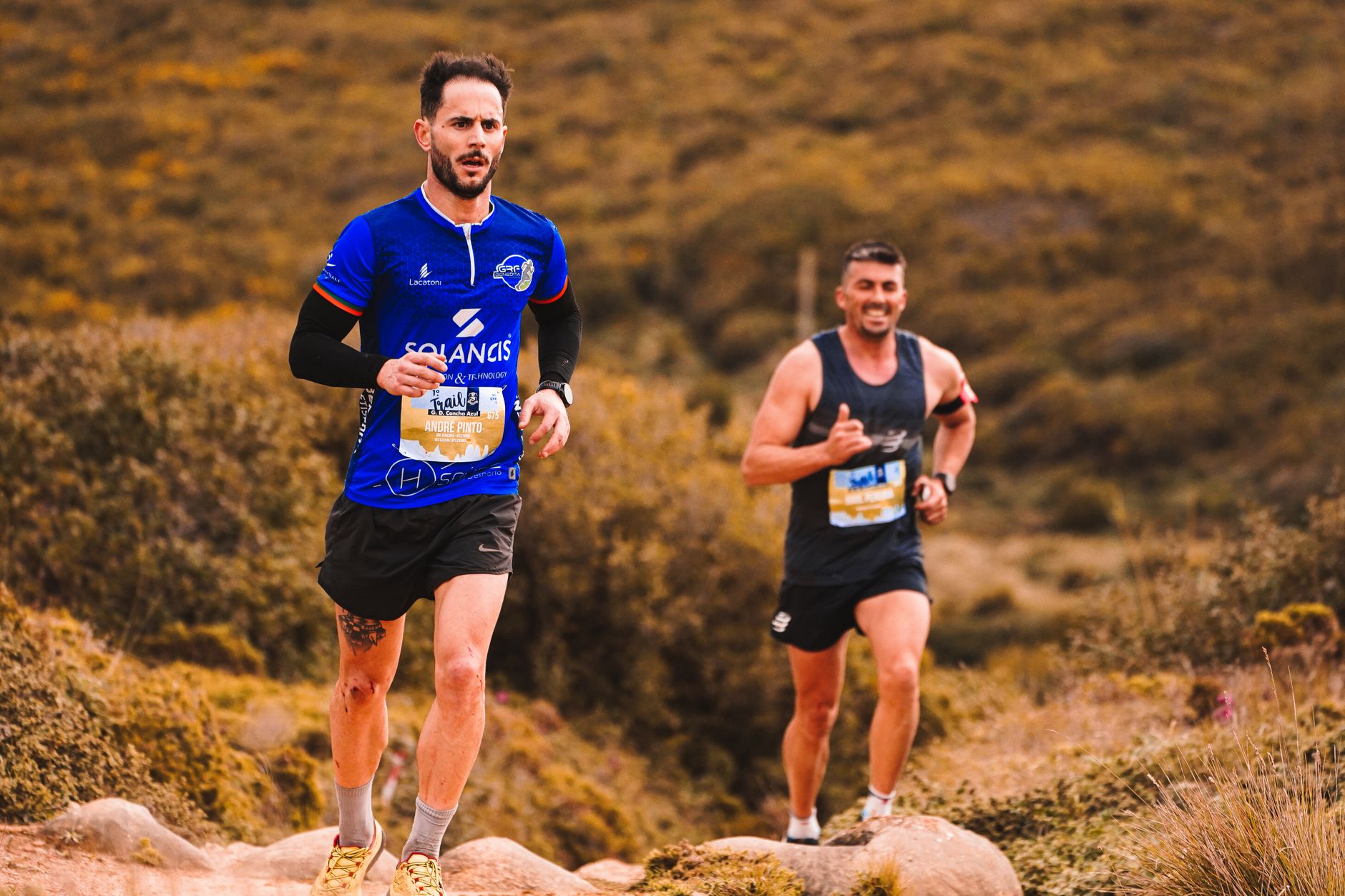
Transitioning from road to trail running requires a structured 4–6 week adaptation period in which you reduce weekly volume by 20–30%, shorten stride length by 8–12%, and progressively introduce technical terrain to allow ankle stabilizers, proprioceptive pathways, and eccentric quad strength to adapt. Research shows that trail surfaces recruit 25–30% more stabilizer muscle activation than flat pavement, increase ground contact time by 12–18 milliseconds, and demand significantly greater ankle range of motion—particularly the 15–20° of extra dorsiflexion required on technical descents. Rushing this transition is the leading cause of Achilles tendinopathy, ankle sprains, and quad-dominant delayed-onset muscle soreness in road runners making the switch.
Why does trail running demand different biomechanics than road running?
Trail running fundamentally alters the neuromuscular and mechanical demands placed on your body compared to road running, even when heart rate and perceived effort remain similar. On uneven terrain, your ankles must accommodate 15–20° more dorsiflexion during descents to clear roots and rocks, while simultaneously providing lateral stability on cambered singletrack. EMG studies from 2024–2025 demonstrate that stabilizer muscles—peroneals, posterior tibialis, and hip abductors—fire 25–30% more frequently on trails than roads to maintain balance and prevent ankle inversion.
Stride mechanics shift measurably: trail runners exhibit 8–12% shorter stride length and 12–18 milliseconds longer ground contact time to navigate obstacles and maintain control. This isn’t inefficiency—it’s adaptive strategy. Your foot spends more time gathering sensory information from unpredictable surfaces, which places novel loads on the plantar fascia and Achilles tendon. Technical descents create the most dramatic shift: eccentric quadriceps loading increases by approximately 23% compared to flat road running as your quads brake against gravity on each downhill step.
Proprioception—your body’s real-time spatial awareness—becomes a primary limiting factor. Your central nervous system must process terrain changes every 1–3 steps rather than every 50–100 steps on uniform pavement. This constant vigilance fatigues the neuromuscular system before cardiovascular capacity is reached, explaining why new trail runners often feel disproportionately exhausted despite slower paces. The adaptation window for these proprioceptive pathways is 3–4 weeks with consistent exposure; skipping this period invites compensatory patterns that cascade into overuse injuries.
What is the week-by-week road-to-trail transition timeline?
A safe road-to-trail transition follows a six-week progressive framework that respects tissue adaptation rates and neuromuscular learning curves. If you’re currently running 40 miles per week on roads, begin Week 1 at 28–32 total miles—a 20–30% volume reduction—replacing one easy road run with a flat, non-technical trail of 4–6 miles. Choose groomed rail-trails, wide dirt paths, or fire roads for this initial exposure. Focus entirely on feel: your goal is to let ankles and feet experience variable surfaces without the compounding stress of elevation or technical obstacles. Monitor for soreness in peroneals (outside lower leg) and plantar fascia in the 24–48 hours post-run.
Weeks 3–4 introduce moderate elevation and a second weekly trail session. Progress to rolling singletrack with 200–400 feet of gain per run, maintaining approximately 80% of your previous road volume (32 miles if starting from 40). Your two trail runs might be a midweek 5-miler with gentle hills and a weekend 8-miler on more sustained climbs. Continue one road-based run to preserve turnover and familiar pacing. Watch for persistent quad soreness beyond 48 hours—this signals insufficient eccentric strength for the descents you’re attempting.
Weeks 5–6 mark the shift to full trail volume if adaptation signs are positive: no lingering ankle tenderness, quad DOMS resolved within 36 hours, and confident foot placement on moderate technical terrain. Introduce roots, rocks, and steeper gradients (8–12%). You can now run 90–100% of your previous road mileage on trails if desired, or maintain a hybrid schedule. Poor adaptation signals—sharp ankle pain, persistent Achilles tightness, or compensatory IT band soreness—mean you’ve progressed terrain difficulty or volume too quickly. Drop back one week in the protocol rather than pushing through.
How should I adjust pace and effort expectations on trails?
Trail running slows your pace by 15–40% compared to equivalent-effort road running, depending on terrain technicality, elevation profile, and surface conditions. An 8:00-per-mile easy road pace typically becomes 9:30–10:30 per mile on rolling singletrack with moderate roots and rocks; highly technical trails with stream crossings and boulder fields can push that to 11:00–12:00 per mile at the same cardiovascular load. This pace variability makes GPS splits nearly useless for pacing—heart rate zones and rate of perceived exertion (RPE) become your primary training governors.
Keep your heart rate zones identical to road training during the transition. If your easy road runs sit at 65–75% max HR, maintain that same range on trails even as pace drops significantly. Your cardiovascular system doesn’t distinguish between road and trail—oxygen demand at Zone 2 effort remains consistent. The muscular and proprioceptive systems, however, are under novel stress, so honoring HR zones prevents you from inadvertently overreaching while chasing arbitrary pace targets. Use the “talk test” as backup: easy trail runs should allow full-sentence conversation without gasping.
Uphill power hiking becomes essential strategy, not defeat. On sustained gradients steeper than 12–15%, most runners achieve faster uphill progress and lower overall fatigue by hiking with purpose—short, quick steps, hands on knees or using poles—than by forcing a shuffle-jog. Elite trail runners routinely hike grades above 15–20% during races. Calculate your personal hiking threshold during Week 3–4 of the transition: time yourself running versus power hiking a 0.25-mile segment at 12%, 15%, and 18% grade; adopt hiking when it’s within 10% of running speed. This preserves quad strength for the descents where running form matters most.
Which strength and mobility exercises prevent trail-specific injuries?
Six targeted exercises address the biomechanical demands unique to trail running and reduce injury risk by up to 40% during the first eight weeks of transition. Perform this circuit 2–3 times per week on non-consecutive days, ideally after easy runs when muscles are warm but not fatigued.
- Single-leg Romanian deadlifts (3 sets of 8–10 per leg): These build eccentric hamstring and glute strength essential for controlling downhill braking. Hold a light dumbbell (10–20 lbs to start), hinge at the hip while extending one leg behind you, and lower the weight to mid-shin. This mimics the posterior chain loading of technical descents.
- Ankle alphabet and CARs (2 sets per ankle, full alphabet): Trace each letter of the alphabet with your big toe while seated, moving only at the ankle joint. This expands the 15–20° extra dorsiflexion and lateral range of motion trails demand. Progress to standing versions in Weeks 4–6.
- Lateral band walks (3 sets of 15 steps each direction): Place a resistance band around your thighs just above the knees. Step laterally while maintaining a quarter-squat, keeping tension on the band. This strengthens hip abductors (gluteus medius specifically) that stabilize your pelvis on cambered trails and prevent IT band compensation.
- Eccentric calf raises off a step (3 sets of 12–15): Stand on a step with heels hanging off, rise onto toes with both feet, then lower slowly on one foot over 3–4 seconds. This builds Achilles resilience for the increased ground contact time and ankle loading trails impose.
- Box step-downs (3 sets of 10 per leg, 6-inch box): Step down slowly from a low box, controlling the descent entirely with the standing leg’s quad. This replicates the eccentric quad control needed on every technical downhill step, addressing the 23% loading increase research identifies.
- BOSU or pillow single-leg balance (3 sets of 30–60 seconds per leg): Stand on one leg on an unstable surface, eyes open initially, progressing to eyes closed by Week 4. This accelerates proprioceptive adaptation, training the reactive stabilization trails demand every 1–3 steps.
What gear and footwear changes does the transition require?
Trail-specific running shoes become necessary once you progress beyond groomed, non-technical paths in Weeks 3–4. Look for outsoles with 3–5mm lugs for grip on dirt, mud, and loose rock; 6–8mm lugs are overkill unless running in deep mud or snow. A rock plate—a thin plastic or carbon insert in the midsole—protects your feet on sharp, technical terrain common to rocky mountain trails but adds unnecessary weight and stiffness for softer woodland singletrack. Most trail shoes feature a 4–8mm heel-to-toe drop, similar to road trainers, though some runners prefer zero-drop models for better ground feel on technical sections.
Expect a wider toe box than road shoes; your feet swell more on long trail runs due to increased impact variability and duration. If you typically wear a size 10 road shoe, try a 10 or 10.5 trail shoe with your toes fully extended—you want 5–8mm of space ahead of your longest toe for downhill braking. Road shoes remain viable for rail-trails and wide fire roads with minimal elevation (under 100 feet per mile) during your first two weeks; this lets you test trail interest before investing $130–160 in dedicated footwear.
Decision matrix for first shoe purchase: If your local trails feature sustained rocky sections, roots crossing the path every 10–20 feet, or technical descents where you’re stepping onto protruding rocks, invest in trail shoes with a rock plate immediately. If trails are soft dirt, pine needles, or hard-packed doubletrack with gentle grades, standard trail shoes without a rock plate suffice and feel more nimble.
Hydration and safety gear scale with trail remoteness. Road runners accustomed to water fountains every 2–3 miles often underestimate trail logistics—carry a handheld bottle for runs under 90 minutes, a hydration vest for anything longer or in warm conditions. Gaiters (fabric sleeves covering the ankle–shoe interface) prevent trail debris from filling your shoes on dusty or gravelly paths. Trekking poles reduce quad loading by 20–25% on steep or prolonged descents, making them valuable for runners over 40 or those with previous knee issues; collapsible models stow easily when not needed. Download offline maps on your phone for unfamiliar trail systems—cellular service is unreliable, and getting lost adds unplanned mileage that sabotages your transition timeline.
Frequently Asked Questions
How much should I reduce my mileage when switching from road to trail running?
Reduce your weekly volume by 20–30% for the first two weeks of trail running. If you typically run 40 miles per week on roads, start with 28–32 trail miles. The increased muscular and connective tissue demands of uneven terrain, even at slower paces, require this buffer to prevent overuse injuries like Achilles tendinopathy and plantar fasciitis.
Why does trail running feel so much harder even when I’m running slower?
Trail running recruits 25–30% more stabilizer muscle activation due to uneven surfaces, increases ground contact time by 12–18 milliseconds, and demands continuous micro-adjustments in stride and foot placement. Your cardiovascular system works at similar intensity, but muscular and proprioceptive systems are under novel load. Heart rate and perceived exertion are better effort gauges than pace during the transition.
Can I do my speed workouts on trails as a new trail runner?
Postpone structured speed work on technical trails for 4–6 weeks while your ankles, feet, and proprioceptive pathways adapt. You can maintain one road-based interval session per week or run tempo efforts on smooth, non-technical fire roads. Once you can complete 60–90 minutes on moderate trails without next-day soreness, reintroduce hill repeats and fartleks on rolling terrain.
What are the most common injuries during a road-to-trail transition?
Ankle sprains, Achilles tendinopathy, and quad-dominant delayed-onset muscle soreness top the list, stemming from increased ankle range of motion, eccentric loading on descents, and unstable foot strikes. Peroneal tendinitis and plantar fasciitis also spike due to lateral foot pressures on cambered trails. Gradual volume progression and targeted ankle-strengthening exercises reduce injury risk by up to 40% in the first eight weeks.
Do I need trail-specific running shoes immediately or can I start in my road shoes?
You can start on non-technical, groomed trails—rail-trails, wide dirt paths with minimal elevation—in road shoes for the first 1–2 weeks to assess interest. Once progressing to singletrack with roots, rocks, or sustained climbs, invest in trail shoes with 3–5mm lugs, reinforced uppers, and a rock plate if your region has sharp, technical terrain. Road shoes lack the grip and protection needed for safe footing.
How long does it take to fully adapt from road running to trail running?
Expect 6–8 weeks for your musculoskeletal system to adapt to trail-specific demands if you follow a progressive volume and terrain plan. Proprioceptive adaptations—your ability to react to uneven ground—improve within 3–4 weeks. Full confidence on technical descents and sustained climbs may take 10–12 weeks. Rushing adaptation increases injury risk; honor soreness and fatigue signals, especially in ankles and quads.
Leave a Reply