

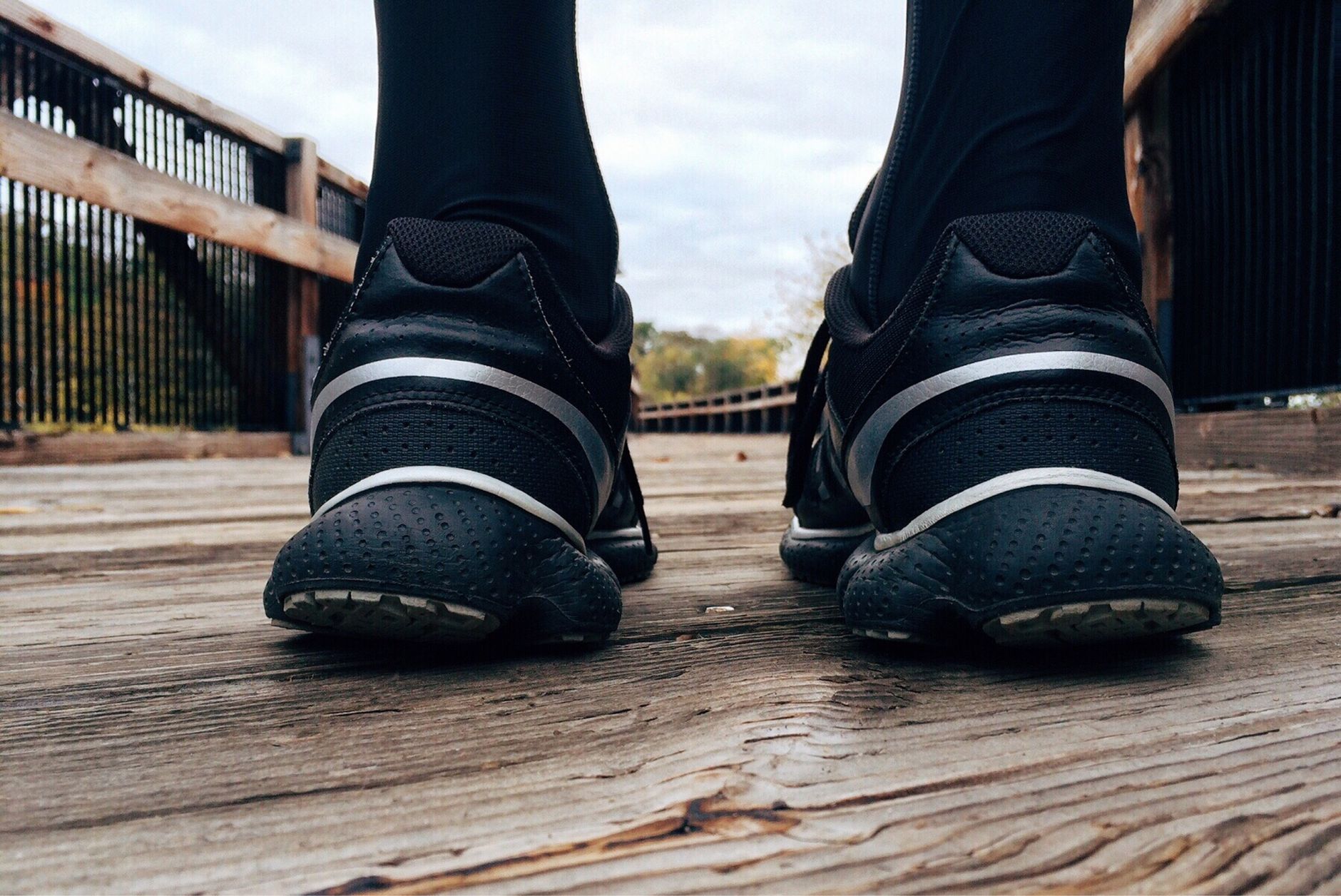
Foot strike pattern—whether you land on your heel, midfoot, or forefoot—affects vertical loading rate, ground contact time, and the distribution of impact forces through your lower limbs. Research shows that no single pattern universally prevents injury or improves speed; rearfoot strikers experience different loading profiles than forefoot strikers, each with distinct advantages and injury risks. What matters most for performance and injury prevention is matching your strike pattern to your training load, footwear, pace, and individual biomechanics rather than chasing a theoretical ideal.
What Are the Three Main Foot Strike Patterns in Running?
Runners land using one of three primary patterns: rearfoot strike (RFS), where the lateral heel makes initial contact; midfoot strike (MFS), where the heel and forefoot touch down simultaneously; and forefoot strike (FFS), where the metatarsal heads land first. Research from Hasegawa et al. (2007) in the Journal of Strength and Conditioning Research found that approximately 75% of recreational distance runners use rearfoot strike, 20% use midfoot, and just 5% use forefoot strike during steady-state running.
Elite marathoners show a similar distribution at slower training paces, but this shifts dramatically when race speeds exceed 3:45 per kilometer. At that threshold, many runners naturally transition toward midfoot or forefoot contact as cadence increases and ground contact time shrinks.
Rearfoot (Heel) Strike: The Majority Pattern
Rearfoot strike means landing on the lateral (outside) edge of your heel before rolling forward through the midfoot and toe-off. This pattern generates a higher vertical loading rate—typically 40 to 100 body weights per second—and a distinct impact transient peak visible on force plate recordings.
Ground contact time for rearfoot strikers averages around 250 milliseconds at easy paces. The pattern is most common among runners wearing traditional cushioned shoes with 8-12 mm heel-to-toe drop, and it tends to dominate during long, slow distance runs where economy and comfort take priority over speed.
Midfoot Strike: The Middle Ground
Midfoot strike involves near-simultaneous contact across both the heel and the ball of the foot, creating a flatter landing profile. This pattern reduces the impact transient peak seen in rearfoot striking while distributing forces more evenly across the foot.
Ground contact time for midfoot strikers typically falls between 220 and 240 milliseconds. Many runners shift toward this pattern naturally when they increase pace during tempo runs or race efforts, even if they default to rearfoot strike during easy mileage.
Forefoot Strike: The Sprinter’s Default
Forefoot strike means landing on the metatarsal heads (the balls of the feet) first, with the heel descending to touch the ground or hovering just above it during the stance phase. This pattern produces the lowest vertical loading rate—often 10 to 40 body weights per second—but places significantly higher eccentric demands on the calf muscles and Achilles tendon.
Ground contact time shortens to 200-220 milliseconds with forefoot strike. This pattern is nearly universal in sprinting, common among barefoot runners, and seen in some elite distance runners, particularly those racing 5K and 10K distances at sub-3:00/km pace.
Does Foot Strike Pattern Directly Improve Running Economy?
Foot strike pattern alone does not significantly improve running economy. A 2012 study by Gruber et al. in Medicine & Science in Sports & Exercise found no meaningful economy difference between habitual rearfoot strikers and forefoot strikers when each group ran at self-selected stride patterns and paces. When researchers forced habitual heel strikers to adopt forefoot mechanics, oxygen cost increased by 2-4% in the short term (Perl et al., 2012).
Running economy depends on a constellation of factors including cadence, vertical oscillation, elastic energy storage in tendons, and neuromuscular coordination. Changing strike pattern in isolation—without addressing these broader mechanical variables—rarely delivers measurable efficiency gains. In fact, the metabolic cost of adapting to an unfamiliar pattern often outweighs any theoretical benefit during the first several months.
If you’re chasing faster race times, focusing on training tips that target VO2 max, lactate threshold, and muscle-tendon stiffness will yield more reliable returns than obsessing over where your foot lands.
How Foot Strike Affects Ground Reaction Forces and Loading Rate
Rearfoot strike typically produces an impact transient spike—a sharp force peak reaching 1.5 to 3.0 times body weight within the first 50 milliseconds of ground contact. Forefoot strike eliminates or greatly reduces this transient spike by distributing load over a longer eccentric phase, engaging the calf and Achilles to decelerate the body more gradually.
Lieberman et al.’s landmark 2010 study in Nature compared barefoot habitual forefoot strikers in Kenya with shod rearfoot strikers and found that forefoot landing reduced the collision force magnitude by approximately 50%. However, total vertical impact peak—the maximum force your body experiences during stance—hovers around 2.5 times body weight regardless of strike pattern. The critical difference is the rate of loading, not the absolute magnitude.
Vertical Loading Rate: The Key Metric
Vertical loading rate measures how quickly force ramps up during initial contact. Rearfoot strikers experience loading rates of 40 to 100 body weights per second, while forefoot strikers see 10 to 40 body weights per second.
Research by Pohl et al. (2009) linked high loading rates to tibial stress fractures in female runners. But reducing loading rate by shifting to forefoot strike isn’t a free lunch—it transfers stress from the tibia to the Achilles tendon, calf muscles, and metatarsals. Injury risk doesn’t vanish; it relocates.
Ground Contact Time and Turnover
Forefoot strikers reduce ground contact time by 10 to 30 milliseconds compared to rearfoot strikers at the same pace. This shorter contact window can benefit speed during 5K to 10K efforts, where quick turnover and elastic rebound play larger roles.
At marathon pace, however, the advantage shrinks. Economy and fatigue resistance dominate performance over the final 10 kilometers, and the marginal gains from reduced contact time rarely offset the higher metabolic cost of maintaining forefoot mechanics for two-plus hours.
Foot Strike and Injury Risk: What the Research Actually Shows
No prospective study has proven that one foot strike pattern prevents all running injuries. The evidence instead suggests that each pattern shifts injury risk to different anatomical structures based on how forces are distributed during stance.
A 2012 study by Daoud et al. followed competitive cross-country runners over a season and found that habitual forefoot strikers experienced 2.6 times fewer repetitive stress injuries overall compared to rearfoot strikers. But forefoot strikers had higher rates of Achilles tendinopathy and calf strains. Kulmala et al. (2013) demonstrated that rearfoot strike increases patellofemoral joint reaction forces and knee extensor moments, explaining the higher prevalence of knee-related complaints among heel strikers.
Injury risk depends far more on training volume, load progression, tissue tolerance, and strength training for runners than on strike pattern alone. A runner who transitions from rearfoot to forefoot strike without building Achilles capacity or adjusting weekly mileage often trades knee pain for Achilles pain.
Injuries More Common in Rearfoot Strikers
Rearfoot strikers show elevated risk for patellofemoral pain syndrome, iliotibial band syndrome, and tibial stress fractures. The mechanism is straightforward: landing on the heel increases the braking impulse, which magnifies knee extensor moments and patellofemoral joint reaction forces. Higher vertical loading rates also transmit more rapid stress to the tibia, overwhelming the bone’s remodeling capacity in runners who ramp volume too quickly.
Injuries More Common in Forefoot Strikers
Forefoot strikers face higher rates of Achilles tendinopathy, gastrocnemius and soleus strains, and metatarsal stress fractures. The Achilles tendon and calf complex absorb the braking forces that the heel would otherwise handle, creating greater eccentric load during each stance phase. The metatarsal heads bear more direct compression, increasing fracture risk if bone density or foot strength lags behind training demands.
When Should Recreational Runners Consider Changing Their Foot Strike?
Consider changing your foot strike pattern in four evidence-based scenarios. First, if you experience chronic tibial or knee pain that persists despite reducing weekly volume and addressing footwear, a gradual shift toward midfoot or forefoot strike may reduce patellofemoral loading. Second, if you’re transitioning to minimalist or zero-drop footwear, adopting a more forward strike pattern helps distribute forces safely in the absence of heel cushioning. Third, during speed work at 5K race pace or faster, many runners naturally shift toward midfoot or forefoot strike to reduce ground contact time—this is a functional adaptation, not a forced change. Fourth, on steep downhill sections, a controlled forefoot landing can reduce braking forces and eccentric quad loading compared to heel striking.
Do not change strike pattern solely because a training partner, online forum, or shoe marketing campaign suggests one pattern is universally superior. The research does not support that claim, and forcing an unfamiliar pattern raises short-term injury risk.
A 6-Week Protocol for Safely Shifting Toward Midfoot or Forefoot Strike
Gradual adaptation is non-negotiable. Begin with weeks 1-2 by dedicating 10% of your weekly mileage to short barefoot or minimalist strides on grass or a track—400 to 800 meters per session, focusing on landing with your foot beneath your center of mass rather than reaching forward. This teaches proprioception without overloading tissues.
During weeks 3-4, add one easy run per week with a conscious midfoot cue, capping duration at 20 minutes. Monitor for calf soreness or Achilles tightness in the 24-48 hours following each session. If soreness exceeds mild tightness, hold the current volume for an additional week before progressing.
In weeks 5-6, extend one midfoot-focused run to 30 minutes while maintaining your other runs in your habitual pattern. Concurrent strength work is essential during this phase—complete 3 sets of 15 eccentric heel drops off a step and 3 sets of 20 single-leg calf raises twice per week. This protocol respects the 10% rule documented by van Gent et al. (2007) in the British Journal of Sports Medicine, which shows that weekly mileage increases above 10% sharply elevate injury risk.
Strength Work That Supports Forefoot Mechanics
Build load tolerance in the muscles and tendons that absorb impact during forefoot strike. Eccentric calf loading—lowering your heels off the edge of a step under control—strengthens the Achilles and soleus. Single-leg calf raises improve balance and plantarflexor endurance. Toe yoga, also called the short foot exercise, activates the intrinsic foot muscles that stabilize the arch. Tibialis anterior strengthening through resisted dorsiflexion (pulling your toes toward your shin against a resistance band) balances the anterior compartment.
Perform 3 sets of 12-15 repetitions per exercise, two to three days per week, on non-running days or after easy runs. Consistency matters more than intensity—these movements build resilience over weeks, not days.
Do Elite Runners Use a Specific Foot Strike Pattern?
Elite distance runners display no universal strike pattern. Hasegawa et al.’s analysis of marathon leaders found that approximately 75% used rearfoot strike at slower race paces, with a shift toward midfoot and forefoot patterns when pace exceeded 3:30 per kilometer. Eliud Kipchoge, who holds the marathon world record, uses rearfoot strike at marathon pace, while many 5K and 10K world record holders employ forefoot strike.
Footwear, race distance, individual limb mechanics, and even course terrain drive elite strike patterns more than any single “optimal” approach. The takeaway for recreational runners: elite performances validate the effectiveness of all three patterns when matched to context, pace, and biomechanics. Chasing an idealized strike pattern because a professional uses it ignores the decades of adaptation and tissue tolerance that elite athletes have built.
Footwear, Drop, and Foot Strike: How Shoe Design Shapes Landing
Traditional running shoes with 8-12 mm heel-to-toe drop elevate the heel relative to the forefoot, shifting your center of mass forward and encouraging rearfoot strike. The cushioned heel absorbs some of the impact transient, making heel landing mechanically feasible even on hard surfaces. Minimalist and zero-drop shoes (0-4 mm drop) remove this offset, placing the heel and forefoot at the same elevation and facilitating midfoot or forefoot patterns.
However, minimalist footwear does not force forefoot strike—many runners continue to heel strike in zero-drop shoes, which dramatically increases Achilles and calf load without the shock attenuation of a cushioned heel. Altman and Davis (2016) conducted a systematic review showing that switching to minimalist footwear without a gradual transition period increased Achilles tendon loading by 20-50%, leading to higher injury rates during the first three months.
If you plan to adopt minimalist shoes, follow the same 6-12 week protocol outlined above, treating the footwear change as inseparable from strike pattern adaptation.
Should You Focus on Foot Strike or Cadence and Vertical Oscillation?
Cadence and vertical oscillation have stronger research support for injury reduction and economy than foot strike pattern alone. Heiderscheit et al. (2011) demonstrated that increasing cadence by just 10% reduced knee loading by approximately 20%, without requiring runners to consciously alter their strike pattern. Most recreational runners benefit from targeting 170-180 steps per minute, which shortens stride length and reduces overstriding—a leading contributor to both impact forces and injury.
Vertical oscillation—how much your center of mass rises and falls with each stride—should stay below 10 centimeters for efficient running. Excessive bounce wastes energy fighting gravity and increases the impact magnitude when you land. Focus on “running quieter” by minimizing vertical displacement rather than fixating on whether your heel touches first.
Adopting injury prevention strategies that address these global metrics typically delivers faster results with lower injury risk than attempting to overhaul your foot strike. Once you’ve optimized cadence, vertical oscillation, and weekly load progression, then consider whether strike pattern changes might address residual issues.
Frequently Asked Questions
Is heel striking bad for runners?
Heel striking is not inherently bad—about 75% of recreational distance runners naturally land on their heel. It can increase knee and hip loading, which may contribute to certain injuries like patellofemoral pain or tibial stress fractures. However, no study proves heel striking causes more injuries overall. The key is managing training load, footwear, and individual biomechanics, not simply avoiding rearfoot contact.
Does forefoot striking make you faster?
Forefoot striking reduces ground contact time by 10-30 milliseconds, which can benefit speed at 5K to 10K paces. However, research shows no significant economy advantage for habitual forefoot strikers at marathon pace. Forcing a forefoot pattern when you’re a natural heel striker typically costs 2-4% more oxygen in the short term. Speed gains come from training adaptations—cadence, strength, and VO2 max—more than strike pattern alone.
How long does it take to change from heel strike to forefoot strike?
A safe transition takes 6-12 weeks of gradual volume progression. Start with 10% of weekly mileage in short, barefoot strides on grass during weeks 1-2. Add one easy 20-minute midfoot run per week in weeks 3-4, then extend to 30 minutes by week 6. Concurrent calf and Achilles strengthening—eccentric heel drops and single-leg calf raises—is essential to handle the increased plantarflexor load and prevent Achilles tendinopathy.
Can changing foot strike reduce knee pain?
Shifting from rearfoot to midfoot or forefoot strike can reduce patellofemoral joint reaction forces and knee extensor moments by 10-20%, which may relieve chronic knee pain in some runners. However, the trade-off is increased Achilles and calf loading. Before changing strike pattern, try reducing weekly mileage, adjusting cadence to 170-180 steps per minute, and addressing strength deficits in the hips and glutes—these interventions carry less injury risk.
Do minimalist shoes force you to forefoot strike?
Minimalist and zero-drop shoes make forefoot striking easier by removing the elevated heel cushion, but they don’t force it. Many runners still heel strike in minimalist footwear, which dramatically increases calf and Achilles load without the shock absorption. If you transition to minimalist shoes, adopt a gradual 6-12 week protocol with concurrent strength work and monitor for Achilles soreness. About 20-50% of runners experience Achilles issues during rapid minimalist transitions.
What foot strike do elite marathon runners use?
Elite marathoners show diverse foot strike patterns. Hasegawa’s analysis found that approximately 75% of marathon leaders use rearfoot strike at slower race paces, shifting toward midfoot or forefoot when pace exceeds 3:30 per kilometer. Eliud Kipchoge, the world record holder, uses rearfoot strike at marathon pace. There is no single ‘elite’ pattern—individual biomechanics, footwear, and race pace determine strike, not a universal rule.
Should I worry about my foot strike if I’m injury-free?
If you’re injury-free and meeting your training goals, there’s no evidence-based reason to change your foot strike pattern. The research shows that forcing a new pattern increases short-term injury risk and energy cost. Instead, focus on proven injury-prevention strategies: maintain a cadence of 170-180 steps per minute, limit weekly mileage increases to 10%, incorporate strength training twice per week, and ensure adequate recovery between hard efforts.
Leave a Reply