

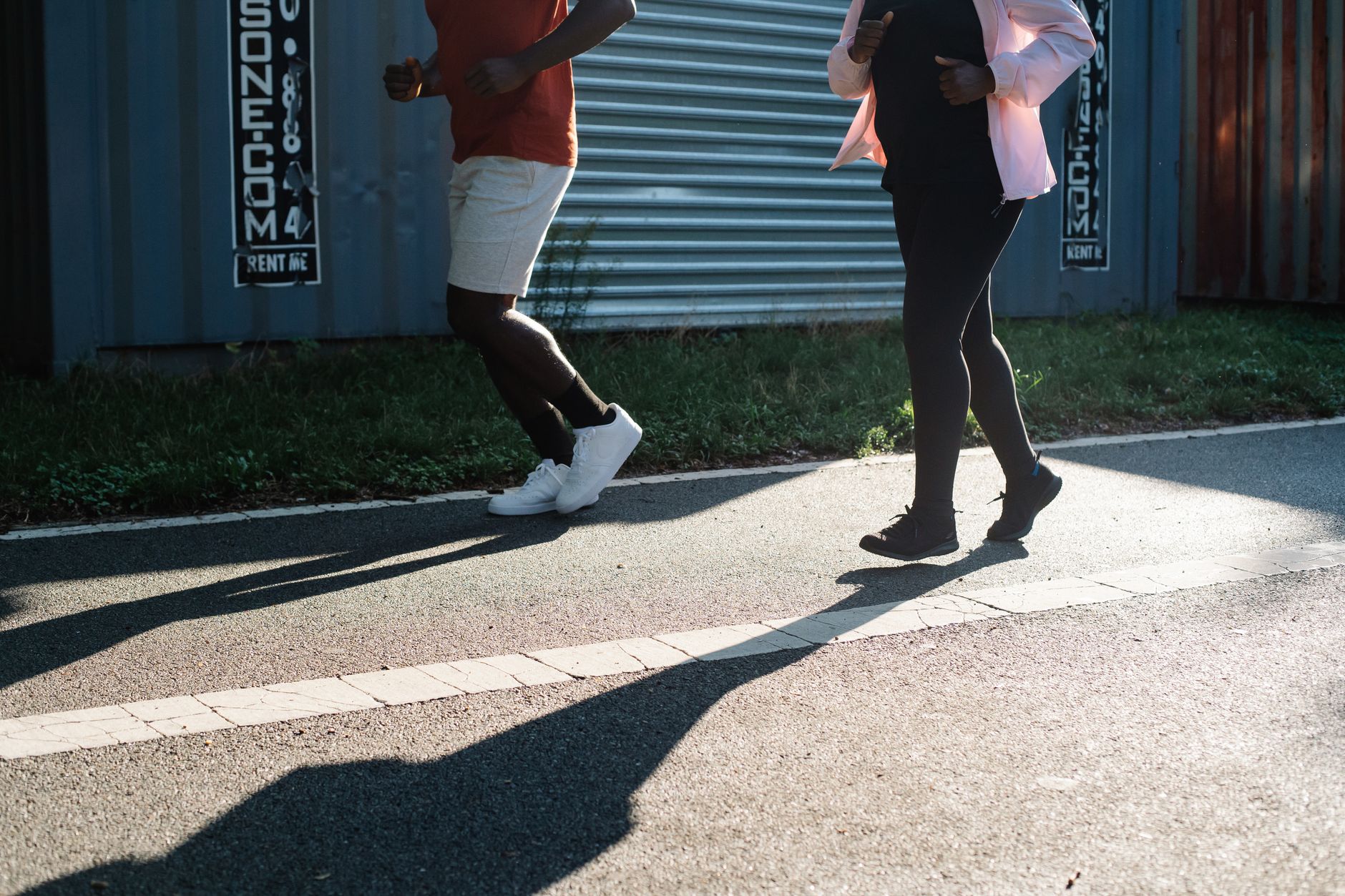
The most effective couch to 5K training plan for beginners uses run-walk intervals over 8 weeks, starting with 60-second running bouts and progressively building to continuous 30-minute efforts while limiting weekly mileage increases to 10-15% to minimize injury risk. This structured approach allows your cardiovascular system to adapt while giving connective tissues—tendons, ligaments, and bones—the time they need to handle repetitive ground-impact forces that reach 2.5 times your body weight with every stride.
What makes a couch to 5K training plan effective?
An effective couch to 5K plan combines three evidence-based principles: run-walk intervals that protect undertrained connective tissue, progressive overload capped at 10-15% weekly increases, and a minimum frequency of three sessions per week spread over 8 to 12 weeks. Research on beginner runners consistently shows injury rates between 30% and 50% in the first year of training, but structured programs using these principles cut that risk nearly in half.
The plan must balance aerobic stimulus with musculoskeletal capacity. Your heart and lungs adapt within days to weeks, but tendons and ligaments require months to build the cross-linked collagen structures that withstand running’s repetitive stress. A well-designed program respects this gap by using walk breaks to distribute load and by progressing volume conservatively enough that tissue remodeling keeps pace with cardiovascular gains.
Three sessions per week represents the minimum frequency to drive adaptation without triggering overuse injuries. Running on alternate days allows 48 to 72 hours between sessions—the window during which muscle protein synthesis peaks and microdamage to connective tissue resolves. Plans shorter than 8 weeks compress adaptation too aggressively for most sedentary individuals, while timelines beyond 12 weeks work well for those over 40, carrying extra weight, or managing prior injury history.
Run-walk intervals build aerobic capacity without overloading connective tissue
Run-walk intervals—alternating timed running segments with walking recovery—deliver the aerobic training stimulus beginners need while keeping peak musculoskeletal stress below injury thresholds. The Galloway method, developed by Olympian Jeff Galloway, structures sessions as repeating cycles: one minute of running followed by two minutes of walking in early weeks, progressing toward longer running intervals as adaptation occurs.
This approach works because tendons and ligaments adapt three to four times slower than cardiovascular tissue. A sedentary individual can improve VO2max—the measure of aerobic capacity—by 15-20% within six weeks of training, but tendon stiffness and collagen cross-linking require 12 to 16 weeks of progressive loading. Walk breaks distribute ground reaction forces across more strides at lower individual peak loads, reducing cumulative stress on Achilles tendons, plantar fascia, and tibial bone.
Starting ratios typically follow a 1:2 or 1:3 pattern—one minute of running for every two to three minutes of walking. Even at these modest intervals, total time on feet builds quickly. A session with eight cycles of one minute running and two minutes walking delivers 24 minutes of activity and eight minutes of actual running, enough to stimulate mitochondrial biogenesis and capillary density improvements without overwhelming untrained connective tissue.
Progressive loading: why the 10% rule matters for new runners
The 10% rule—limiting weekly running volume increases to no more than 10-15% of the previous week’s total—emerges from biomechanics research on stress fractures, Achilles tendinopathy, and tibial stress syndrome. When weekly volume jumps exceed 15-20%, injury risk increases exponentially, particularly in runners with fewer than six months of consistent training.
Bone adapts to mechanical load through a process called Wolff’s Law, where osteoblast activity increases along stress vectors. This remodeling requires 8 to 12 weeks to produce measurable increases in bone mineral density. Jump volume too quickly, and microdamage accumulates faster than bone can repair itself, leading to stress reactions and eventual fractures. The same principle applies to tendon collagen remodeling, which peaks 72 hours post-exercise but requires weeks of accumulated sessions to produce structural changes.
A concrete example: progressing from six total minutes of running in week one (three sessions of eight one-minute intervals) to 30 continuous minutes by week eight represents a 400% total increase but achieves it through incremental steps. Week two adds two minutes (33% increase, acceptable given the low absolute volume). Week three adds two more (25% increase). By week five, when total running time reaches 15 minutes, increases drop to 2-3 minutes per week (13-20%), and by week seven, the final jump to continuous running adds just five minutes (16%) before the week-eight consolidation at 30 minutes.
The 8-week couch to 5K blueprint: week-by-week structure
This 8-week progression uses run-walk intervals to build from zero running to a continuous 30-minute effort, with three sessions per week and strategic rest days. Each week includes 20 to 35 minutes of total session time, progressing both the length of running intervals and the ratio of running to walking. The plan assumes you can walk comfortably for 30 minutes and have no current injuries requiring modification.
Week 1: Three sessions of 8 × (1:00 run / 2:00 walk). Total running per session: 8 minutes. Total session time: 24 minutes.
Week 2: Three sessions of 8 × (1:30 run / 2:00 walk). Total running per session: 12 minutes. Total session time: 28 minutes.
Week 3: Three sessions of 6 × (2:00 run / 2:00 walk). Total running per session: 12 minutes. Total session time: 24 minutes.
Week 4: Three sessions of 5 × (3:00 run / 1:30 walk). Total running per session: 15 minutes. Total session time: 22.5 minutes.
Week 5: Three sessions of 4 × (5:00 run / 1:00 walk). Total running per session: 20 minutes. Total session time: 24 minutes.
Week 6: Three sessions of 3 × (8:00 run / 1:00 walk). Total running per session: 24 minutes. Total session time: 27 minutes.
Week 7: Three sessions of 2 × (12:00 run / 1:00 walk). Total running per session: 24 minutes. Total session time: 26 minutes.
Week 8: Three sessions of 1 × 30:00 continuous run. Total running per session: 30 minutes.
Schedule sessions on non-consecutive days—Monday, Wednesday, Friday or Tuesday, Thursday, Saturday work well. Non-running days should include at least one complete rest day and optional cross-training (cycling, swimming, walking) on others.
Weeks 1-3: Establishing the run-walk rhythm
Weeks one through three focus on neuromuscular patterning and establishing the run-walk rhythm without accumulating fatigue. Your effort during running intervals should feel conversational—you can speak full sentences without gasping. This corresponds to 60-70% of maximum heart rate, or what exercise physiologists call Zone 2. Most beginners run 30-60 seconds per mile too fast in these early weeks, which increases perceived effort and injury risk without accelerating adaptation.
During these first three weeks, expect mild muscle soreness 24 to 48 hours after sessions (delayed onset muscle soreness, or DOMS), particularly in calves, quadriceps, and hip flexors. This is normal adaptation discomfort. You may also notice foot awareness or mild plantar fascia tension as arches adjust to load. These sensations should diminish by session three of each week and resolve completely within 48 hours.
If using new running shoes, break them in on walks before your first running session—despite marketing claims, no break-in period exists for modern running shoes, but your feet need time to adapt to different support patterns. Check that shoes have adequate toe-box room (thumb-width between longest toe and shoe end) and that you’re not gripping with your toes during running intervals, which creates unnecessary forefoot tension.
Pay attention to running form basics without overthinking mechanics: maintain an upright posture with a slight forward lean from the ankles (not the waist), land with your foot beneath your hip rather than reaching forward, and aim for a cadence around 160-170 steps per minute. Don’t worry about perfecting these elements—neuromuscular coordination improves automatically as volume accumulates.
Weeks 4-6: Lengthening running intervals and reducing walk breaks
Weeks four through six shift the run-to-walk ratio significantly, progressing from 2:1 (three minutes running to 1.5 minutes walking) to nearly 8:1 by week six. This middle phase builds the continuous running capacity that allows the final transition to unbroken efforts. The jump to five-minute intervals in week five often feels like the program’s first major challenge—many beginners report this as the psychological turning point where they begin to identify as “a runner.”
You may add an optional fourth easy session during these weeks if you’re recovering well, but keep it conservative: no more than 15 minutes total time with generous walk breaks (4 × 2:00 run / 2:00 walk). The goal is to accumulate easy aerobic volume without pushing into the 15-20% weekly increase danger zone. Most runners should stick with three sessions and use the extra day for strength exercises that transfer to running performance.
Introduce basic biomechanical cues during these weeks: experiment with cadence by counting steps for 30 seconds (aim for 40-45 on one leg, meaning 80-90 total), which typically reduces overstriding and impact forces. Notice whether you’re running with relaxed shoulders or creeping tension into your upper traps—if you can’t shake out your arms loosely during walk breaks, you’re carrying unnecessary tension that wastes energy and promotes fatigue.
Week six’s three eight-minute intervals represent the longest sustained running efforts so far. Resist the urge to push pace during these—your breathing should remain controlled enough for conversation throughout each interval. If you find yourself gasping in the final two minutes, you started too fast. Walk breaks are still working breaks during this phase; use them to bring heart rate and breathing fully under control before the next running interval.
Weeks 7-8: Transitioning to continuous running
Weeks seven and eight complete the transition to continuous running, first with two 12-minute efforts separated by a one-minute walk (week seven), then a single 30-minute unbroken run (week eight). The week-seven structure serves as a rehearsal for continuous running while providing a brief recovery point that many runners find psychologically helpful—knowing a walk break exists at the halfway mark often reduces anticipatory anxiety about the full continuous effort.
For your first continuous 30-minute run in week eight, practice negative-split pacing: start conservatively for the first 10 minutes, settle into your sustainable rhythm for the middle 10 minutes, and allow a natural increase in pace for the final 10 minutes if you feel strong. This pacing pattern teaches the effort distribution you’ll use in 5K racing and prevents the common beginner mistake of starting too fast and struggling to finish.
After completing week eight, consolidate with two additional weeks at 30 minutes continuous before progressing further or racing. This consolidation phase cements adaptations and provides a physiological buffer before increasing volume or intensity. Schedule your first 5K race for week 10 or 11—this gives you time to practice race-morning logistics (nutrition, warmup routine, bathroom timing) during regular training sessions before adding event-day variables.
If you plan to race, implement a three-day micro-taper: reduce volume by 30-40% in the three days before the race (a 15-minute easy run three days out, full rest or 10-minute walk two days out, 10-minute easy jog with three 20-second strides the day before). This brief reduction allows glycogen supercompensation and reduces residual fatigue without compromising fitness.
How to choose your training intensity: the talk test vs. heart rate zones
The talk test provides the most accessible and accurate intensity guide for beginners: you should be able to speak full sentences during running intervals without gasping or pausing mid-sentence for breath. This conversational pace corresponds to approximately 60-70% of maximum heart rate, which falls within Zone 2 of a five-zone training model—the intensity that maximizes mitochondrial biogenesis and aerobic enzyme development while minimizing stress hormone response and muscle damage.
If you have a heart rate monitor or fitness watch, you can optionally track Zone 2 boundaries using the simple formula: (220 – your age) × 0.6 to 0.7 = your Zone 2 range. For a 35-year-old, this yields 111-130 beats per minute. However, individual variation in maximum heart rate can reach ±10-12 beats per minute, making heart rate zones less reliable than perceived exertion for untrained individuals. The talk test auto-calibrates to your current fitness and daily variables like sleep quality, hydration, and environmental temperature.
Beginners should prioritize feel over pace during the couch to 5K program. Pace varies enormously based on terrain, temperature, wind, fatigue, and hydration status—your sustainable conversational pace might range from 11:00 per mile to 15:00 per mile depending on these factors. Chasing arbitrary pace targets (often borrowed from others’ training or online calculators) drives intensity too high, compromising recovery and increasing injury risk without accelerating adaptation.
Use rating of perceived exertion (RPE) on a 1-10 scale if you want a numerical framework: running intervals should feel like 4-6 out of 10, where 1 is sitting still and 10 is maximum sustainable effort for 30 seconds. If you’re above 7 during early-week sessions, you’re working too hard. Save harder efforts for week eight and beyond, after your aerobic base is established.
Injury prevention essentials for couch to 5K runners
The three most common beginner running injuries are shin splints (medial tibial stress syndrome), plantar fasciitis, and patellofemoral pain syndrome (runner’s knee), with incidence rates of 15%, 10%, and 13% respectively in first-year runners. These overuse injuries share a common mechanism: tissue stress accumulates faster than the body can adapt. Prevention relies on four pillars—appropriate footwear, progressive loading (already built into the plan), supplemental strength training, and attention to warning signs.
Replace running shoes every 300-500 miles, which for most couch to 5K runners means after completing the program and continuing for another 12 to 16 weeks. Cushioning compounds break down with repetitive compression cycles even when the upper and outsole show minimal wear. Consider visiting a specialty running store for gait analysis if you have prior injury history or significant biomechanical concerns (severe overpronation, prior ankle injuries, significant leg-length discrepancy).
Vary running surfaces when possible to distribute stress patterns. Concrete sidewalks transfer the highest impact forces, asphalt roads slightly less, and dirt trails or synthetic tracks the least. If all your running occurs on concrete, consider shifting one weekly session to a local track or park trail. This variation changes loading angles on tendons and ligaments just enough to reduce repetitive strain.
Strength training twice weekly reduces running injury risk by 30-40% in research studies, with particularly strong evidence for eccentric calf work (Achilles health) and hip strengthening (IT band syndrome and runner’s knee). Dedicate 15-20 minutes after easy run days or on complete rest days to targeted exercises rather than attempting separate gym sessions—consistency matters more than volume for injury prevention strength work.
Three strength exercises that reduce injury risk by up to 40%
Research on injury prevention in runners consistently identifies three movement patterns that address the most common weak links: hip stability and abduction strength, eccentric calf and Achilles capacity, and single-leg balance and control. These exercises require minimal equipment and take 12-15 minutes total when performed twice weekly on non-consecutive days.
Single-leg deadlift (hip and posterior chain): Stand on one leg with slight knee bend, hinge forward at the hips while extending the opposite leg behind you for balance, reach toward the ground with both hands, then return to standing by driving through the standing heel and contracting the glute. Perform 2 sets of 10-12 reps per leg. This exercise builds hip stability and eccentric hamstring control that protects knees and prevents IT band friction syndrome. Focus on maintaining level hips throughout the movement rather than achieving maximum depth.
Lateral band walk (hip abduction): Place a resistance band loop around your legs just above the knees, assume a quarter-squat position with feet shoulder-width apart, step laterally 10-12 steps in one direction while maintaining band tension and squat depth, then return. Perform 2 sets in each direction. Hip abductor weakness—particularly in gluteus medius—contributes to knee valgus (inward collapse) during running, which loads the IT band and lateral knee structures excessively. This exercise directly strengthens the stabilizers that prevent that collapse.
Eccentric heel drop (calf and Achilles): Stand with the balls of your feet on a stair edge or curb, rise onto your toes on both feet, shift weight entirely onto one foot, then slowly lower your heel below the level of the step over a 3-5 second count. Perform 2 sets of 12-15 reps per leg. Eccentric loading—the controlled lengthening phase—stimulates Achilles collagen remodeling more effectively than concentric calf raises and has strong evidence for preventing Achilles tendinopathy in runners. Keep the lowering phase slow and controlled.
Perform these exercises after your run-walk sessions when muscles are warm, or on complete rest days as a standalone routine. Progress by adding light dumbbell weight to the single-leg deadlift (5-10 pounds), using a heavier resistance band for lateral walks, or eventually performing heel drops with a weighted vest or backpack.
Recognizing the difference between adaptation discomfort and injury
Delayed onset muscle soreness (DOMS) typically appears 24-48 hours after a training session, feels like diffuse muscle aching or stiffness, and improves with movement and warmup. This is normal adaptation discomfort. True injury pain tends to be sharp or localized to a specific structure (tendon, bone, joint), worsens rather than improves with activity, and persists beyond 48 hours even with rest.
Apply the 48-hour rule: if pain hasn’t improved after two full rest days, consult a healthcare professional with running injury experience—ideally a physical therapist or sports medicine physician. Trying to “run through” pain that meets injury criteria increases recovery time exponentially and can convert minor tissue irritation into structural damage requiring weeks or months of rest.
When in doubt, skip a session or modify it rather than pushing through questionable pain. Drop back to the previous week’s intervals or reduce total session time by 30% if you’re experiencing unusual muscle soreness or minor joint discomfort. One missed session costs you three days; a stress fracture or tendinopathy costs you 6-12 weeks. The progression built into this plan includes enough buffer that repeating a single week has zero impact on your ability to reach 30 minutes of continuous running.
Warning signs that warrant immediate medical evaluation include sharp pain that stops you mid-stride, joint swelling that persists more than a few hours post-run, pain that wakes you at night, and pain that changes your gait pattern or forces you to limp. Early intervention for these symptoms typically means 1-2 weeks of modified activity; delayed intervention often means 8-12 weeks of complete rest.
What to do after completing your first 5K: three post-race pathways
After completing your first 5K race or continuous 30-minute training run, choose one of three progressive pathways based on your goals and how your body responded to the couch to 5K program. Most runners benefit from spending 4-6 weeks consolidating at the 5K distance before introducing new variables like increased volume or intensity.
Path 1: Build your aerobic base (consolidation). Continue running three to four times weekly at 20-30 minutes per session for 4-6 weeks, gradually increasing total weekly volume toward 20-25 miles by adding a fourth easy day or extending one session to 35-40 minutes. This extended base-building phase improves mitochondrial density and running economy while reinforcing biomechanical patterns. Runners who consolidate before progressing typically experience lower injury rates when they eventually add speed work or longer distances.
Path 2: Train for 10K (volume progression). After a 2-week recovery period following your first 5K, begin a 12-week 10K program that extends long-run distance progressively from 30 minutes to 60 minutes while maintaining two weekly shorter runs. Follow the same 10% weekly volume increase guideline, which typically means adding 5 minutes to your weekly long run every other week. Most 10K training peaks around 25-30 miles per week for recreational runners.
Path 3: Improve your 5K time (intensity progression). If you enjoyed the 5K distance and want to run it faster, spend 4-6 weeks building base volume to 15-18 miles per week, then introduce one quality session weekly—either tempo runs at comfortably hard effort (7-8 out of 10 RPE) for 15-20 minutes, or four to six 60-90 second strides at 5K race pace with full recovery between efforts. Keep your other two weekly runs easy. This approach works particularly well for competitive personalities who want to see measurable time improvements.
Regardless of pathway, resist the temptation to add both volume and intensity simultaneously—this violates progressive overload principles and increases injury risk. Add one variable at a time over 6-8 week blocks, then consolidate before introducing the next progression.
Common couch to 5K mistakes and how to avoid them
Seventy percent of beginner runners start their running intervals too fast, pushing into Zone 3 or Zone 4 effort (7-8 out of 10 RPE) when they should be staying at 4-6 out of 10. This premature intensity accumulates fatigue that doesn’t improve adaptation speed—your cardiovascular system develops just as effectively at conversational pace—but does increase musculoskeletal stress and injury risk. Use the talk test religiously during early weeks: if you can’t speak full sentences, slow down.
Skipping rest days increases injury risk by 2.3 times according to research on novice runners. The temptation to run consecutive days often peaks around weeks 3-5 when initial soreness subsides and running starts to feel easier. Your cardiovascular system may feel ready for daily running, but your tendons and bones are still adapting. Honor the 48-hour recovery window between sessions during your first three months of running.
Inadequate or inappropriate footwear contributes to 30-40% of beginner injuries. Visit a specialty running store for gait analysis if possible, particularly if you have known biomechanical issues (significant overpronation, prior ankle injuries, high or low arches). Running shoes should feel comfortable immediately—there is no break-in period—and should be replaced every 300-500 miles. Don’t rely on athletic shoes designed for cross-training or gym work; running-specific shoes are engineered for repetitive forward motion rather than lateral movements.
Comparing your pace to others creates unnecessary pressure and often drives unsustainable intensity. Individual variation in VO2max adaptation ranges from 20-40%, meaning one runner might naturally progress 30% faster than another despite identical training. Your current pace reflects your starting point, genetics, biomechanics, body composition, and training history—none of which change by running faster than your physiology supports. Focus on the subjective experience of conversational pace rather than pace-per-mile numbers.
Neglecting strength training and mobility work leaves common weak links unaddressed. Hip abductor weakness, calf and Achilles inflexibility, and poor single-leg balance contribute to the majority of beginner running injuries. Dedicate 15-20 minutes twice weekly to the three exercises outlined earlier—single-leg deadlifts, lateral band walks, and eccentric heel drops. This minimal time investment reduces injury risk by 30-40% and improves running economy as movement patterns become more efficient.
Frequently Asked Questions
How long does it take to go from couch to 5K?
Most evidence-based couch to 5K plans span 8 to 12 weeks, with three running sessions per week. The 8-week timeline works for individuals with some baseline activity, while 12 weeks allows more gradual adaptation for completely sedentary beginners or those with prior injury history. Progression speed depends on individual recovery capacity, age, and adherence to the 10-15% weekly volume increase guideline.
Should I run every day on a couch to 5K plan?
No. Beginners should run three to four days per week maximum, with at least one full rest day between running sessions. Tendons, ligaments, and bones adapt three to four times slower than the cardiovascular system, and daily running in untrained individuals increases injury risk by over 200% compared to alternate-day schedules. Use non-running days for optional cross-training like cycling or swimming, or complete rest.
What is the run-walk method and why does it work for beginners?
The run-walk method alternates timed running intervals with walking recovery periods, such as one minute running followed by two minutes walking. This approach allows beginners to accumulate aerobic training stimulus while keeping musculoskeletal stress below injury thresholds. Research shows run-walk participants complete couch to 5K programs at rates 30-40% higher than those attempting continuous running from day one, with significantly lower dropout due to pain or overuse injuries.
How do I know if I’m running too fast as a beginner?
Use the talk test: you should be able to speak full sentences without gasping during your running intervals. This corresponds to roughly 60-70% of maximum heart rate, or Zone 2 effort. If you can only manage one or two words at a time, you’re running too fast. Most beginners run 30-60 seconds per mile faster than optimal in early weeks, which increases fatigue and injury risk without improving adaptation speed.
When should I buy running shoes for couch to 5K training?
Invest in proper running shoes before your first session. Visit a specialty running store for gait analysis if possible, focusing on shoes with adequate cushioning and appropriate support for your foot strike pattern. Shoes should feel comfortable immediately—there is no break-in period for modern running shoes. Replace them every 300 to 500 miles, which for most couch to 5K runners means after completing the program and continuing for another 12 to 16 weeks.
Can I do couch to 5K if I’m overweight or over 40?
Yes, but you may benefit from a more conservative 12-week plan and extra attention to strength training and recovery. Individuals over 40 or carrying extra weight experience higher ground reaction forces (up to 2.5 times body weight per stride) and may need longer adaptation windows. Consider adding a fourth week at each plateau before progressing intervals, incorporate two strength sessions weekly focusing on hips and calves, and prioritize softer running surfaces like trails or tracks over concrete when possible.
What should I do if I miss a week of my couch to 5K plan?
Return to the last fully completed week rather than picking up where you left off. Fitness declines are minimal in the first 10 days, but musculoskeletal readiness—especially tendon stiffness and neuromuscular coordination—degrades faster. Repeating one week costs you seven days but reduces injury risk substantially. If you miss two or more weeks, step back two weeks in the program. Consistency matters more than speed of progression for long-term running success.
Leave a Reply