

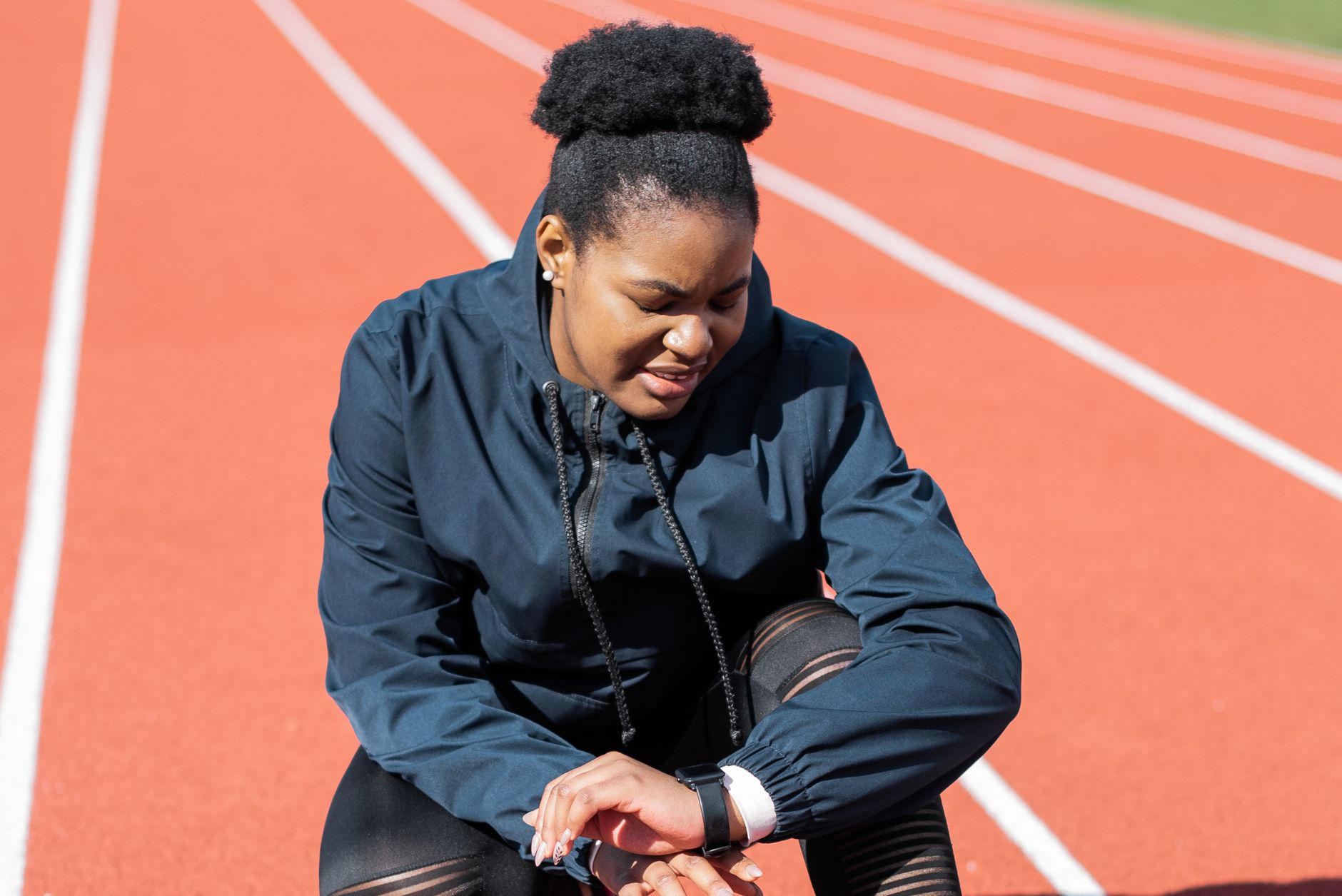
The Garmin Forerunner 265, COROS PACE 3, and Polar Vantage V3 lead the 2026 field for cadence-tracking accuracy, each delivering wrist-based optical sensors validated within ±2 steps per minute of footpod standards in lab tests. Real-time stride-rate alerts, post-run trend analysis, and optional Running Dynamics Pod integration make these three models the smartest tools for recreational and competitive runners refining form without a coach. Below, we break down why cadence matters, how modern watches measure it, and which device fits your training goals.
Why cadence tracking matters for runners in 2026
Optimal cadence for most recreational runners falls between 170 and 190 steps per minute, a range that reduces ground-reaction forces per stride and lowers injury risk. A 2023 meta-analysis in the British Journal of Sports Medicine found that increasing stride rate by just 5–10 percent above a runner’s natural baseline significantly decreased tibial stress and patellofemoral load—two primary drivers of shin splints and runner’s knee. Real-time feedback from a watch allows you to retrain gait mechanics on every run, translating elite biomechanics insights into an actionable metric you can see mid-stride.
Higher cadence shortens ground contact time and reduces the braking force that occurs when your foot lands far ahead of your center of mass. For runners without access to video gait analysis or coaching, a watch that vibrates when cadence dips below a target zone serves as a portable form cue. The result: smoother turnover, less vertical oscillation, and a measurable drop in overuse injuries across training cycles.
How running watches measure cadence—and where wrist sensors fall short
Modern running watches use a three-axis accelerometer mounted in the case to detect the up-down wrist motion that corresponds to each footstrike. The algorithm counts oscillations per minute and divides or multiplies as needed to report steps per minute for both feet. Flagship 2026 models from Garmin, COROS, and Polar now achieve ±2 SPM accuracy compared to chest-strap accelerometers and footpods in controlled treadmill trials, sufficient for nearly all training applications.
Wrist-based detection falters when arm motion decouples from leg rhythm—carrying a water bottle in one hand, using trekking poles on technical trails, or running with a phone gripped asymmetrically. In those scenarios, variance can widen to ±4 SPM or produce intermittent dropouts. Chest-strap heart-rate monitors with integrated accelerometers (Garmin HRM-Pro, Polar H10) and dedicated footpods (Stryd, Garmin Running Dynamics Pod) remain the gold standard for ±1 SPM lab-grade precision.
For the majority of road marathoners, track interval sessions, and moderate trail runs, the wrist wins on convenience without sacrificing actionable accuracy. A footpod upgrade makes sense for ultra-distance events with mandatory poles, biomechanics research requiring publication-grade data, or runners who chronically carry gear in one hand and see erratic SPM readings.
Top 5 running watches for cadence tracking in 2026
Each model below pairs wrist-based cadence monitoring with distinct strengths—real-time alerts, multi-day battery, or advanced stride analytics. Match your primary training environment and budget to the device that surfaces the metrics you’ll actually use.
Garmin Forerunner 265: Best overall for real-time cadence feedback
The Forerunner 265 combines a 1.3-inch AMOLED display with customizable cadence alert zones, letting you set upper and lower SPM thresholds that trigger a mid-run vibration and on-screen notification. Readability in bright sunlight and during intervals makes it easy to glance at live cadence without breaking stride. The watch syncs with Garmin’s Running Dynamics Pod ($69 separately) to add ground-contact time, vertical oscillation, and left-right balance—four additional gait metrics that pair with cadence for comprehensive form analysis. At $449, it’s the best all-around choice for road marathoners and half-marathoners prioritizing real-time feedback and post-run trend graphs in Garmin Connect.
COROS PACE 3: Best value and battery life for cadence monitoring
Weighing just 30 grams with a 24-day battery life in standard GPS mode, the PACE 3 delivers accurate wrist-based cadence tracking at a $229 price point that undercuts Garmin and Polar by $220–$370. The watch displays a live cadence graph on a customizable data screen, and the COROS app archives SPM averages across every mile split for post-run review. No accessory pod is required, and the extended battery makes it ideal for high-mileage weeks, stage races, or ultra-distance training blocks where you want continuous tracking without mid-week charging. The lack of AMOLED and advanced running-dynamics fields keeps the cost low; if you need only SPM and basic pace-distance data, the PACE 3 offers the longest per-charge monitoring window in the category.
Polar Vantage V3: Best for stride-rate and stride-length pairing
The Vantage V3 pairs real-time cadence with stride length to show efficiency trends—because cadence multiplied by stride equals speed, the watch highlights whether you’re gaining pace through faster turnover or longer strides. Polar’s Hill Splitter feature auto-detects incline changes and adjusts expected cadence zones for uphill and downhill segments, a critical tool for trail runners managing variable terrain. The watch records cadence variability (lower standard deviation equals more consistent gait), ground contact time, and vertical oscillation natively on the wrist, no pod needed. At $599, it’s the premium choice for runners who want stride mechanics beyond a single SPM number and train regularly on hilly or technical courses. The Polar Flow app archives every session’s cadence distribution histogram, making it easy to spot fatigue-driven form breakdown across a training cycle.
Garmin Forerunner 965: Best for maps and long-term cadence trends
The Forerunner 965 adds full-color topographic maps and multi-band GPS to the cadence-alert and Running Dynamics suite of the 265, at a $599 price. The larger 1.4-inch AMOLED screen accommodates more data fields per page, and Garmin’s Training Readiness score incorporates cadence consistency as one input for daily training recommendations. Long-term cadence trends in Garmin Connect show monthly averages, helping you identify whether winter treadmill running or spring trail volume shifts your natural SPM baseline. Best for competitive runners who want navigation for remote long runs and the deepest historical analytics Garmin offers.
Suunto Race: Dual-frequency GPS with cadence for trail precision
The Suunto Race pairs dual-frequency (L1+L5) GPS with wrist-based cadence tracking, minimizing the location drift that can skew pace and stride-length calculations on tree-covered trails. Real-time cadence alerts and post-run SPM graphs sync to the Suunto app, and the watch’s 26-hour GPS battery supports ultra-distance events. At $449, it splits the difference between the COROS PACE 3’s value and the Polar Vantage V3’s advanced stride metrics, appealing to trail and mountain runners who prioritize satellite accuracy over running-dynamics depth.
Key cadence metrics to track beyond real-time SPM
Real-time steps per minute is the anchor metric, but pairing it with four additional data points reveals whether higher cadence actually improves efficiency or simply masks other form flaws.
- Cadence variability measures the standard deviation of your SPM across a run—lower variability (±3 SPM or less) indicates consistent gait, while swings of ±8 SPM or more often signal fatigue or pacing errors.
- Stride length combined with cadence diagnoses overstriding: if you raise SPM from 165 to 175 but stride length stays at 1.4 meters, you haven’t reduced impact forces because you’re still reaching far ahead of your center of mass.
- Ground contact time under 250 milliseconds correlates with elastic energy return and lower braking forces—higher cadence should drive this number down.
- Vertical oscillation below 10 centimeters per stride reflects efficient forward propulsion; excessive bounce (12+ cm) often pairs with low cadence and wasted energy.
The Garmin Forerunner 965 and Polar Vantage V3 surface all four natively on the wrist. COROS models and entry-level Garmins require a Running Dynamics Pod or HRM-Pro chest strap to capture ground-contact and oscillation data. For most recreational runners, starting with SPM and stride length provides enough insight to drive form improvements; competitive athletes chasing marginal gains benefit from the full suite.
How to use cadence alerts to retrain your stride in four weeks
Neuromuscular adaptation to a new cadence stabilizes in three to four weeks with deliberate practice, following a progressive protocol that avoids sudden mileage or intensity jumps.
Week 1: Establish baseline. Run five easy sessions with no alerts active, recording average SPM across each outing. Most recreational runners land between 160 and 175 SPM; your natural baseline becomes the reference for incremental change. Log the range in your training tips for recreational runners journal or Garmin Connect notes.
Week 2: Introduce target intervals. Set a cadence alert 5 SPM above your baseline average (e.g., if baseline is 168, target 173). Practice holding the new cadence for one 10-minute segment during each easy run, letting SPM drift naturally for the remainder. The watch will vibrate if you drop below 173, cueing you to quicken turnover.
Week 3: Extend duration. Increase to two 10-minute intervals per run at the elevated cadence, separated by natural-pace running. Total time at target: 20 minutes per session. Your nervous system begins automating the faster rhythm, reducing conscious effort to maintain it.
Week 4: Full easy runs at new cadence. Attempt entire easy runs (40–60 minutes) at the target SPM, using alerts as a guardrail. By the end of the week, most runners internalize the new rhythm and require fewer mid-run corrections. Avoid changing weekly mileage or adding speed work during this four-week window—simultaneous load increases spike injury risk when gait mechanics are in flux.
Research on gait retraining consistently shows that three to four weeks of focused practice consolidates motor patterns, after which the new cadence feels “natural” and requires minimal cognitive load to sustain. This evidence-based running guides approach mirrors protocols used in physical-therapy clinics for runners recovering from tibial stress injuries.
When a footpod still beats wrist-based cadence tracking
Three scenarios justify the $199–$249 investment in a Stryd or Garmin Running Dynamics Pod despite 2026 wrist-sensor improvements.
Trail ultra-runners with trekking poles. Poles decouple arm swing from leg rhythm entirely—your hands move in a different plane and tempo than your feet. Wrist accelerometers register pole plants as false strides, producing SPM readings 10–20 percent higher than reality. A footpod mounted on the laces captures actual ground contact with ±1 SPM precision regardless of upper-body motion.
Asymmetric arm carry. Carrying a phone in one hand and a soft flask in the other, or gripping a handheld water bottle for 90 minutes, creates uneven accelerometer input. The watch may average the two arms or rely on the free arm, neither of which reflects true bilateral cadence. If your training regularly includes handheld hydration or you run with a dog leash in one hand, a footpod eliminates variability.
Elite athletes requiring lab-grade data. Biomechanics researchers, sponsored runners analyzing form for performance gains, or physical therapists prescribing precise cadence targets need ±1 SPM repeatability across sessions. Footpods deliver publication-quality data, whereas wrist sensors carry a ±2 SPM margin that, while fine for training feedback, doesn’t meet research-grade standards.
For the majority of road marathoners, track athletes, and recreational trail runners without poles, the convenience and “good enough” accuracy of wrist-based tracking outweigh the cost and setup friction of a footpod. The decision hinges on your specific use case, not a blanket superiority of one technology.
Common cadence mistakes recreational runners make
Four frequent errors undermine the injury-prevention and efficiency benefits of higher cadence, each with a straightforward corrective.
Chasing 180 SPM without context. The 180 guideline originated from Jack Daniels’ observation of elite runners at the 1984 Olympics—it’s a population average for athletes running 5:00–6:00 per-mile pace, not a universal law. Your optimal cadence depends on height, leg length, and speed; a 5’4″ runner at 9:00 pace may find 172 SPM ideal, while a 6’2″ runner at 7:30 pace gravitates toward 182. Fix: Use your watch to establish your baseline, then increase by 5–10 percent—don’t force an arbitrary number.
Ignoring stride length. Raising cadence while maintaining a long stride (landing with your foot far ahead of your hips) preserves high braking forces and negates injury-risk reduction. Cadence and stride length must move in opposite directions for net benefit. Fix: Pair cadence alerts with a stride-length data field (Polar Vantage V3, Garmin with Running Dynamics Pod) and confirm that as SPM rises, stride length shortens by a proportional amount.
Only tracking on easy runs. Cadence naturally drops 5–15 SPM during tempo efforts and interval repeats as stride length increases to generate speed—your easy-run target doesn’t apply. Holding the same SPM at threshold pace forces an unnaturally short, choppy stride. Fix: Establish separate cadence baselines for easy, tempo, and interval paces, accepting that faster efforts will show lower turnover and longer ground contact.
Changing cadence and mileage simultaneously. Increasing weekly volume by 20 percent while retraining cadence stacks two neuromuscular stressors, spiking injury risk. Tendons and fascia need adaptation time for both load and movement-pattern shifts. Fix: Hold mileage steady during the four-week cadence-retraining protocol, then resume progressive volume increases once the new SPM feels automatic.
Each mistake stems from treating cadence as an isolated number rather than one variable in a biomechanical system. The watches highlighted here give you the data; your job is to interpret SPM alongside stride length, ground contact, and training load to make smart adjustments.
Frequently Asked Questions
What is the best running watch for cadence tracking in 2026?
The Garmin Forerunner 265 offers the best combination of real-time cadence alerts, AMOLED screen readability, and optional Running Dynamics Pod integration for ground-contact time. For budget-conscious runners, the COROS PACE 3 delivers accurate wrist-based cadence tracking at $229 with 24-day battery life. Trail runners benefit most from the Polar Vantage V3’s stride-rate and stride-length pairing across variable terrain.
How accurate is wrist-based cadence tracking on running watches?
Flagship 2026 models from Garmin, COROS, and Polar achieve ±2 SPM accuracy compared to footpod standards in controlled tests, sufficient for most training applications. Accuracy degrades with asymmetric arm carry (water bottles, phones) or trekking-pole use on trails. For lab-grade precision or ultra-distance events with gear, a dedicated footpod like Stryd remains the gold standard within ±1 SPM.
Should I aim for 180 steps per minute cadence?
No. The 180 SPM guideline is a population average, not a universal target. Most recreational runners find their optimal cadence between 170–190 SPM depending on height, leg length, and speed. A 2023 British Journal of Sports Medicine review shows injury-risk reduction correlates with increasing cadence by 5–10 percent above your natural baseline, not hitting an arbitrary number. Use your watch to establish your current average, then incrementally raise it.
Do I need a footpod if my watch has wrist-based cadence?
Most road and track runners do not need a footpod in 2026—wrist sensors on the Garmin Forerunner 265, COROS PACE 3, and Polar Vantage V3 are accurate within ±2 SPM. A footpod upgrade makes sense for trail ultra-runners using trekking poles, athletes requiring ±1 SPM lab precision for biomechanics work, or runners who carry gear asymmetrically (phone in one hand, bottle in the other), which confounds accelerometer data.
How do I set up cadence alerts on a Garmin watch?
On Garmin devices, open the activity profile (Running), select Settings > Alerts > Add New > Cadence. Choose ‘Above’ or ‘Below’ and enter your target range (e.g., alert if cadence drops below 175 SPM). The watch will vibrate and display a notification mid-run when you drift outside the zone. Start with a 10 SPM window around your baseline for the first two weeks to avoid constant alerts while retraining.
What other metrics should I track with cadence for better running form?
Pair cadence with stride length to diagnose overstriding—if cadence rises but stride length stays long, impact forces remain high. Ground contact time under 250 milliseconds and vertical oscillation under 10 cm correlate with efficient form at higher cadences. The Garmin Forerunner 965 and Polar Vantage V3 display all four natively; COROS and entry-level Garmins require a Running Dynamics Pod accessory for ground-contact and oscillation data.
How long does it take to retrain cadence with a running watch?
Neuromuscular adaptation to a new cadence typically stabilizes in three to four weeks with consistent practice. Week one, record your baseline over five easy runs without alerts. Week two, use cadence alerts to hold 5 SPM above baseline for one 10-minute segment per run. Week three, extend to two 10-minute intervals. By week four, attempt full easy runs at the new cadence. Avoid changing mileage or intensity simultaneously to reduce injury risk, a principle central to gear reviews and race-day nutrition planning for sustainable training cycles.
Leave a Reply