

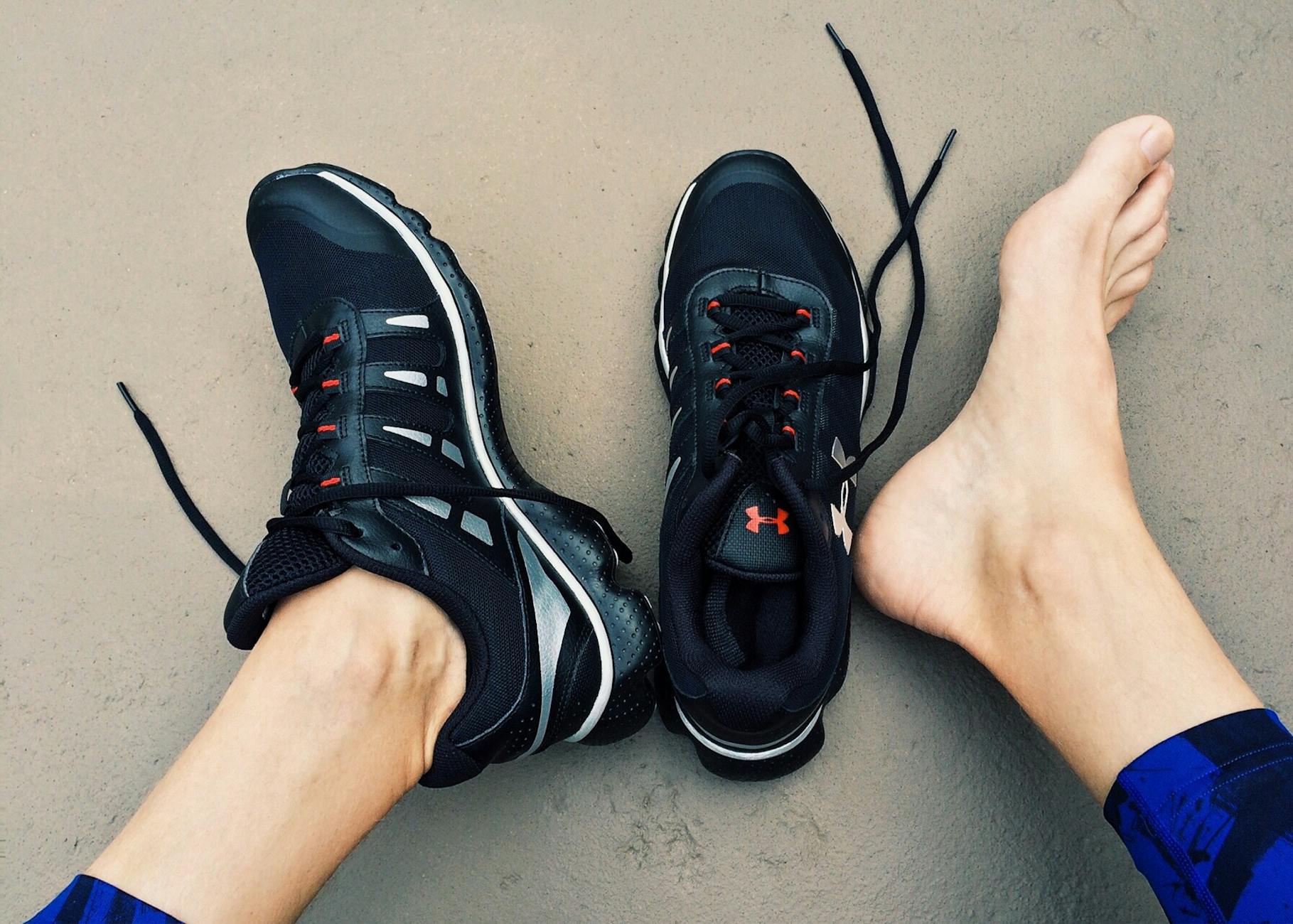
Minimalist running shoes can work for beginners, but only through a structured 8–12 week transition that prioritizes calf and foot strengthening alongside gradual volume increases. Jumping directly into low-drop, minimal-cushion footwear without preparation raises Achilles tendinopathy and metatarsal stress-fracture risk by 30–40% in untrained runners. For most new runners, starting in traditional trainers and delaying minimalist experimentation for 6–12 months offers a safer path to building the aerobic base and tissue resilience required for long-term success.
What Makes a Running Shoe ‘Minimalist’?
A minimalist running shoe is defined by four measurable characteristics: stack height below 18 mm, heel-to-toe drop between 0–4 mm, weight under 7 oz (men’s size 9), and a flexible forefoot that allows natural toe splay. These specs stand in sharp contrast to traditional neutral trainers like the Brooks Ghost or ASICS Cumulus, which typically feature 10–12 mm drops and 25–35 mm stack heights. The reduced cushioning and lower heel forces your foot and ankle to handle impact loads that cushioned midsoles normally absorb, shifting mechanical stress to the midfoot, Achilles tendon, and intrinsic foot muscles.
Examples span a spectrum: the Merrell Vapor Glove and Xero Prio sit at the extreme minimalist end with sub-10 mm stack and zero drop, while the Altra Escalante offers zero drop but retains a 25 mm stack for more cushioning. Understanding where a shoe falls on this continuum matters because each millimeter of drop and stack changes how your body distributes force during ground contact.
Stack Height, Drop, and Ground Feel
Stack height refers to the total thickness of material between your foot and the ground—minimalist shoes keep this below 18 mm to maximize proprioception and ground feedback. Drop measures the height difference between heel and forefoot; a 0–4 mm drop keeps your foot nearly level, unlike the elevated heel (10 mm drop, 30 mm stack) common in traditional trainers.
The trade-off is direct: lower stack and drop improve sensory feedback and encourage midfoot or forefoot landing, but they remove the impact protection that helps untrained tissues survive early training mistakes. Beginners often lack the movement literacy to exploit that proprioceptive advantage, making the protection loss more costly than the feedback gain.
Weight and Flexibility Standards
Minimalist shoes typically weigh under 7 oz, roughly half the mass of max-cushion models like the Hoka Bondi or Brooks Glycerin (12–14 oz). That weight reduction comes from stripped-down midsoles and uppers, which also enables forefoot flexibility—the shoe bends easily at the metatarsal heads, allowing your toes to splay and grip naturally during push-off.
Traditional trainers use rigid, structured midsoles to guide motion and control pronation. Minimalist designs abandon that guidance, placing full responsibility on your foot and ankle musculature to stabilize each stride. For a beginner still learning basic running mechanics, that responsibility can exceed tissue capacity quickly.
How Do Minimalist Shoes Change Running Biomechanics?
Minimalist footwear alters your running gait by shifting impact from heel-strike patterns to forefoot or midfoot landings, increasing Achilles tendon load by 15–20% and demanding 25–30% more activation from intrinsic foot muscles. A 2014 Harvard study led by Daniel Lieberman demonstrated that runners in minimal shoes naturally adopt forefoot strikes to mitigate the high-impact transient—the sharp force spike—that occurs when heel-striking without cushioning. While this reduces the vertical ground-reaction force peak, it trades one load for another: ankle plantar-flexion moment and eccentric calf demand climb sharply, and beginners typically lack the strength to absorb those forces safely across multiple miles.
The biomechanical cascade works like this: less cushioning and lower drop remove the mechanical advantage of an elevated heel, so your Achilles and calf complex must eccentrically control foot descent through a longer range of motion. Your plantar fascia stretches more during midstance, and your metatarsal heads bear greater compressive load. Knee-flexion moment drops—good news for patellofemoral pain—but that load doesn’t vanish; it redistributes distally to structures that beginners haven’t yet conditioned.
Foot-Strike Pattern and Impact Forces
Forefoot landing in minimalist shoes reduces the vertical ground-reaction force spike by spreading impact over a longer time window, but it increases ankle plantar-flexion moment—the rotational force your calf muscles must resist to prevent your heel from slamming down. Research shows this moment can rise 15–20% compared to heel-striking in traditional shoes.
For a beginner whose soleus and gastrocnemius muscles haven’t adapted to eccentric loading, this repeated high torque leads to delayed-onset soreness in the short term and, if unchecked, Achilles tendinopathy or calf strains within weeks. The reduced impact transient is real, but it’s irrelevant if the tissue handling that new load isn’t prepared.
Muscle and Tendon Load Shifts
Intrinsic foot muscles—abductor hallucis, flexor digitorum brevis, and the lumbricals—activate 25–30% more in minimalist footwear because the flexible sole and low arch support demand active stabilization during stance phase. Your Achilles tendon force climbs 15–20%, and metatarsal stress increases if your cadence and technique don’t adapt to distribute load more evenly.
Beginners enter this scenario with untrained intrinsic muscles (many can’t even perform basic toe-yoga drills) and tendons that haven’t undergone the months of progressive overload required for remodeling. The result is a mismatch between tissue capacity and mechanical demand—the textbook definition of injury risk.
What Does the Injury-Risk Research Say for New Runners?
A 2013 Brigham Young University study found that runners switching abruptly to Vibram FiveFingers experienced a 30% injury rate within 10 weeks—double the 15% rate in a traditional-shoe control group—with metatarsal stress reactions and Achilles tendinopathy dominating the injury list. Importantly, these were recreational runners with existing training bases; absolute beginners face even steeper odds because they lack the baseline calf strength and tendon resilience that multi-year runners take for granted. A 2016 meta-analysis in the British Journal of Sports Medicine confirmed that gradual transitions—spreading the adaptation over 10–12 weeks—brought injury rates back to baseline, but only when runners followed structured protocols that limited minimalist volume to 20–30% of weekly mileage in early phases.
The data converge on a clear principle: minimalist footwear isn’t inherently injurious, but abrupt adoption in untrained populations is. Beginners occupy the highest-risk category because they’re simultaneously learning running mechanics, building aerobic capacity, and adapting musculoskeletal tissues—all while navigating work schedules, sleep debt, and other real-world constraints that slow recovery.
Stress Fractures and Tendinopathy Rates
The BYU trial’s 30% injury rate within 10 weeks came from a protocol that asked runners to ramp minimalist use over just six weeks—too fast even for experienced athletes. The most common injuries were 2nd and 3rd metatarsal stress reactions (the long bones behind your toes, which bear peak load during forefoot push-off) and Achilles tendinopathy (chronic irritation of the Achilles from repeated eccentric overload).
Traditional-shoe runners in the same study saw a 15% injury rate, consistent with population norms for recreational mileage increases. The delta—that extra 15 percentage points—reflects the cost of mismatched load and capacity when tissue hasn’t been prepared.
Why Beginners Face Higher Risk
New runners lack three protective factors that experienced athletes possess: eccentric calf strength from thousands of previous foot-strikes, intrinsic foot-muscle endurance built through varied terrain and pacing, and movement-pattern literacy that lets them self-correct stride errors before pain escalates. Combine untrained tissue with a novel mechanical load—forefoot landing, increased Achilles moment, greater metatarsal compression—and you open a wide injury window.
Experienced runners arrive at minimalist transitions with 2–3 years of adaptive bone and tendon remodeling already banked. Beginners start from zero, which is why even a “gradual” 8-week protocol can feel aggressive if foundational strength work isn’t layered in first.
When Might a Beginner Consider Minimalist Shoes?
A beginner should consider minimalist shoes if they have a history of patellofemoral (knee) pain that improves with midfoot striking, an interest in trail running where enhanced proprioception aids navigation on technical terrain, or a long-term goal to build foot strength as part of a resilient running foundation. “Consider” here means committing to an 8–12 week transition protocol with concurrent strength work—not racing out in Merrell Vapor Gloves on day one. Minimalist footwear is a tool for specific outcomes, not a universal solution, and the decision should align with injury history, training goals, and willingness to invest months in adaptation before seeing performance benefits.
Most beginners will find traditional trainers more forgiving during the critical first year, but outliers exist. If knee pain persists despite proper mileage progression and you’ve confirmed that a forefoot strike pattern reduces discomfort, a controlled minimalist transition may address the root cause more effectively than orthotics or rigid stability shoes.
Knee Pain and Strike-Pattern Modification
Runners with patellofemoral pain syndrome often experience relief when switching to a forefoot or midfoot strike because it reduces the knee-flexion moment—the rotational force acting on the kneecap during stance. A 2012 study in Medicine & Science in Sports & Exercise measured a 20% reduction in patellofemoral joint stress when runners adopted forefoot landing, even in traditional shoes.
Minimalist footwear naturally encourages this strike pattern by removing the elevated heel that facilitates heel-striking. For a beginner whose knee pain hasn’t responded to strength work or load management, a slow minimalist transition—combined with glute and quad strengthening—can be part of a multi-pronged solution. The key is that the transition itself doesn’t cause the strike change; it supports a mechanical shift you’re training deliberately.
Long-Term Foot Strength and Proprioception Goals
If a beginner’s 12-month plan includes building resilience for trail running, ultra distances, or technical terrain where ankle proprioception and intrinsic foot strength matter, a gradual minimalist transition can lay that foundation. This isn’t a shortcut—it’s a multi-month investment in tissue capacity that pays dividends when you eventually tackle rocky descents or single-track roots.
Trail running demands dynamic stability that rigid, cushioned trainers partly suppress. Starting a minimalist protocol during base-building phases—when mileage is low and intensity controlled—lets you develop foot strength in parallel with aerobic gains, so by month six you’re ready to handle varied surfaces without gear-dependent fragility.
What Is a Safe Transition Protocol for Beginners?
A safe minimalist transition for beginners spans 8–12 weeks and follows a phased volume increase: weeks 1–2 involve 15–20 minutes of daily walking in minimalist shoes; weeks 3–4 add 5 minutes of easy jogging every other run; weeks 5–8 build to 20-minute sessions while traditional shoes handle long runs; and weeks 9–12 extend minimalist use to 30–40 minutes, still alternating with conventional footwear for higher-intensity or longer efforts. Concurrent strength work—eccentric calf raises (3×15 reps) twice weekly, daily toe-yoga, and short-foot drills—is non-negotiable, as it develops the tissue capacity to handle new loads safely. This protocol mirrors the structure validated in the 2016 British Journal of Sports Medicine analysis, which showed that gradual transitions achieved injury rates equivalent to runners who never switched footwear.
Monitor calf and Achilles soreness on a 0–10 scale after each minimalist session; if soreness exceeds 4 or persists beyond 48 hours, pause progression for a week and add an extra strength session. The timeline assumes a beginner is already running 3–4 days per week in traditional shoes; if you’re brand-new to running entirely, establish that base first before layering on a footwear transition.
Weeks 1–4: Walking and Short Jogs
Spend weeks 1–2 walking 15–20 minutes daily in your minimalist shoes—on flat, smooth surfaces like sidewalks or tracks—to let your feet adapt to the flexible sole and reduced arch support without impact stress. Your intrinsic foot muscles will fatigue quickly; that’s normal and desired.
In weeks 3–4, add a 5-minute easy jog (conversational pace, 170+ cadence) at the end of every other run, still completing the bulk of your training in traditional shoes. Track calf and forefoot soreness; if tenderness exceeds a 4/10 or doesn’t resolve within two days, hold at this volume for another week. Patience here prevents the metatarsal stress reactions that derail abrupt transitions.
Weeks 5–8: Building Volume and Monitoring Load
Increase minimalist running to 20 minutes every other session during weeks 5–8, while continuing traditional shoes for long runs (anything over 45 minutes) and speed work. This mixed approach spreads mechanical load across different tissues and reduces overuse risk.
Add eccentric calf raises—stand on a step, lift onto your toes with both feet, then lower slowly on one foot for a three-second count—3 sets of 15 reps, twice weekly. These build the Achilles and soleus capacity to handle the increased plantar-flexion moment. Watch for midfoot or forefoot tenderness; mild soreness is expected, but sharp or localizing pain signals you’ve exceeded tissue tolerance.
Weeks 9–12: Mixed Use and Strength Work
Extend minimalist sessions to 30–40 minutes by weeks 9–12, still alternating with traditional footwear for high-load days. At this stage you should feel confident in your foot-strike pattern and notice reduced calf fatigue compared to early weeks—signs that neuromuscular adaptation is occurring.
Incorporate the short-foot drill daily: sit barefoot, press your heel and toes into the ground, then draw your arch upward without curling your toes (imagine shortening your foot). Hold for 10 seconds, repeat 5 times. Add toe-yoga—lifting your big toe while keeping the others down, then reversing—to activate the flexor hallucis longus and intrinsic muscles. By week 12, assess whether you’re ready for majority minimalist use or prefer to continue the hybrid model indefinitely; many experienced runners stay mixed to optimize both durability and performance.
Should Most Beginners Start in Traditional Trainers Instead?
Yes—for 80% or more of new runners, starting in traditional trainers with a 10 mm drop and moderate cushioning (Brooks Ghost, Saucony Ride, ASICS Cumulus) offers better tissue protection during the critical first 6–12 months while they build an aerobic base, learn pacing discipline, and develop foundational strength. Minimalist footwear is an advanced tool best delayed until a beginner has logged consistent mileage, resolved any movement-pattern issues, and built the eccentric calf and intrinsic foot strength required to handle redistributed loads safely. Footwear is not a magic fix for running form—strength work, load management, and gradual volume progression prevent far more injuries than any shoe design. The runners who thrive in minimalist shoes are typically those who’ve already survived the beginner phase and understand how to listen to tissue feedback before it escalates into injury.
Runner’s Digest emphasizes evidence-based progression over gear shortcuts, and that principle applies doubly to footwear choices. If your goal is simply to run consistently and injury-free through your first year, traditional trainers remove a major variable from an already complex adaptation process.
Building an Aerobic Base First
The first 6–12 months of running should focus on building aerobic capacity—training your heart, lungs, and mitochondria to sustain effort—and establishing weekly mileage consistency without injury. Traditional shoes reduce injury risk during this learning phase by cushioning impact forces and guiding motion in ways that compensate for weak stabilizers and underdeveloped movement patterns.
Experimenting with minimalist footwear during this window adds mechanical complexity when your nervous system is already task-saturated learning pace control, breathing rhythm, and basic fatigue management. Delay the transition until you can comfortably run 20–25 miles per week in traditional shoes for at least three consecutive months; that baseline indicates your tissues have adapted enough to handle a new training stimulus.
Strength and Load Management Trump Shoe Choice
Eccentric calf strength, hip stability (glute medius and maximus endurance), and adherence to the 10% weekly mileage rule prevent more running injuries than any footwear decision. A beginner in minimalist shoes who ignores these principles will get hurt; a beginner in max-cushion trainers who prioritizes them will stay healthy.
Minimalist footwear is a tool that magnifies the consequences of poor load management and weak tissue—it doesn’t fix those problems. If you’re drawn to minimalist running for philosophical or biomechanical reasons, invest the first six months building the strength and movement competency that will let you execute the transition successfully later, rather than gambling on a shortcut that research shows fails 30% of the time.
Frequently Asked Questions
Can a brand-new runner start in zero-drop shoes?
Technically yes, but it’s high-risk. Zero-drop shoes shift 15–20% more load onto the Achilles and calf compared to traditional 10 mm drop trainers. A true beginner lacks the eccentric strength and tendon resilience to handle that stress safely. Most sports-medicine guidelines recommend building a 3–6 month running base in moderate-drop, cushioned shoes before attempting any minimalist transition. If you’re set on zero-drop, follow an 8–12 week gradual protocol and include twice-weekly calf strengthening.
How long does it take to adapt to minimalist running shoes?
A safe adaptation window is 8–12 weeks for recreational runners and potentially longer for absolute beginners. This timeline allows the foot intrinsics, Achilles, and plantar fascia to remodel under new loads. Research from the British Journal of Sports Medicine (2016) showed that runners who followed a structured 10-week transition had injury rates equivalent to those who stayed in traditional shoes, while abrupt switchers faced 30% injury rates. Beginners should err toward the longer end—12 weeks minimum—and mix minimalist with traditional footwear throughout.
What injuries are most common when beginners switch too fast?
The top three are metatarsal stress fractures (especially 2nd and 3rd), Achilles tendinopathy, and plantar fasciitis. A 2013 Brigham Young University study found that runners moving abruptly to Vibram FiveFingers experienced a 30% injury rate within 10 weeks, with stress reactions and tendon pain dominating. Beginners are even more vulnerable because they lack the baseline foot and calf strength that recreational runners already have. Gradual load increases and eccentric calf work (3×15 reps, twice weekly) are essential to mitigate these risks.
Do minimalist shoes automatically improve running form?
No. Minimalist shoes encourage a forefoot or midfoot strike by removing the elevated heel, but they don’t teach proper cadence, hip drive, or core stability. A 2014 Harvard study showed that runners in minimal footwear naturally adopt a forefoot landing to reduce impact spikes, but poor form—overstriding, low cadence, weak glutes—can still cause injury. Beginners need dedicated drills (strides, cadence work at 170–180 spm, single-leg strength) alongside any footwear change. The shoe is a tool, not a form coach.
Should I do calf exercises before transitioning to minimalist shoes?
Yes. Pre-transition strength work significantly lowers injury risk. Eccentric calf raises—where you lower your heel slowly off a step—build the Achilles and soleus resilience needed to absorb increased load. Aim for 3 sets of 15 reps, twice per week, for at least four weeks before your first minimalist jog. Add toe-yoga (spreading and lifting toes independently) and the short-foot drill (drawing the arch up without curling toes) to activate intrinsic foot muscles. This prep phase is especially critical for beginners who haven’t logged months of running mileage.
Are there any beginners who should avoid minimalist shoes entirely?
Yes. Runners with a history of metatarsal stress fractures, chronic Achilles issues, or plantar fasciitis should stay in traditional, cushioned footwear until those conditions are fully resolved and strength deficits addressed. Beginners over 200 lb may also face higher ground-reaction forces that minimal cushioning can’t attenuate safely. Additionally, if you’re ramping up mileage quickly—say, training for a first half-marathon in under six months—adding a footwear transition on top of volume stress is a recipe for overuse injury. In these cases, prioritize a stable training block in traditional shoes first.
Can I mix minimalist and traditional shoes during the transition?
Absolutely, and it’s recommended. Alternating between shoe types spreads mechanical load across different tissues and reduces overuse risk. For example, wear minimalist shoes for short, easy runs (20–30 minutes) and traditional trainers for long runs or speed work. This hybrid approach lets the foot adapt gradually while maintaining training consistency. Many experienced runners continue mixing footwear indefinitely—minimalist for track intervals and traditional for marathon-pace efforts—to optimize both performance and durability. Beginners should plan to mix for at least 12 weeks, possibly longer.
Leave a Reply