

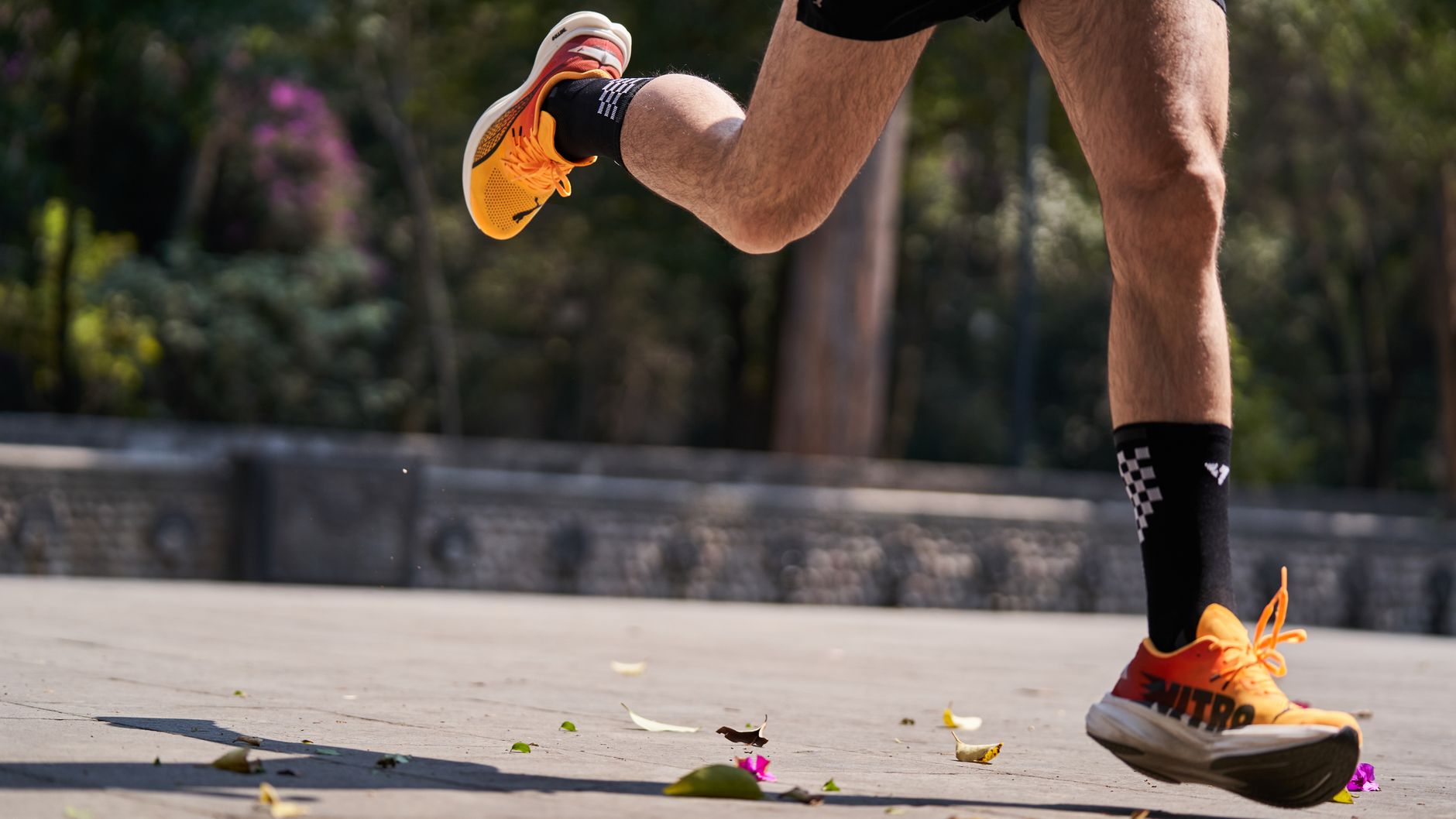
Preventing Achilles tendonitis starts before you ever feel pain: eccentric calf loading 2–3 times per week, capping weekly mileage increases at 10%, and rotating footwear drop heights to vary tendon load angles. The tendon adapts more slowly than your cardiovascular system, so the margin between “building resilience” and “accumulating micro-damage” is narrower than most runners realize.
Why is the Achilles tendon uniquely vulnerable in runners?
The Achilles transmits 6–8 times your body weight during the push-off phase of every stride—the highest force of any tendon in the body. That load concentrates at a single insertion point where the gastrocnemius and soleus muscles converge, making the mid-portion and heel attachment the most common injury sites. Biomechanics research published in 2024 confirms that this force magnitude, repeated thousands of times per run, outpaces the tendon’s ability to repair if training volume or intensity climbs too quickly.
Collagen turnover—the process by which tendon fibers repair micro-tears—requires 48–72 hours. When runners add mileage, introduce speed work, or switch to lower-drop shoes before that remodeling window closes, micro-damage accumulates faster than the tendon can rebuild. The gastrocnemius handles most of the load during straight-leg push-off, while the soleus activates heavily when the knee bends, so training that neglects either muscle leaves the tendon under-prepared for the full range of running forces.
Training volume spikes are the single greatest predictor of Achilles strain. A runner jumping from 30 to 40 miles per week—a 33% increase—may feel cardiovascularly ready, but the tendon’s collagen cross-links need weeks, not days, to handle the added load. This lag explains why Achilles pain often surfaces 1–2 weeks after the problematic training block.
What are the earliest warning signs runners should not ignore?
Morning stiffness lasting more than 15 minutes is the first red flag. Healthy tendons loosen within a few steps; persistent stiffness signals incomplete overnight repair. Tenderness 2–6 centimeters above the heel insertion—palpable when you pinch the tendon between your thumb and forefinger—indicates localized inflammation or micro-tearing in the tendon’s mid-portion, where blood supply is poorest and healing slowest.
Pain during the first 10 minutes of a run that diminishes as the tendon “warms up” is a classic early-stage pattern. The tendon becomes more pliable with activity, temporarily masking damage, but the pain returns 24–48 hours later—often worse. This delayed-onset soreness reflects incomplete collagen repair between sessions. Runners who push through this cycle accelerate the transition from reversible irritation to chronic tendinopathy.
Speed work and hill sessions amplify risk because they increase both peak force and the rate at which force loads the tendon. If soreness worsens consistently after tempo runs, hill repeats, or track intervals, the tendon is signaling it cannot handle the eccentric load (the lengthening phase when your foot strikes the ground) at that volume or intensity. Ignoring these signs for 2–3 weeks often leads to pain severe enough to halt training entirely.
Which loading protocols actually strengthen the Achilles before injury?
Eccentric heel drops remain the gold-standard prevention exercise, adapted from the Alfredson protocol used in clinical Achilles rehab. Perform 3 sets of 15 repetitions, 2–3 times per week, in both straight-leg and bent-knee variations. The straight-leg version targets the gastrocnemius; the bent-knee variation isolates the soleus. Stand on a step, rise onto your toes with both feet, then shift your weight onto one leg and slowly lower your heel below step level over 3–4 seconds. The lowering phase—eccentric contraction—is where tendon strengthening occurs.
Start with body weight alone. Over 8–12 weeks, progress to a weighted vest or holding dumbbells once 3 sets of 15 reps feel manageable without next-day soreness. Research shows this gradual overload thickens the tendon and reorganizes collagen fibers into more resilient, parallel alignment. Rushing the progression by adding weight too soon re-introduces the same micro-damage you’re trying to prevent.
Isometric holds—standing on your toes and holding the position for 30–45 seconds—serve a different purpose. They’re useful during acute flare-ups because they load the tendon without the high forces of eccentric lengthening, allowing partial training stimulus while inflammation settles. But isometric work alone doesn’t build the eccentric strength required for the impact forces of running, so it’s a supplement, not a replacement, for heel drops.
Should runners perform eccentric work year-round or seasonally?
Maintenance-phase loading—1–2 sessions per week—is sufficient during base-building periods when mileage is stable and intensity low. Increase frequency to 3 times weekly 4–6 weeks before planned volume ramps, marathon build-ups, or speed blocks. This pre-strengthening window allows the tendon to adapt before you ask it to handle higher loads under fatigue.
Even during planned deload weeks, include at least one eccentric session. Tendons lose adaptation faster than muscle; skipping two consecutive weeks can erase several weeks of progressive loading. Competitive runners often schedule eccentric work on easy-run days or as standalone evening sessions, separated from hard efforts by 24–48 hours to respect collagen turnover time.
How do mileage progression and footwear choices affect tendon load?
The 10% weekly mileage increase rule exists because tendon collagen adapts more slowly than aerobic capacity or leg muscle strength. Biomechanics data shows that exceeding 15% weekly increases correlates with significantly higher Achilles strain rates. A runner at 40 miles per week can safely add 4 miles the following week; jumping to 50 miles (25% increase) stretches the tendon’s repair capacity past the micro-damage threshold, even if the cardiovascular system handles it easily.
Heel-toe drop rotation—mixing 4mm, 8mm, and 12mm shoes across the training week—distributes load across different angles of the gastrocnemius and soleus. A lower-drop shoe lengthens the calf-Achilles complex at foot strike, increasing eccentric demand; a higher drop shortens it, shifting some load to the quadriceps. Varying drop heights prevents repetitive strain on a single tendon position. Runners who wear only zero-drop shoes load the Achilles at maximum length on every stride, leaving no mechanical variation for recovery.
Transitioning to zero-drop or minimalist footwear requires a 12–16 week gradual adoption period. Start with one easy run per week in the new shoes, capping mileage at 2–3 miles, and add one mile every 7–10 days. Abrupt switches—wearing zero-drop shoes for a 10-mile long run after years in 10mm drop trainers—suddenly lengthen the muscle-tendon unit under load, overwhelming the tendon’s current capacity. Surface variation also matters: soft trails reduce peak impact forces compared to asphalt, giving the tendon partial relief even when total mileage climbs.
What does a practical Achilles-prevention training week look like?
A sample 40–50 mile-per-week schedule balances eccentric loading, volume progression, and recovery windows:
- Monday: Eccentric heel drops (3 sets × 15 reps, both variations) + 6-mile easy run
- Tuesday: 8-mile tempo run or threshold intervals
- Wednesday: Rest or low-impact cross-training (cycling, swimming)
- Thursday: Eccentric heel drops + 5-mile easy run
- Friday: Complete rest
- Saturday: 12–14 mile long run
- Sunday: 4–6 mile recovery jog or strength session focusing on hips and glutes
Timing eccentric work immediately post-run or as a standalone evening session both work; the key is separating it from the next hard effort by at least 24 hours. Post-run eccentric loading takes advantage of already-warmed tendons, but some runners find next-day soreness interferes with tempo or interval quality. Evening sessions on easy-run days solve this by pushing the 48-hour collagen remodeling window away from speed work.
Foam rolling the calves and light dynamic stretching (ankle circles, toe walks) before runs can improve mobility, but static stretching—holding a calf stretch for 30+ seconds—does not build tendon resilience. Static stretching may acutely reduce tendon stiffness, which sounds beneficial but actually decreases the elastic energy return tendons provide during push-off. Post-run static stretching for general flexibility is fine, but it doesn’t substitute for the progressive strengthening that eccentric heel drops deliver. For a full approach to evidence-based strength work for runners, pair Achilles-specific loading with hip and glute exercises to address movement compensations up the kinetic chain.
Frequently Asked Questions
How often should runners do eccentric calf exercises to prevent Achilles tendonitis?
Runners should perform eccentric heel drops 2–3 times per week during training build-ups, tapering to 1–2 sessions weekly during base phases. Each session includes 3 sets of 15 reps for both straight-leg (gastrocnemius) and bent-knee (soleus) variations. Research shows this frequency allows 48–72 hours of collagen remodeling between sessions while progressively increasing tendon load tolerance over 8–12 weeks.
What are the first signs of Achilles tendonitis in runners?
The earliest warning sign is morning stiffness in the Achilles lasting more than 15 minutes, often accompanied by tenderness 2–6 centimeters above the heel. Runners typically notice pain during the first 10 minutes of a run that diminishes as the tendon warms up, then returns 24–48 hours later. Pain that worsens after speed work, hill repeats, or sudden mileage increases indicates micro-damage is accumulating faster than the tendon can repair.
Can changing running shoes prevent Achilles tendon problems?
Rotating between shoes with different heel-toe drops (4mm, 8mm, 12mm) throughout the training week distributes load across varying angles of the gastrocnemius and soleus, reducing repetitive strain on a single tendon position. Transitioning to zero-drop or minimalist shoes requires a 12–16 week gradual adoption period to allow tendon adaptation. Abrupt footwear changes, especially to lower drops, increase Achilles injury risk by suddenly lengthening the muscle-tendon complex under load.
Why does the Achilles tendon get injured more than other running tendons?
The Achilles transmits 6–8 times body weight during the push-off phase of running, the highest force of any tendon in the body. Its collagen fibers require 48–72 hours to repair micro-tears from training, but many runners add volume or intensity before this remodeling completes. The gastrocnemius and soleus muscles converge into a single tendon insertion point, concentrating stress at the mid-portion and heel attachment where most injuries occur.
Should runners stretch or strengthen the Achilles to prevent injury?
Strengthening through eccentric loading is the evidence-based prevention strategy; stretching alone does not build tendon resilience. Static stretching before a run may acutely reduce tendon stiffness but does not increase long-term load capacity. Eccentric heel drops progressively thicken and organize collagen fibers, increasing the tendon’s ability to handle training stress. Stretching post-run can support flexibility but should complement, not replace, structured eccentric work 2–3 times weekly.
How much should runners increase weekly mileage to avoid Achilles problems?
The 10% weekly mileage increase rule remains the biomechanically sound guideline; exceeding 15% correlates with significantly higher Achilles strain risk. Tendon collagen adapts more slowly than cardiovascular or muscular systems, requiring conservative volume progression. Runners adding speed work, hill sessions, or changing footwear should hold weekly mileage steady for 2–3 weeks to allow tendon adaptation before resuming increases. Every fourth week should include a 20–30% volume reduction to permit full tissue remodeling.
Leave a Reply