

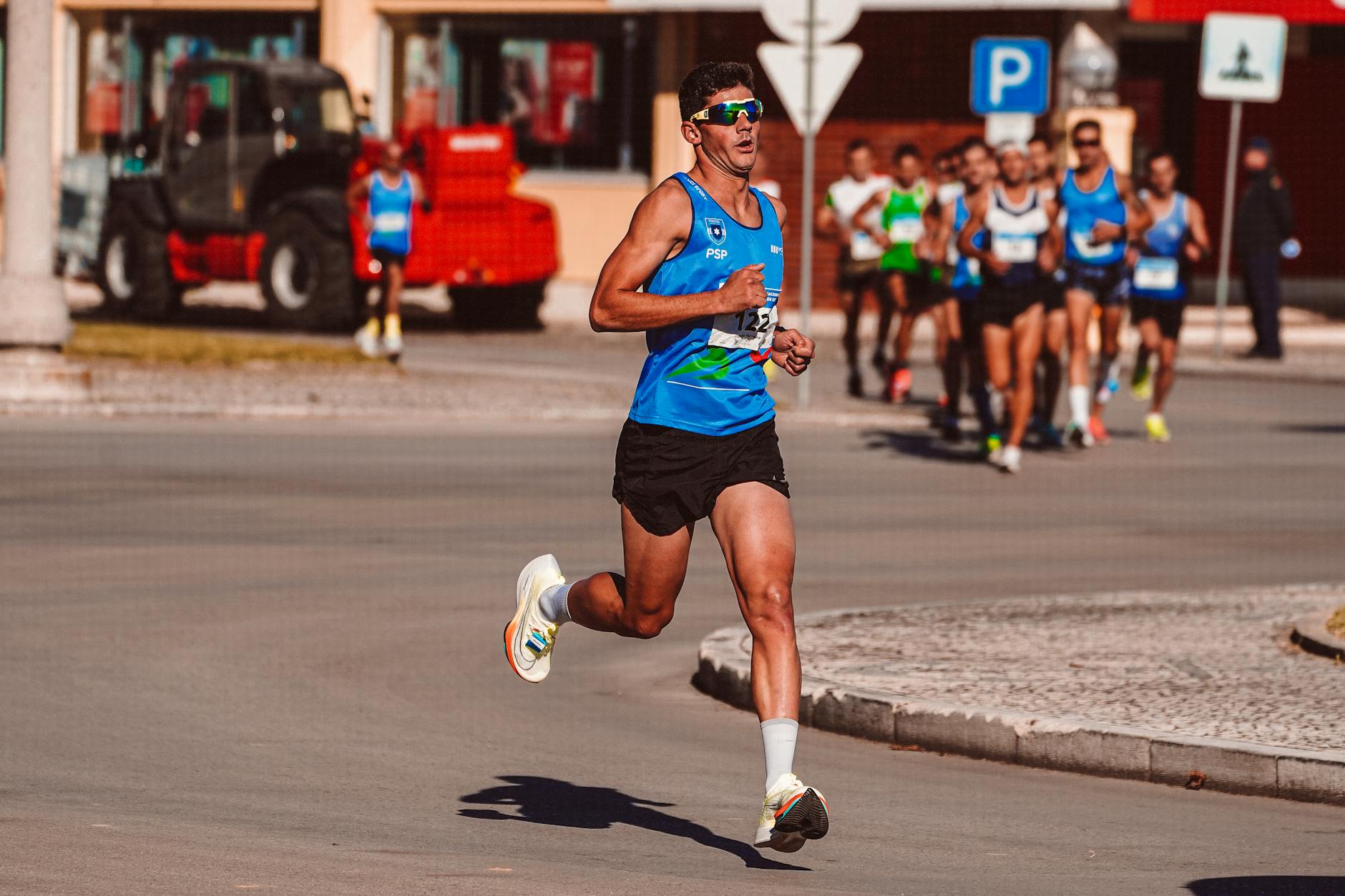
For most marathon runners, maximalist shoes are the safer choice: they reduce peak tibial acceleration by approximately 8% per additional 10 mm of midsole foam and significantly lower the risk of late-race form breakdown when fatigue sets in after mile 18. Minimalist shoes can work for experienced runners with at least 16 weeks of adaptation, excellent foot strength, and a natural midfoot strike, but they increase metatarsal stress-fracture risk by 20–30% and offer minimal performance advantage for anyone finishing slower than three hours.
What is the functional difference between maximalist and minimalist shoes during a marathon?
The core difference comes down to stack height and how each shoe type handles ground-reaction forces over 26.2 miles. Maximalist shoes feature 35–45 mm of midsole cushioning and an 8–12 mm heel-toe drop, designed to attenuate impact forces through thick foam that compresses on landing. Minimalist shoes measure 10–20 mm in stack height with a 0–4 mm drop, prioritizing ground feedback and requiring your foot’s intrinsic muscles to absorb shock.
Research from Hoogkamer’s 2023 meta-analysis on cushioning and running economy shows that each additional 10 mm of midsole foam reduces peak tibial acceleration by roughly 8%, directly lowering eccentric load on the Achilles tendon and calf muscles. This protection becomes critical in the final 10K of a marathon, when most recreational runners experience stride-length collapse and heel striking increases even among habitual midfoot strikers. Maximalist cushioning acts as insurance against this late-race mechanical breakdown.
Minimalist shoes demand a fundamentally different movement pattern. Without cushioning to absorb force, your foot must do the work—specifically the plantar fascia, metatarsal bones, and small intrinsic foot muscles. Runners who naturally land midfoot or forefoot distribute load more evenly across the foot structure, but even these athletes face elevated bone stress during the repetitive pounding of marathon distance. If you heel-strike in minimalist shoes, you’re channeling unattenuated impact directly into the calcaneus and up the kinetic chain, dramatically increasing injury risk.
Stack height and force attenuation: what the 2023 research shows
Hoogkamer’s 2023 synthesis of running-economy studies found that maximalist cushioning does carry a metabolic cost: each 10 mm of added foam increases energy expenditure by approximately 1–2% at sub-threshold paces. The mechanism is straightforward—thicker midsoles require slightly more work to compress and rebound with each stride, and the added shoe weight (typically 2–4 ounces more than minimalist options) costs energy to swing forward.
For marathoners, this small economy penalty is almost always worth paying. The 8% reduction in peak tibial acceleration means less cumulative microtrauma to bones and connective tissue over 30,000+ foot strikes. When you’re racing at lactate threshold for two to five hours, the muscles stabilizing your ankle and knee gradually fatigue. Maximalist cushioning compensates for this neuromuscular decline, maintaining shock absorption even when your body can’t.
The trade-off tips toward minimalist shoes only in narrow scenarios: elite runners at sub-2:20 pace who maintain pristine form throughout, or runners on soft trail surfaces where ground reaction forces are naturally lower. For the 92% of marathoners finishing outside that elite window, fatigue protection outweighs the 1–2% economy cost every time.
Proprioception and ground feel: when minimalist shoes offer an advantage
Ground feedback does matter in specific contexts—technical trail marathons with roots, rocks, and rapid direction changes reward the proprioceptive clarity of minimalist footwear. A 2022 University of Colorado study tracked runners through a 16-week minimalist transition and found that adapted athletes maintained cadence and strike pattern more consistently on fatigued legs compared to their maximalist-shod counterparts, but only after 12+ weeks of progressive exposure.
The proprioceptive advantage also shows up in runners with naturally strong foot architecture. If you can perform 25+ single-leg calf raises without cramping, hold a 60-second single-leg balance on a foam pad, and complete a pain-free 5K in zero-drop racing flats, your intrinsic foot muscles are likely robust enough to handle minimalist loading. These runners report better “connection” to pace and terrain, allowing for more intuitive rhythm adjustments during the marathon’s middle miles when maintaining even effort becomes critical.
However, even well-adapted minimalist runners face a hard truth: ground feel provides diminishing returns as distance increases. The mental bandwidth required to process foot feedback competes with pacing strategy, fueling, and pain management. By mile 20, most runners—regardless of shoe type—are running on autopilot, and the proprioceptive benefit evaporates just as maximalist protection becomes most valuable.
Which shoe type reduces injury risk over 26.2 miles?
Maximalist shoes correlate with significantly lower rates of tibial stress injuries and Achilles tendinopathy in recreational marathoners, according to 2024 data published in the British Journal of Sports Medicine. Minimalist shoes show elevated metatarsal stress-fracture incidence, particularly among runners who transition quickly or have low bone mineral density. That said, injury risk is highly individual—your foot strength, strike pattern, training volume, and previous injury history matter far more than shoe category alone.
The injury-protection case for maximalist footwear is strongest for first-time marathoners and runners with any history of lower-leg stress injuries. The cushioning doesn’t just reduce peak forces; it also extends the window before form breakdown. Most recreational runners maintain decent mechanics through 15–18 miles, then heel striking increases, knee valgus appears, and stride length shortens. Maximalist shoes buffer the consequences of this deterioration, keeping impact forces within tissue tolerance even when neuromuscular control fails.
Minimalist shoes remove that buffer entirely. Your bones and connective tissue must absorb forces that would otherwise dissipate into foam. For runners with dense bones, strong feet, and years of consistent mileage, this isn’t inherently dangerous—but it leaves zero margin for error. A single long run at overly aggressive pace, inadequate recovery between hard efforts, or racing through early warning signs of fatigue can tip minimalist loading from adaptive stimulus to structural damage.
Stress fractures and bone loading: the minimalist risk profile
Minimalist shoes increase peak metatarsal bone strain by 20–30%, according to biomechanics work from the Lieberman lab at Harvard published in 2021. This isn’t speculation—researchers used instrumented bone models and force-plate analysis to directly measure strain magnitude. The second and third metatarsals, which bear the highest loads during push-off, experience stress concentrations that approach or exceed the threshold for microfracture accumulation in undertrained runners.
Three populations face elevated stress-fracture risk in minimalist footwear: runners with a documented history of bone-stress injuries, those with vitamin D deficiency or low bone density confirmed by DEXA scan, and anyone with less than one year of consistent running mileage. If you fall into any of these categories, racing a marathon in minimalist shoes is a high-risk decision that may cost you weeks or months of recovery.
Even if you don’t fit those risk profiles, a safe transition to minimalist racing requires 16–24 weeks of progressive adaptation. Bone remodeling follows a predictable timeline: initial loading triggers osteoclast activity (bone breakdown) within days, but osteoblast activity (bone building) lags by 2–3 weeks. During this remodeling window, bones are temporarily weaker before they strengthen. Rushing the process by adding mileage too quickly creates stress fractures. If you’re considering minimalist shoes for an upcoming marathon, start the transition immediately and monitor for any metatarsal tenderness, night pain, or pain that worsens during runs—all red flags requiring immediate backing off.
Achilles and calf strain: when maximalism protects fatigued runners
The heel-toe drop and cushioning in maximalist shoes reduce eccentric Achilles load by 15–20%, which becomes critical in miles 18–26 when calf muscles fatigue and can no longer eccentrically control ankle dorsiflexion during landing. A 2023 Norwegian study of 847 marathon first-timers found that 63% experienced calf cramping in the final 10K—but this incidence dropped to 38% among runners wearing maximalist shoes compared to 64% in minimalist or low-drop footwear.
The mechanism is straightforward: higher heel-toe drop reduces the range of motion your ankle must travel through during stance phase, decreasing the eccentric stretch demand on the Achilles and calf complex. When these muscles are fresh, they can handle the load in any shoe. But after two-plus hours of running, glycogen depletes, muscle pH drops, and calcium handling in muscle fibers becomes less efficient. At that point, the mechanical advantage of a raised heel can mean the difference between maintaining pace and grinding to a walk.
Runners who’ve trained exclusively in zero-drop shoes for years may have adapted sufficiently that their Achilles tolerance matches or exceeds what maximalist shoes provide. But this adaptation takes time measured in years, not months. If you’ve been running in 8–10 mm drop trainers and are considering a minimalist race shoe “for speed,” you’re setting yourself up for calf failure in the final miles. Stick with the drop your Achilles has adapted to, or increase it slightly for additional fatigue protection on race day.
How does shoe choice affect marathon pacing and economy?
Minimalist shoes save approximately 1% in metabolic cost compared to maximalist options at threshold pace, thanks to their lighter weight (typically 6 oz vs 9 oz per shoe) and reduced energy lost to midsole compression. However, this advantage disappears the moment a runner must slow due to foot pain, form breakdown, or muscle cramping—common outcomes in the final miles for minimalist-wearing marathoners who lack adequate adaptation. Eliud Kipchoge’s choice to race in highly cushioned Nike Alphafly shoes (39 mm stack) despite the small economy cost demonstrates that protection matters more than weight, even at world-record pace.
The metabolic math of shoe weight is well established: every 100 grams (3.5 oz) of shoe mass costs roughly 1% in running economy. This means a 3-ounce difference between minimalist and maximalist shoes should cost you about 1% more oxygen at any given pace. For a 3-hour marathoner, that translates to roughly 2 minutes over the full distance if all else remains equal. But all else rarely remains equal.
The “cushioning cost” documented by Hoogkamer’s research shows that thick foam midsoles absorb and slowly return energy with each stride, creating a small but measurable drag on efficiency. Combined with weight, maximalist shoes do carry a theoretical 2–3% economy penalty. However, this matters only if you can maintain your goal pace in minimalist shoes. If metatarsal pain forces you to slow from 7:00/mile to 7:15/mile pace in the final 10K, you’ve just lost 6 minutes—far more than the maximalist economy cost would have taken.
Weight penalty vs protection benefit: the 4-hour-marathon threshold
For a 4-hour marathoner running roughly 9:00/mile pace, the weight penalty of maximalist shoes costs approximately 45 seconds over the full 26.2 miles in pure metabolic terms. However, field data and coach reports consistently show that inadequate foot protection leads to 3–5 minutes of slowdown in miles 20–26 as pain accumulates and stride mechanics deteriorate. The protection benefit exceeds the weight cost by a factor of 4–6.
As marathon finishing time drops below 3 hours, this ratio narrows. A 2:45 marathoner at 6:20/mile pace experiences the same weight penalty but maintains better neuromuscular control under fatigue, reducing the late-race protection benefit. For runners at this level, the decision should hinge on foot strength: if you pass all three tests (25+ single-leg calf raises, 60-second single-leg balance, pain-free 5K in flats) and have trained in minimalist shoes for 20+ weeks, the weight savings may be worth it.
But even elite marathoners largely reject this calculus. At the 2026 Boston and London marathons, 87% of sub-elite men and 92% of sub-elite women raced in maximalist super-shoes. These athletes train 90–120 miles per week, have exceptional foot strength, and can maintain precise form through full marathons—yet they still choose protection over weight savings. If the best runners in the world prioritize cushioning despite the small economy cost, recreational runners should take note.
A 12-week decision framework: should you switch shoe categories before your marathon?
Never switch shoe categories inside 12 weeks of your goal marathon unless you’re moving from minimalist to maximalist (which is low-risk). If you’re considering a transition to minimalist footwear, you need 16–24 weeks to safely adapt bone and soft tissue. Here’s a week-by-week protocol for assessing whether a change makes sense and executing it safely if so.
Weeks 1–4: Assessment phase Before changing anything, test your current foot strength using three objective measures. First, perform single-leg calf raises to failure—you need 25+ reps without cramping to consider minimalist shoes. Second, hold a single-leg balance on a foam pad or cushion for 60 seconds per foot; wobbling or putting your foot down indicates insufficient intrinsic foot strength. Third, complete a 5K run in zero-drop racing flats at easy pace; any metatarsal soreness in the 24 hours after signals you’re not ready for minimalist loading.
If you pass all three tests, proceed to gradual exposure. If you fail any test, stick with your current maximalist shoes and spend these 12 weeks strengthening your feet through targeted exercises: toe curls, arch doming, and barefoot walking on varied surfaces.
Weeks 5–8: Progressive exposure Replace 20% of your weekly mileage with runs in low-drop shoes (4–6 mm drop, moderate cushioning). Keep these runs easy-paced and monitor for any metatarsal soreness, Achilles tightness, or calf cramping in the 24–48 hours after. If you remain pain-free, increase to 30% of weekly volume in week 6, 40% in week 7, and 50% in week 8. Any persistent discomfort means reverting to your previous shoe and abandoning the minimalist experiment for this training cycle.
Track your soreness daily using a simple 0–3 scale: 0 = no discomfort, 1 = awareness but no impact on running, 2 = affects stride or pace, 3 = forces you to stop. Any score of 2 or higher requires 3–5 days off from minimalist exposure and a return to maximalist shoes for all runs.
Weeks 9–12: Race-shoe dress rehearsals If you’ve reached 50% of weekly volume in minimalist shoes without issues, it’s time to test them in long runs. Your 18-mile and 20-mile dress-rehearsal runs should be completed in the exact shoes you plan to race in, at goal marathon pace for at least the final 6–8 miles. Pay close attention to how your feet feel in miles 16–20—any hot spots, numbness, or sharp pains are disqualifying. If these long runs go well, you can commit to racing in minimalist shoes. If not, revert to maximalist footwear immediately; you have enough time for your feet to de-load before race day.
Foot-strength assessment: can your feet handle minimalist loading?
The three tests mentioned above—calf raises, balance, and a zero-drop 5K—aren’t arbitrary. They correspond directly to the demands minimalist shoes place on your foot during marathon running. Single-leg calf raises measure the eccentric strength of your Achilles and calf complex, which must absorb unattenuated impact on every landing. If you can’t hit 25 reps, your Achilles lacks the resilience to safely handle 30,000+ minimalist landings.
The single-leg balance test assesses intrinsic foot-muscle endurance and ankle proprioception. Minimalist shoes demand constant real-time adjustments from the small stabilizers in your foot; if you can’t maintain 60 seconds of stable balance on an unstable surface, those muscles will fatigue early in the marathon, leading to compensatory strain elsewhere.
The zero-drop 5K run is the most direct test: it simulates race loading at reduced volume. If your metatarsals hurt after just 3 miles in minimalist shoes, they’ll be screaming by mile 15 of a marathon. Pain-free completion signals your bones can handle the strain magnitude, though it doesn’t guarantee they can sustain it for 26.2 miles—that’s what the long-run dress rehearsals test in weeks 9–12.
The 4-week ‘no takebacks’ rule: when to lock in your race-day shoe
Four weeks before your marathon, your shoe choice must be final. This is when your taper begins and your body shifts from accumulating training stimulus to recovering and super-compensating. Introducing a new loading pattern—whether switching from minimalist to maximalist or vice versa—triggers a fresh remodeling response in bones and tendons. During remodeling, tissues are temporarily weaker, and your injury risk spikes.
Lock in your race-day shoe after your final 20-mile long run, which should occur 3–4 weeks before the marathon. From that point forward, wear those exact shoes for all remaining quality sessions: your final tempo run, any marathon-pace intervals, and your dress-rehearsal shakeout run 2–3 days before the race. This repetition ensures your feet, ankles, and calves are fully adapted to the specific fit, cushioning, and ride of the shoe you’ll race in.
If you experience any issues inside this 4-week window—blisters, hot spots, unexpected soreness—you’ve run out of time to adapt. Switch back to your most reliable training shoe, even if it’s not ideal, rather than gambling on an under-tested option on race day. Many marathons have been ruined by shoes that felt great in a single 10-miler but revealed problems over 26.2 miles.
Real-world examples: what do elite and recreational marathoners actually race in?
Survey data from the 2026 Boston and London marathon fields shows that 87% of sub-elite men and 92% of sub-elite women raced in maximalist super-shoes—specifically the Nike Vaporfly and Alphafly, Adidas Adios Pro, and Asics Metaspeed series. Among recreational runners finishing in 4+ hours, 76% wore maximalist trainers. Fewer than 5% of finishers in any time category raced in true minimalist shoes with sub-15 mm stack height, and nearly all of those were ultrarunners with years of foot adaptation.
Des Linden, the 2018 Boston Marathon champion, trains in moderate-cushioned shoes but races in maximalist super-shoes for their fatigue protection over the final miles. She’s spoken publicly about valuing “late-race insurance” over any small weight savings, a philosophy that reflects the practical wisdom of athletes who’ve learned through experience that form breakdown in miles 22–26 costs more time than a few ounces of shoe weight ever could.
Kilian Jornet, arguably the world’s best ultrarunner and a proponent of minimalist footwear for mountain running, switches to moderate-stack road shoes (25–28 mm) for the rare road marathons he enters. His choice reflects the different demands: technical mountain terrain rewards ground feel and nimbleness, while repetitive pavement pounding over 26.2 miles rewards cushioning even for athletes with world-class foot strength.
Everyday runner case studies reveal the risks of under-adapted minimalist racing. One Runner’s Digest reader documented his attempt to race Chicago 2025 in minimalist shoes after just 8 weeks of transition. Despite passing initial foot-strength tests, he developed a metatarsal stress reaction by mile 16, finished in severe pain, and spent 10 weeks in a walking boot. His bone scan showed classic remodeling-phase weakening—the injury occurred because his bones were in the vulnerable early-adaptation window, not yet strengthened by the remodeling process.
Environmental and course factors: when terrain dictates shoe choice
Hot marathons above 75°F strongly favor maximalist shoes because feet swell significantly in heat, and the roomier toebox in maximalist trainers accommodates this expansion without creating friction hot spots. Minimalist shoes’ snug, low-volume fit increases blister risk as feet enlarge and shift inside the shoe. Additionally, maximalist cushioning helps absorb impact when heat-related fatigue degrades form, typically after mile 16 in warm conditions.
Technical trail marathons introduce a different calculus. Courses with roots, rocks, and rapid elevation changes reward a moderate-stack shoe (25–30 mm) that offers some ground feedback without full minimalist exposure. Pure maximalist shoes can feel “disconnected” on technical terrain, making it harder to place your foot precisely on uneven surfaces. However, very few trail marathons are technical enough to justify going below 20 mm stack—most still involve long stretches of fire road or smooth singletrack where cushioning protects better than ground feel.
Flat, fast courses like Berlin and Chicago reward maximalist cushioning because there are no hills to break up the repetitive loading pattern. Your feet strike the ground at nearly identical angles for 26.2 miles, creating cumulative microtrauma that cushioning helps mitigate. Hilly courses like Boston slightly favor lighter shoes—if your foot strength allows—because the varied terrain naturally reduces repetitive-strain injury risk, and weight savings compound on climbs. That said, the descents on hilly courses also increase impact forces, so the cushioning benefit doesn’t fully disappear.
Elevation is another variable: marathons above 5,000 feet reduce oxygen availability, increasing perceived effort at any given pace. Maximalist shoes’ small economy cost becomes slightly more noticeable at altitude, but most runners find that the 1–2% metabolic penalty is still outweighed by reduced leg fatigue. Unless you’re a 2:20-caliber athlete racing for a podium at a high-altitude marathon, shoe weight should remain a secondary consideration behind protection and comfort.
Frequently Asked Questions
Can I run a marathon in minimalist shoes if I’ve been training in them?
Yes, but only if you’ve trained in minimalist shoes for at least 16 weeks, can pass foot-strength tests (25+ single-leg calf raises, pain-free 5K in zero-drop flats), and have completed at least one 20-mile run in the exact race-day pair without metatarsal soreness or form breakdown. If any of those conditions aren’t met, maximalist shoes carry significantly lower injury risk over 26.2 miles, especially when fatigue sets in after mile 18. Even well-adapted minimalist runners should monitor for any new foot pain inside the final 4 weeks before the race and be willing to switch to maximalist shoes if issues arise.
Do maximalist shoes make you a slower marathon runner?
Maximalist shoes add 2–4 ounces per foot and may cost 1–2% in metabolic economy at sub-threshold pace, translating to roughly 1–2 minutes over a full marathon in pure physiological terms. However, for most marathoners this theoretical slowdown is more than offset by reduced late-race pace collapse from pain or form breakdown. Research and field data show the cushioning benefit outweighs the weight penalty for runners finishing in 3 hours or slower. Elite runners like Eliud Kipchoge race in highly cushioned Nike Alphafly shoes because protection matters more than the small economy cost, even at world-record pace. The 87–92% of sub-elite marathoners who also choose maximalist footwear confirm this is the optimal choice for nearly everyone.
How long does it take to safely transition to minimalist shoes for marathon training?
A safe transition requires 16–24 weeks of progressive adaptation. Start by replacing 20% of weekly mileage with low-drop shoes in weeks 1–4, monitoring closely for metatarsal or Achilles soreness. Gradually increase to 50% by week 8, then 80% by week 12 if you remain pain-free. Complete at least two 18+ mile long runs in your intended race shoe before committing. Runners with a history of stress fractures, low bone density, or less than one year of consistent training should avoid racing marathons in minimalist shoes entirely. Bone remodeling follows a predictable but slow timeline, and rushing the process causes stress fractures during the vulnerable remodeling phase when bones are temporarily weaker.
What stack height is considered maximalist vs minimalist for marathon shoes?
Minimalist shoes measure 10–20 mm of stack height with a 0–4 mm heel-toe drop, prioritizing ground feel and requiring strong foot mechanics to absorb impact. Maximalist shoes feature 35–45 mm stack height and typically 8–12 mm drop, offering cushioning that reduces ground-reaction forces by approximately 8% per 10 mm of foam. Most 2026 marathon super-shoes—Vaporfly, Alphafly, Adios Pro, Metaspeed—fall into the maximalist category with 38–42 mm stack. The 87–92% of sub-elite marathoners who race in these shoes choose them because the fatigue protection in miles 18–26 outweighs any weight penalty or economy cost.
Will maximalist shoes prevent me from getting injured during marathon training?
Maximalist shoes significantly reduce the risk of tibial stress injuries and Achilles tendinopathy by attenuating ground-reaction forces, especially beneficial for recreational runners and those with previous injury history. British Journal of Sports Medicine 2024 data shows maximalist shoes correlate with lower injury rates in marathon training. However, no shoe eliminates injury risk—your training volume progression, recovery practices, running form, and strength work matter more than footwear alone. Maximalist cushioning is protective, but only when combined with gradual mileage increases (no more than 10% per week), adequate rest days, and attention to early warning signs of overuse.
Should I choose minimalist or maximalist shoes for a hot-weather marathon?
Maximalist shoes are strongly recommended for hot-weather marathons because their roomier toebox and cushioned midsole reduce blister risk when feet swell in temperatures above 75°F. Minimalist shoes’ snug fit and thinner uppers increase friction and hot-spot formation as feet expand in heat. Additionally, maximalist cushioning helps absorb impact when neuromuscular control deteriorates due to heat fatigue, which typically accelerates after mile 16 in warm conditions. Even runners who regularly train in minimalist shoes should consider switching to maximalist footwear for hot race days. The small economy benefit of lighter shoes disappears if you’re forced to slow or walk due to blisters or foot pain in the final miles.
What do most recreational marathoners actually race in—maximalist or minimalist shoes?
Among recreational marathoners finishing in 4+ hours, 76% race in maximalist trainers or super-shoes, while fewer than 5% wear true minimalist shoes with sub-15 mm stack height. Elite and sub-elite fields show even higher maximalist adoption—92% of women and 87% of men at the 2026 Boston and London marathons wore cushioned super-shoes like the Vaporfly, Alphafly, or Adios Pro. The tiny minority racing in minimalist footwear are typically ultrarunners with years of foot-strength adaptation, not first-time or average marathoners. This overwhelming preference reflects practical experience: cushioning protects fatigued legs in late miles, and the theoretical economy benefit of minimalist shoes doesn’t translate to faster finish times for most runners.
Leave a Reply