

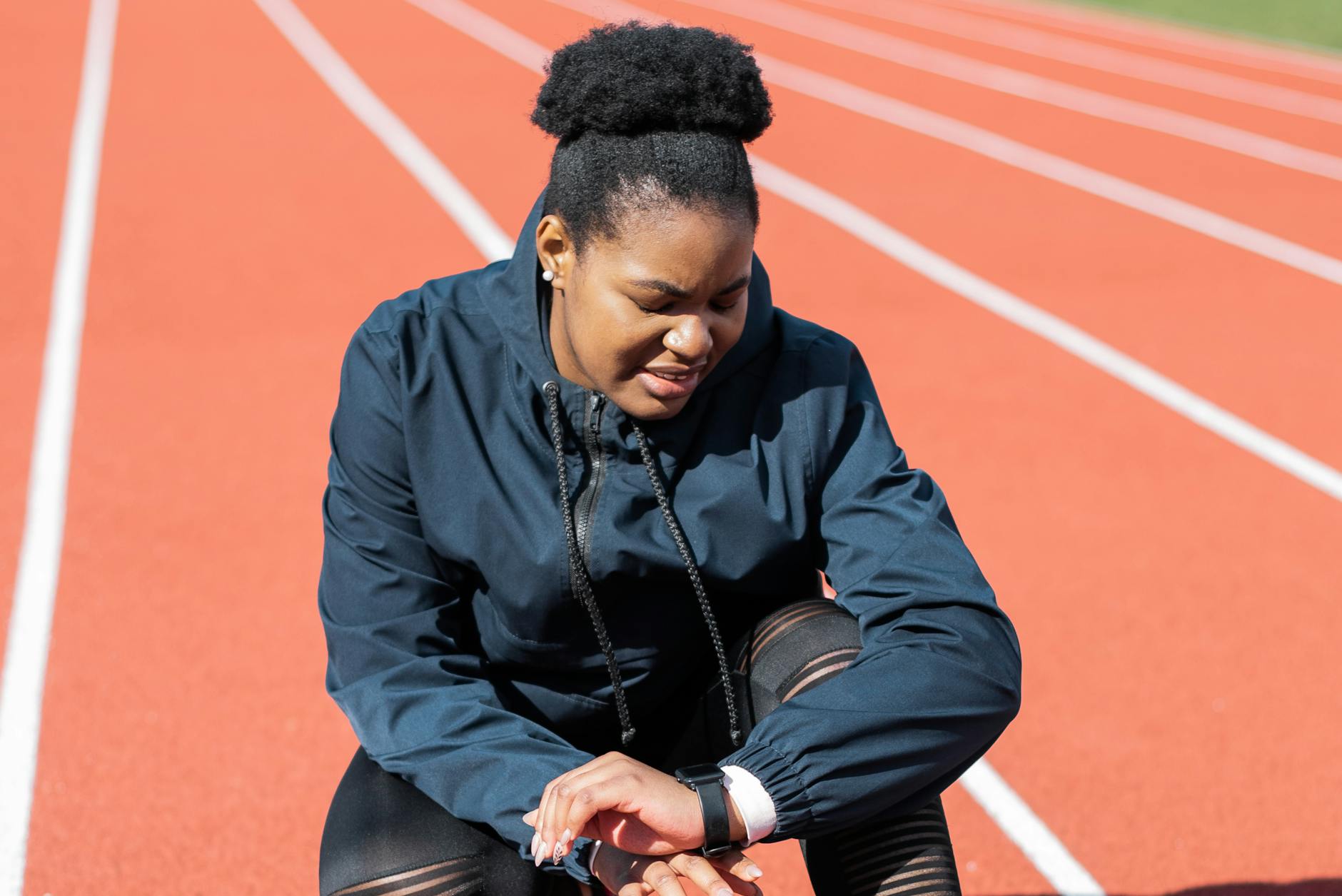
GPS watches, footpods, smartphone apps, and modern treadmills all measure running cadence with varying degrees of accuracy. For most runners, a GPS watch from Garmin, Coros, Apple, or Polar offers the best balance of convenience and precision—accurate within ±2-3 steps per minute and integrated into your existing training ecosystem. Footpods like Stryd deliver lab-grade accuracy (±1 spm) for gait retraining or injury recovery, while free smartphone apps provide a zero-cost entry point for runners testing whether cadence feedback matters to them.
Why measuring cadence matters for recreational runners
Cadence—your step rate in steps per minute (spm)—directly influences impact loading and injury risk. A 2014 biomechanics study by Heiderscheit and colleagues found that increasing cadence by just 5-10% reduces loading forces at the knee and hip by more than 20%, making it a practical lever for runners managing shin splints, IT band syndrome, or patellofemoral pain. Most recreational runners settle into a natural cadence between 160-180 spm, while elite marathoners often exceed 180 spm, though speed, terrain, and leg length all affect optimal rate.
Measuring cadence turns this insight into actionable feedback. Instead of chasing a “magic number,” you can track whether your cadence drifts lower during mile 18 of a long run—a sign of fatigue and altered mechanics—or whether a cue to “quick feet” on downhills actually changes your stride. The goal isn’t rigid adherence to 180 spm; it’s building awareness of how step rate shifts across paces, surfaces, and fatigue states, then using that data to refine your form and reduce injury exposure.
GPS running watches: the most versatile cadence tool
GPS running watches measure cadence using a wrist-worn accelerometer that detects the rhythmic oscillation of your arm swing with each stride. Current models from Garmin (Forerunner 255, 265, 965, Fenix 7), Coros (Pace 3, Apex 2 Pro), Apple (Watch Series 9, Ultra 2), and Polar (Vantage V3, Pacer Pro) all include cadence tracking as a standard feature, displaying real-time step rate on customizable data screens and logging every step for post-run analysis.
Validation studies conducted in 2022 and 2023 show wrist-based cadence accurate within ±2-3 spm during steady-state running on roads and tracks. That precision is more than sufficient for training feedback—you’ll reliably spot a 10-spm drop during a fatigued interval or confirm that your new “quick turnover” cue raised your typical easy-run cadence from 168 to 174 spm over four weeks. Data syncs automatically to platforms like Strava, TrainingPeaks, and Garmin Connect, where you can chart cadence trends across months and correlate step rate with pace, heart rate, and perceived effort.
The main limitation appears on technical trails or when carrying handheld water bottles. Extra wrist movement—grabbing a gel, adjusting a pack strap, gripping trekking poles—introduces accelerometer artifacts that can inflate or deflate the reported cadence by 5-10 spm for short windows. Road runners and track athletes rarely encounter this; trail and ultra runners should be aware that wrist-based readings may fluctuate more than reality during rough sections.
Price ranges from around $200 for entry-level models (Garmin Forerunner 55, Coros Pace 3) to $700 for multisport flagships (Garmin Fenix 7X, Apple Watch Ultra 2). For cadence measurement alone, even the most affordable GPS watch in 2026 delivers the accuracy and features needed to guide training decisions.
Which GPS watch brands measure cadence most accurately?
Garmin and Coros both use tri-axial accelerometers paired with proprietary filtering algorithms validated in university biomechanics labs. Apple introduced wrist-based cadence tracking in watchOS 9, leveraging the same motion-sensing hardware that powers fall detection and workout auto-recognition; independent testing shows it performs on par with dedicated running brands when the watch is snug and the wrist stable. Polar’s approach fuses data from its optical heart-rate sensor with accelerometer input, a method that also lands within the ±2-3 spm error envelope.
In practice, all four brands agree within 3 spm during controlled road runs. A runner wearing a Garmin Forerunner 265 on one wrist and a Coros Apex 2 on the other will see near-identical cadence readings lap after lap. Differences emerge on uneven terrain—Garmin’s FirstBeat analytics apply more aggressive smoothing, while Coros updates cadence every second with less filtering, producing a slightly noisier but more responsive trace. Neither approach is objectively better; some runners prefer the steadier Garmin display, others like Coro’s instant feedback when testing a form cue mid-interval.
For training purposes, any current-generation GPS watch from Garmin, Coros, Apple, or Polar provides cadence data accurate enough to inform decisions about pacing strategy, fatigue monitoring, and gait adjustments. The choice comes down to ecosystem preference (iOS integration for Apple, deep running analytics for Garmin, value-per-feature for Coros) rather than measurement fidelity.
Footpods and chest straps: when precision beats convenience
Footpods measure cadence by attaching a small accelerometer directly to your shoelace or the top of your shoe, capturing 3D motion at the foot rather than inferring it from wrist swing. The Stryd footpod, priced around $220, remains the field standard for non-lab cadence measurement, delivering accuracy within ±1 spm across surfaces from track to trail. Stryd also calculates running power, ground contact time, and leg spring stiffness, making it a comprehensive gait-analysis tool packaged in a 9-gram sensor.
Garmin’s Running Dynamics Pod (RDP), a chest- or waist-mounted clip, provided similar precision for cadence plus vertical oscillation and ground-contact balance until Garmin discontinued it in 2023. Used units still circulate on secondary markets, and existing owners can continue pairing them with compatible watches. Polar’s H10 chest strap, primarily a heart-rate monitor, includes an accelerometer that measures cadence when paired with a Polar watch, though it requires firmware updates to enable the feature and doesn’t offer the full gait-metrics suite of Stryd.
When should you choose a footpod over your wrist-worn watch? Three scenarios justify the cost and minor setup hassle:
- Formal gait retraining: Physical therapists often prescribe a target cadence increase (e.g., from 162 to 172 spm) to reduce impact loading post-injury. The ±1 spm precision of Stryd ensures you’re hitting the prescription, not drifting ±3 spm above or below without realizing it.
- Trail running with poles or handhelds: Trekking poles, handheld soft flasks, and frequent arm movement to scramble over rocks all compromise wrist accelerometer stability. A lace-mounted pod eliminates those artifacts.
- Data-driven training with running power: If you’re already investing in power-based training, Stryd’s cadence comes as part of a broader metrics package that includes real-time watt output and efficiency scores, all from a single sensor.
For the majority of runners—those logging road miles, track intervals, and moderate trails without poles—the GPS watch on your wrist delivers cadence feedback indistinguishable from a footpod in practical terms. Save the $220 unless you fall into one of the three scenarios above or you’re chasing every percentage point of measurement precision.
Smartphone apps: free cadence tracking with tradeoffs
Free smartphone apps including Strava, Nike Run Club, Runkeeper, and MapMyRun measure cadence using your phone’s built-in accelerometer, the same chip that rotates your screen and counts daily steps. The phone must remain in a consistent position—secured in an armband, clipped to a waistband, or held steadily in one hand—so the sensor registers the rhythmic up-and-down motion of your stride. Algorithms sample accelerometer data at 50-100 Hz and apply pattern-recognition filters to count steps per minute.
Accuracy typically lands in the ±5-8 spm range, lower than a GPS watch but adequate for tracking broad trends. You’ll reliably notice if your easy-run cadence averages 165 spm one month and 172 spm three months later after working on turnover drills, even if any single run’s reading might be off by a handful of steps. Inconsistent phone placement introduces the largest errors—holding the phone in your hand during an easy jog, then tucking it into a belt pouch for intervals, creates measurement discontinuities that skew session averages.
Pros of smartphone cadence apps:
- Zero hardware cost beyond the phone you already own
- Instant access—download, run, view cadence in post-activity summary
- Integration with social training platforms and route libraries
Cons:
- Battery drain, especially with GPS and screen active simultaneously
- Reduced reliability on trails where arm swing becomes irregular
- No real-time wrist display—you finish the run before seeing cadence data
- Requires discipline to secure phone in the same spot every run
Smartphone apps work best for new runners testing whether cadence feedback improves their training before committing $200+ to a GPS watch, or for experienced runners who forgot their watch and want a backup measurement tool. If you find yourself checking post-run cadence regularly and wishing you could see it live during intervals, that’s a clear signal to invest in a wrist-worn device.
Treadmills and indoor track solutions
Most treadmills manufactured in 2022 or later with integrated touchscreens display real-time cadence alongside pace and heart rate. High-end commercial and home models—Peloton Tread, Woodway Curve, NordicTrack Commercial series—use belt-speed sensors or pressure-sensitive deck panels to detect foot-strike timing, then calculate steps per minute. Accuracy varies widely: premium belts achieve ±3-5 spm, while budget models can drift ±10 spm or more, especially at slower paces where foot-strike signal is weaker.
If your treadmill cadence reads 182 spm but your GPS watch shows 174 spm outdoors at the same easy pace, trust the watch or verify with a manual count. Treadmill readings are useful for session-to-session comparisons on the same machine (did your cadence hold steady through a 60-minute tempo, or did it drop 8 spm in the final 10 minutes?) but shouldn’t be treated as ground truth for absolute step rate.
Manual counting remains the zero-tech gold standard for indoor verification: set a timer, count right-foot strikes for 30 seconds, and double the result. Done carefully, this method has ±0 spm error and takes 30 seconds. Repeat it once per treadmill run to calibrate your sense of what 170, 175, or 180 spm feels like, then rely on internal feel and the treadmill display for in-run feedback.
Metronome apps (free on iOS and Android) don’t measure cadence—they provide an audible beat to match. Set the metronome to your target step rate (e.g., 174 bpm for 174 spm), play it through earbuds, and synchronize your foot strikes to the beep. This trains cadence adherence rather than tracking it, but pairs well with manual counting: count to confirm your actual rate, adjust the metronome up or down, then run several intervals locked to the beat. Over weeks, the target cadence becomes ingrained, and you’ll need the metronome less often.
Comparing accuracy: which tool should you trust?
Laboratory-grade cadence measurement uses high-speed video (240+ frames per second) or force plates embedded in a track surface, both accurate to the individual step. Those tools aren’t practical for daily training, so field runners rely on consumer devices that trade some precision for convenience. Here’s the accuracy hierarchy for tools available in 2026:
- Stryd footpod: ±1 spm across all surfaces and arm positions
- GPS watch on stable wrist: ±2-3 spm during road and track running
- Chest-mount pod (Polar H10, used Garmin RDP): ±2 spm, minimal arm-swing artifacts
- Smartphone in armband: ±5-8 spm with consistent placement
- Treadmill display: ±3-10 spm depending on model quality
For training purposes, even ±5 spm error is acceptable. You’re not chasing decimal-point precision; you’re tracking trends—did your cadence drift lower during the second half of a marathon-pace workout, signaling fatigue? Did your new “quick feet” cue on downhills raise cadence by 6-8 spm, or did it have no measurable effect? Those questions get answered reliably even with a smartphone app, though tighter accuracy helps when the changes you’re testing are subtle (a 3-spm increase from a form tweak is invisible to a ±5 spm tool, obvious to a ±1 spm footpod).
Recommendation for most runners: if you already own a GPS watch, use it—the ±2-3 spm accuracy is more than sufficient, and the convenience of wrist display plus automatic data logging outweighs the minor precision gain from a footpod. If you’re working with a physical therapist on gait retraining post-injury and need to verify you’re hitting a prescribed cadence within 1-2 spm, invest in Stryd. If you’re exploring whether cadence feedback helps before buying any hardware, start with a free smartphone app and manual counting to establish your baseline.
How to choose the right cadence tool for your training goals
Matching tool to goal ensures you spend appropriately and get actionable data rather than unused features. Here are five common scenarios with tailored recommendations:
Scenario 1: Beginner wanting baseline cadence data Use a free smartphone app (Strava, Nike Run Club, Runkeeper) or a basic GPS watch if you already own one for navigation. Goal is discovering your natural step rate at easy, tempo, and interval paces—±5-8 spm accuracy is fine for this exploration phase. After three months, if you find yourself checking cadence regularly and correlating it with how runs feel, upgrade to a GPS watch for real-time feedback.
Scenario 2: Injury history, physical therapist recommended cadence increase Choose a GPS watch with a customizable data screen so you can display cadence in large font during runs. Set up an alert (available on Garmin and Coros) to vibrate if cadence drops below your target range, providing in-run cues to lift turnover when fatigue sets in. Real-time visibility keeps you on track with the PT’s prescription; post-run trends show whether the adjustment is becoming habitual or requires continued focus.
Scenario 3: Trail runner with trekking poles or frequent handheld use Opt for a footpod like Stryd. Wrist motion on technical trails—grabbing poles, adjusting pack straps, catching yourself on a slip—creates accelerometer noise that inflates or deflates wrist-based cadence readings unpredictably. A lace-mounted pod measures foot motion directly, eliminating those artifacts and giving you confidence that a 168 spm reading on a rocky descent reflects reality, not sensor confusion.
Scenario 4: Serious about run economy and power metrics Invest in Stryd for its full metrics suite: cadence, running power (watts), ground contact time, vertical oscillation, and leg spring stiffness. Cadence is one variable in the efficiency equation; seeing how step rate interacts with power output across paces lets you optimize both. For example, you might discover that raising cadence from 172 to 178 spm at tempo pace increases power by only 4 watts but significantly reduces quad fatigue—a finding that informs race-day pacing strategy.
Scenario 5: Budget under $50, want to test if cadence feedback matters Download a free app, invest in a $12 smartphone armband for stable placement, and pair it with manual counting (30-second right-foot tally, doubled) once per week to calibrate. After two months, if cadence data has influenced your training decisions or helped troubleshoot an injury, budget for a GPS watch. If you rarely look at the numbers, you’ve spent $12 instead of $250 to learn that cadence isn’t a priority metric for your current goals.
Most runners land in scenario 1 or 2, making a GPS watch the practical default. The watch delivers cadence automatically while also providing pace, distance, heart rate, and route tracking—training tips you’re likely using anyway. Footpods and smartphone apps serve narrower use cases where wrist-based measurement fails or budget constraints demand a free option.
Frequently Asked Questions
Can I measure running cadence without buying a watch?
Yes. Free smartphone apps like Strava, Nike Run Club, and Runkeeper measure cadence using your phone’s accelerometer when secured in an armband or waist belt. Accuracy is ±5-8 steps per minute, which is sufficient for tracking trends. You can also count manually: tally right-foot strikes for 30 seconds and double the number. Modern treadmills often display cadence as well.
Are GPS watches accurate for measuring running cadence?
GPS watches from Garmin, Coros, Apple, and Polar measure cadence via wrist accelerometers with typical accuracy of ±2-3 steps per minute in controlled conditions. This is precise enough for training feedback and trend analysis. Accuracy can decrease on technical trails or when carrying water bottles, because extra wrist movement introduces artifacts. For most runners, GPS watch cadence data is reliable and actionable.
What is the most accurate tool for measuring running cadence?
Footpods like the Stryd sensor, which attaches to your shoelaces, offer the highest field accuracy at ±1 step per minute. They measure 3D motion directly at the foot, eliminating wrist-movement errors. Lab-grade tools like high-speed video or force plates are more precise, but impractical for everyday training. For runners retraining gait or recovering from injury, a footpod provides the precision needed; for general training, a GPS watch is sufficient.
Do I need a special sensor to track cadence on a Garmin watch?
No. All current Garmin running watches measure cadence using the built-in wrist accelerometer—no external sensor required. Older Garmin models supported the Running Dynamics Pod for chest or waist mounting, which offered slightly better accuracy, but that accessory was discontinued in 2023. The wrist-based cadence on Forerunner and Fenix models is accurate within ±2-3 steps per minute for typical road and track running.
How does a smartphone app measure running cadence?
Smartphone apps measure cadence by detecting rhythmic accelerations from your stride using the phone’s accelerometer chip. The phone must be in a stable position—an armband, waistband, or held steadily—so the sensor registers consistent motion. Apps like Strava and MapMyRun sample accelerometer data at high frequency and apply algorithms to count steps per minute. Accuracy ranges from ±5-8 spm depending on phone placement and running surface.
Is treadmill cadence display accurate?
Treadmill cadence accuracy varies widely by model and price. Higher-end belts with touchscreens (Peloton, Woodway, newer NordicTrack) typically measure within ±3-5 steps per minute using belt-speed sensors or foot-strike detection. Budget treadmills may show errors of ±10 spm or more. If your treadmill cadence differs significantly from your GPS watch, trust the watch or verify with a 30-second manual count.
Should I use a footpod or rely on my running watch for cadence?
Most runners should rely on their GPS watch—it’s convenient, accurate enough (±2-3 spm), and already on your wrist. Consider a footpod like Stryd if you’re doing formal gait retraining, recovering from a repetitive-stress injury, or running trails with trekking poles where wrist motion isn’t reliable. Footpods cost around $220 but also provide running power and ground-contact time, making them worthwhile for data-focused training.
Leave a Reply