

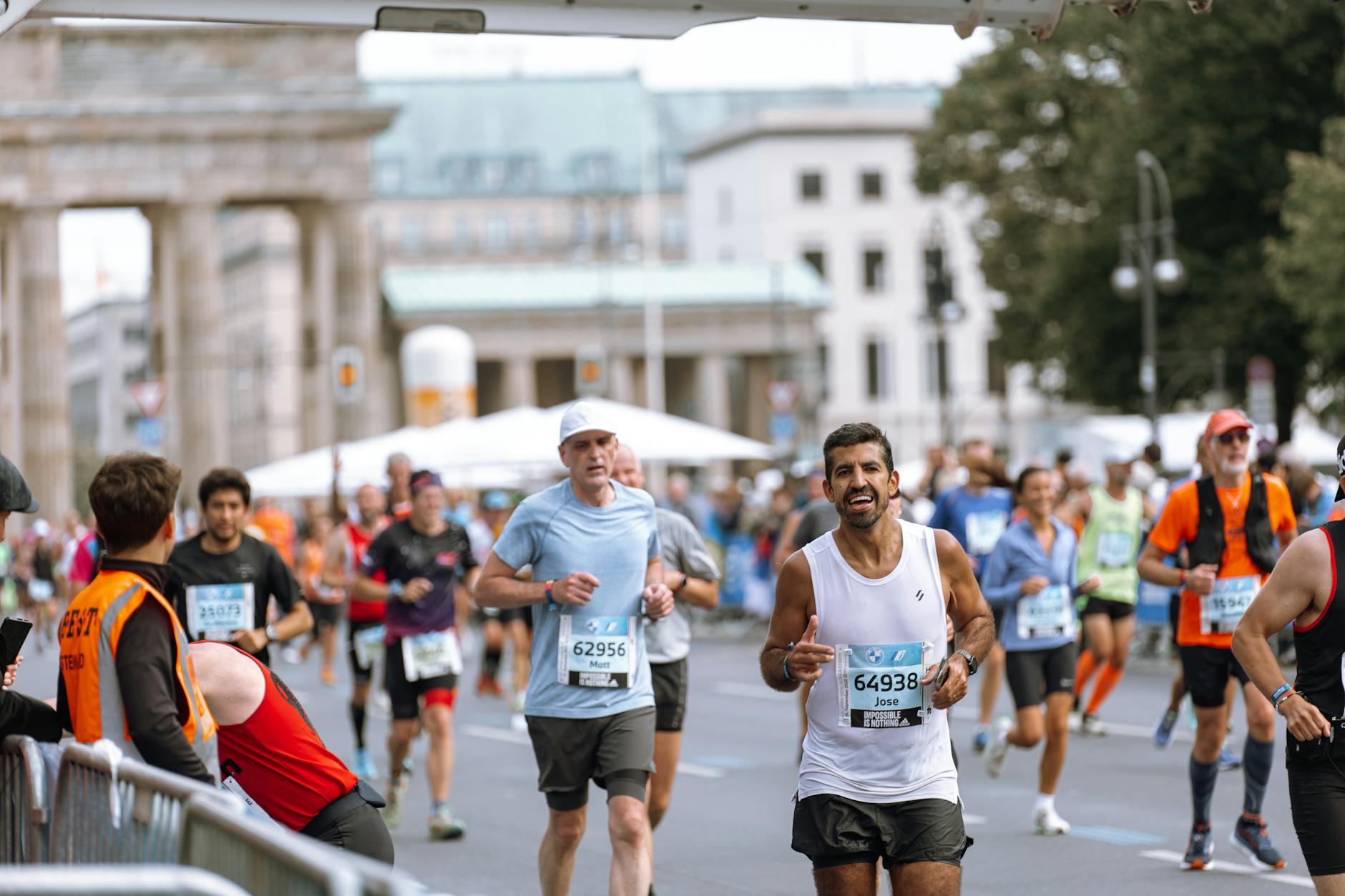
Marathon recovery requires a full 3–4 weeks of structured rest and gradual return to training. The first 7–10 days demand complete rest from running, allowing muscle fibers to repair and glycogen stores to normalize. Week two introduces short, easy runs every other day at conversational pace, while weeks three and four systematically rebuild volume before reintroducing any intensity work.
Why does marathon recovery take 3–4 weeks?
The 26.2-mile distance inflicts measurable physiological damage that cannot be rushed. Research on post-marathon blood markers shows creatine kinase—a protein released when muscle fibers break down—remains elevated for 7–10 days after the race, indicating ongoing muscle repair. Muscle glycogen stores, depleted by the sustained effort, take 24–72 hours to fully restore even with optimal carbohydrate intake. Your immune system experiences acute suppression in the 48–72 hour window post-race, leaving you vulnerable to upper respiratory infections if you resume hard training too quickly.
Beyond the metabolic toll, connective tissue sustains micro-trauma from the repetitive eccentric loading of downhill running and the cumulative pounding of 30,000–40,000 foot strikes. Tendons, ligaments, and fascial layers lack the blood supply of muscle tissue, so they repair more slowly. This is why runners who feel “fine” muscularly at day 10 often develop tendinopathy or stress reactions when they jump back into mileage too aggressively.
The three-to-four-week timeline reflects the convergence of these repair processes: muscle fiber regeneration peaks around day 10, connective tissue remodeling continues through week three, and neuroendocrine function—hormones like cortisol and testosterone—normalizes by week four for most runners.
Week 1: The active rest window (Days 1–7)
Take complete rest from running for the first three days post-marathon. During this period, limit activity to light walking for daily tasks—no purposeful exercise sessions. From days 4–7, you can introduce very light cross-training such as 30–45 minutes of easy cycling, pool jogging, or restorative yoga, keeping your heart rate comfortably below 70% of maximum.
Sleep becomes your primary recovery tool: aim for 8–9 hours per night, and don’t be surprised if you need an extra hour in the first 72 hours. Your muscles repair during deep sleep, and growth hormone secretion—critical for tissue regeneration—peaks at night.
Hydration targets in week one should focus on urine color: pale yellow indicates adequate hydration, while dark amber means you’re still catching up from race-day losses. Protein intake matters more now than during peak training: target 1.6–2.0 grams per kilogram of bodyweight, spread across four to five meals. A 70 kg (154 lb) runner should consume 112–140 grams of protein daily, or roughly 25–30 grams per meal.
Key week-one rules:
- No running, period, through day 7
- Walk for errands and daily movement only in days 1–3
- Add optional cross-training after day 5, under 60 minutes, easy effort
- Prioritize sleep over any “active recovery” session
What cross-training is safe in the first week?
Pool jogging, easy cycling with heart rate below 70% of max, and gentle yoga or stretching are approved starting around day 5. These activities promote blood flow and mobility without adding eccentric muscle load—the lengthening contractions that cause the most damage. Swimming is ideal because the water supports your bodyweight, eliminating impact forces entirely.
Avoid plyometrics, box jumps, or any jumping movement. Skip heavy strength training, especially exercises like squats and lunges that load the legs eccentrically. Hold off on high-intensity interval work of any kind, even on the bike. The reason is simple: your muscle fibers are still undergoing structural repair, and eccentric loading re-damages tissue before the initial injury has healed.
If you feel compelled to “do something” in the first week, a 20-minute walk followed by 10 minutes of gentle stretching offers more recovery benefit than a 60-minute easy spin that leaves your legs feeling heavy the next day.
Week 2: Return to easy running (Days 8–14)
Begin running again around day 8 with 20–30 minute sessions at a truly easy pace—conversational effort, heart rate under 75% of maximum, or RPE 3–4 out of 10. Run every other day, capping your total weekly volume at 30–40% of your pre-taper weekly mileage. If you were running 50 miles per week before your taper, week two should total 15–20 miles maximum.
These runs should feel almost trivially easy. The goal is neuromuscular reactivation—reminding your legs how to run—not aerobic stimulus. If you finish a run and feel fatigued an hour later, you’ve gone too hard or too long.
Monitor your resting heart rate each morning before getting out of bed. If it remains elevated by 10 or more beats per minute above your established baseline, take an extra rest day. An elevated resting heart rate signals incomplete recovery and predicts higher injury risk if you proceed with training.
How do you know if you’re running too hard too soon?
Warning signs include soreness in the same muscle or tendon lasting more than 48 hours after a run, fatigue that persists into the following day, resting heart rate that won’t return to baseline, and mood disturbances like irritability or difficulty concentrating. Any of these symptoms mean you should dial back effort, reduce mileage, or add another rest day.
Keep a simple recovery log during weeks 2–4: rate your perceived effort (1–10 scale), note sleep quality (hours and how rested you felt upon waking), and track any specific soreness locations. This data helps you distinguish between general post-marathon fatigue—which is normal and improving—and emerging injury patterns that require rest or professional evaluation.
Sharp, localized pain is never normal. Dull, symmetric muscle ache that improves with a few minutes of easy jogging is expected in week two. If pain worsens during a run, stop immediately and walk home.
Week 3: Build volume, hold intensity (Days 15–21)
Increase your weekly volume to 50–60% of pre-taper mileage, maintaining easy conversational pace for the majority of runs. If you’re feeling strong and energetic, you can introduce one tempo effort: 10–15 minutes at threshold pace (the effort you could hold for roughly an hour in a race) within an otherwise easy 40–50 minute run. This single harder effort tests your readiness for structured work without overwhelming still-healing tissue.
Reintroduce strength training this week, but start conservatively: bodyweight exercises or light resistance for 2–3 sets of 10–12 reps. Focus on single-leg stability work—split squats, step-ups, and single-leg deadlifts—rather than heavy bilateral lifts. Avoid max-effort lifts or high-volume eccentric work; your goal is neuromuscular activation and connective tissue loading, not muscle damage.
Consider your running surfaces carefully. Softer trails and dirt paths reduce impact forces compared to concrete sidewalks. If your marathon was entirely on asphalt, transitioning to softer surfaces for half your weekly mileage gives your bones and connective tissue a break while you rebuild volume.
By the end of week three, you should feel noticeably more like yourself: energy levels closer to normal, legs responding well to easy pace, and no lingering soreness 24 hours after a run.
Week 4: Gradual return to structure (Days 22–28)
Resume 70–80% of your normal training volume in week four, with one structured workout per week. Safe workout options include a 20–30 minute tempo run at threshold pace, a hill session with 6–8 moderate-grade repeats of 60–90 seconds, or short intervals at 5K pace (e.g., 6 × 800 meters with equal recovery). Keep the total time at intensity under 25 minutes.
The rest of your week should remain aerobic: easy runs, one slightly longer run at 60–75 minutes (still easy pace), and at least two full rest days. This balance allows you to begin rebuilding aerobic and neuromuscular systems without accumulating the fatigue that leads to overtraining.
Monitor for overtraining markers: persistent fatigue despite adequate sleep, loss of appetite, elevated resting heart rate, or regression in workout performance. If you hit your tempo pace splits more easily in week three than week four, you’re not recovering between sessions—add rest.
Do not resume VO2max intervals, long tempo runs of 40+ minutes, or back-to-back hard workouts until week 5 or 6. Full-intensity training before week five significantly raises injury risk because connective tissue is still remodeling and your aerobic system hasn’t fully rebuilt the mitochondrial density lost during your taper and recovery.
What if you’re still sore after four weeks?
Persistent soreness or fatigue at the four-week mark usually points to one of three issues: insufficient calorie intake during recovery, a pre-existing injury unmasked by marathon damage, or inadequate sleep. Review your nutrition log—are you eating enough carbohydrates to support the training you’ve resumed? Many runners unconsciously under-eat post-race, maintaining race-week calorie restriction habits even as training volume climbs.
If pain is localized to a specific tendon, bone, or joint and hasn’t improved with rest, consult a physiotherapist. What feels like “slow recovery” may actually be a stress reaction in the tibia, Achilles tendinopathy, or plantar fascial strain that was brewing before the marathon and became symptomatic under race-day load.
Distinguish between general fatigue—feeling tired but able to complete runs at the prescribed pace—and true injury, where specific movements cause sharp pain or you cannot maintain normal running form. General fatigue responds to an additional week of easy volume; injury requires professional assessment and often a temporary break from running.
Active recovery strategies that accelerate tissue repair
Foam rolling for 5–10 minutes daily on the quadriceps, calves, IT band, and glutes improves tissue mobility and may reduce perceived soreness. Focus on slow passes (1–2 inches per second) over tender areas, spending 60–90 seconds per muscle group. Avoid rolling directly over bones, joints, or acutely inflamed tissue.
Compression garments—full-length tights or calf sleeves—worn for 2–4 hours immediately post-race and during sleep for the first three nights improve venous return and may reduce swelling. The evidence for faster muscle repair is mixed, but the reduction in perceived soreness is consistent across studies.
Cold-water immersion within one hour of finishing your marathon—10–15 minutes in water at 10–15°C (50–59°F)—reduces inflammation and perceived soreness in the 24–72 hour window. Fill a bathtub with cold water and ice, submerge up to your waist, and tolerate the discomfort. If full immersion isn’t practical, contrast showers (alternating 2 minutes cold, 1 minute warm, repeated three times) offer a milder alternative.
Massage is beneficial after day three, but avoid deep-tissue work in the first 72 hours when inflammation is part of the healing process. Schedule a session for day 5–7 focused on gentle effleurage (long, gliding strokes) to promote circulation rather than aggressive myofascial release.
Does ice bath vs. compression gear make a difference?
Meta-analyses comparing recovery modalities show that cold-water immersion reduces perceived soreness by roughly 20% and modestly accelerates creatine kinase clearance, indicating faster muscle-fiber repair. Compression garments improve venous return—the flow of deoxygenated blood back to the heart—but show inconsistent evidence for accelerating tissue repair itself.
The practical takeaway: both strategies offer small but real benefits, and the best choice is the one you’ll actually use consistently. If sitting in an ice bath sounds miserable and you’ll skip it, compression tights you can wear while relaxing on the couch deliver more benefit simply because you’ll comply. Conversely, if you have easy access to cold-water immersion and find it invigorating, the physiological edge is slightly larger.
Don’t overthink recovery modalities. Sleep, nutrition, and appropriate training load matter far more than whether you choose ice or compression. Use these tools as supplements, not substitutes, for the basics.
Nutrition priorities in the first 72 hours
Carbohydrate repletion is the most urgent nutritional task: consume 7–10 grams per kilogram of bodyweight in the first 24 hours post-race. For a 70 kg runner, that’s 490–700 grams of carbohydrate—roughly 2,000–2,800 calories from carbs alone. Prioritize easily digestible sources: white rice, pasta, bread, potatoes, bananas, and sports drinks. After the initial 24-hour push, maintain 5–7 g/kg daily through the first week.
Protein intake supports muscle-fiber repair: target 20–30 grams every 3–4 hours rather than one or two large doses. Spreading intake maximizes muscle protein synthesis throughout the day. Good post-marathon sources include Greek yogurt, eggs, chicken, fish, and protein shakes if appetite is low.
Anti-inflammatory foods help manage the systemic inflammation triggered by 26.2 miles of pounding. Tart cherry juice—two servings (8 ounces each) daily—contains anthocyanins that reduce oxidative stress and perceived soreness. Omega-3 fatty acids from salmon, mackerel, walnuts, or flaxseed also modulate inflammation without suppressing the adaptive immune response you need for tissue repair.
Hydration should aim to replace 150% of weight lost during the race. If you lost 4 pounds (1.8 kg) from start to finish, drink 6 pounds (2.7 liters) of fluid over the next 6–12 hours. Include electrolytes—sodium and potassium—not just water. Sodium helps retain fluid, while potassium supports muscle function. Electrolyte drinks, broths, or salty snacks accomplish this more effectively than plain water alone.
When can you race again after a marathon?
A conservative guideline is one day of recovery per mile raced, yielding a minimum 26-day break before any race effort. This rule scales effort appropriately: a 5K or 10K four weeks post-marathon presents manageable risk, while another marathon demands 12–16 weeks.
For another full marathon, allow 12–16 weeks of structured training following your four-week recovery. This timeline rebuilds aerobic capacity, allows a proper base phase, and accommodates a full build and taper. Attempting a second marathon on shorter rest increases stress fracture risk, compromises performance, and limits long-term adaptation—you’ll run slower and gain less fitness.
For a half marathon, wait 6–8 weeks post-marathon. The half distance requires sustained threshold effort but less absolute volume and pounding than a full marathon, so tissue can handle the load sooner. You’ll need at least two weeks of easy running, two weeks of moderate volume building, and two weeks of specific half-marathon work before race day.
For a 5K or 10K, 4–6 weeks is reasonable. These shorter distances demand higher intensity but less eccentric load and total time on your feet. If your four-week recovery proceeds smoothly, you can begin specific speed work in week five and race in week six without significant injury risk.
Racing too soon while muscle, connective tissue, and aerobic systems are still recovering diminishes the adaptive stimulus of your marathon training. Your body interprets back-to-back hard efforts as chronic stress, not progressive overload, leading to tendinopathy, stress reactions, or performance stagnation over the following months.
Frequently Asked Questions
How long should you rest after running a marathon?
Take 7–10 days of complete rest from running after a marathon. During the first 3 days, avoid all exercise beyond light walking. From days 4–7, you can add low-impact cross-training like swimming or easy cycling under 60 minutes. This window allows muscle fibers to repair, glycogen stores to normalize, and your immune system to recover from the acute suppression that follows a 26.2-mile effort.
Can you do any exercise in the first week after a marathon?
Yes, but only low-impact, non-eccentric activities starting around day 4 or 5. Safe options include pool jogging, easy cycling (heart rate below 70% max), and gentle yoga or stretching. Avoid running, plyometrics, heavy strength training, or high-intensity intervals. The goal is to promote blood flow and mobility without adding eccentric muscle load, which delays recovery of the damage caused by marathon pounding.
When can you start running again after a marathon?
Begin easy running in week two, around days 8–10 post-race. Start with 20–30 minute runs at a conversational pace, every other day, keeping your heart rate under 75% of max. Cap your weekly mileage at 30–40% of your pre-taper volume. If you experience persistent soreness in the same spot for more than 48 hours or your resting heart rate remains elevated by 10+ bpm, delay your return by a few more days.
What should you eat in the 72 hours after a marathon?
Prioritize carbohydrate repletion at 7–10 grams per kilogram of bodyweight in the first 24 hours, then maintain 5–7 g/kg daily. Consume 20–30 grams of protein every 3–4 hours to support muscle repair. Include anti-inflammatory foods like tart cherry juice (two servings daily) and omega-3 sources such as salmon or walnuts. Hydrate to replace 150% of weight lost during the race, including electrolytes like sodium and potassium.
How soon can you race again after a marathon?
A conservative guideline is one day of recovery per mile raced, meaning at least 26 days before any race. For another marathon, allow 12–16 weeks. For a half marathon, wait 6–8 weeks. For a 5K or 10K, 4–6 weeks is reasonable. Racing too soon while muscle, connective tissue, and energy systems are still repairing significantly increases your risk of stress fractures, tendinopathy, and diminished long-term adaptation.
What are the signs you’re recovering too slowly from a marathon?
Watch for persistent muscle soreness in the same location lasting beyond 48 hours, resting heart rate elevated by more than 10 beats per minute above your baseline, fatigue that lingers into the next day after light activity, and mood disturbances like irritability or low motivation. If pain is sharp and localized rather than general muscle ache, or if these symptoms persist past two weeks, consult a physiotherapist to rule out injury.
Do compression garments and ice baths help marathon recovery?
Both have modest benefits. Cold-water immersion (10–15 minutes at 10–15°C within an hour post-race) reduces perceived soreness and may slightly accelerate creatine kinase clearance. Compression garments worn for 2–4 hours post-race and during sleep the first three nights improve venous return but show mixed evidence for faster tissue repair. The best strategy is the one you’ll use consistently—both are safe and may help you feel better even if the physiological gains are small.
Leave a Reply