

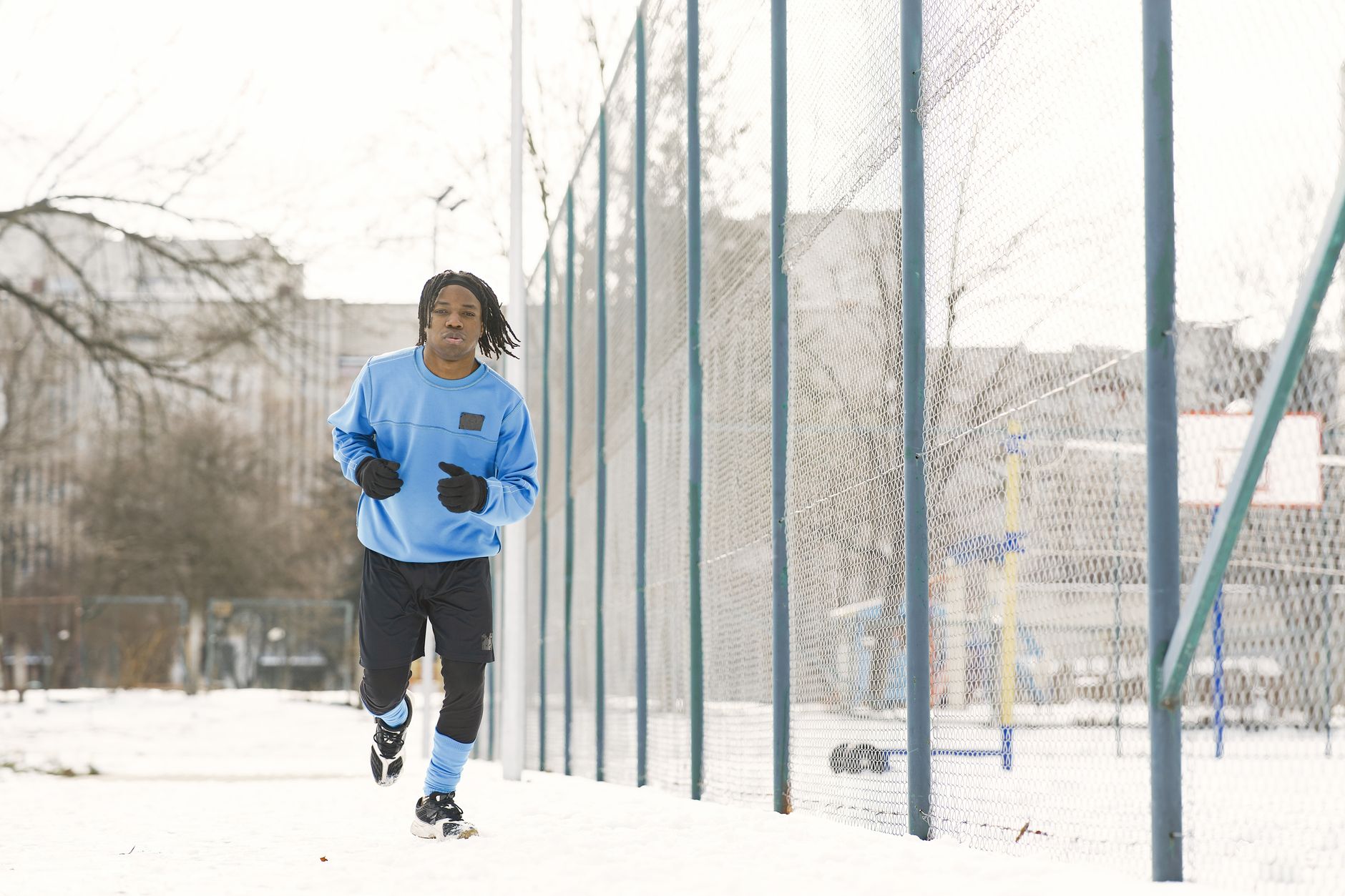
Most runners can safely train outdoors down to about 0°F (-18°C) when properly layered and acclimated, but wind chill below -20°F (-29°C) significantly raises frostbite risk within 30 minutes. Your personal threshold depends less on the thermometer reading and more on wind speed, humidity, your cold-weather experience, and how well you protect exposed skin. The American College of Sports Medicine considers 0°F a practical floor for most recreational athletes, though elite cold-adapted runners regularly train in colder conditions with meticulous preparation.
What temperature is medically unsafe for outdoor running?
Exercise physiologists and sports medicine researchers point to 0°F as the temperature below which most recreational runners face elevated risk without specialized gear and experience. At this threshold, cold stress on exposed skin accelerates, breathing very cold air can trigger airway constriction in susceptible individuals, and the margin for layering mistakes narrows sharply.
Wind chill complicates the picture considerably. When effective temperature—accounting for wind speed—drops below -20°F, frostbite can occur on exposed skin in under 30 minutes, even during vigorous exercise. The National Weather Service classifies this range as “dangerous” for outdoor activity. Research on cold-weather athletes shows that acclimated runners—those who’ve trained through at least one full winter season—can tolerate ambient temperatures 10-15°F lower than beginners before experiencing the same physiological stress. Their bodies adapt through improved peripheral circulation, more efficient shivering thermogenesis, and behavioral adjustments like shorter strides that reduce convective heat loss.
Humidity matters more than many runners realize. Dry cold at 5°F feels markedly less penetrating than damp cold at 20°F because moisture conducts heat away from skin roughly 25 times faster than dry air. Coastal winter runners often struggle more at 25°F with ocean wind than Midwest runners at 10°F in dry continental air.
A practical decision rule: if you’re new to winter running, stay indoors below 15°F until you’ve built four to six weeks of consistent cold exposure at milder temperatures. Experienced cold-weather runners can safely extend that floor to 0°F with proper layering and route planning. Below 0°F, even veterans should limit runs to familiar, short loops with bailout options and never run solo.
How wind chill changes your actual cold exposure
Wind chill quantifies the rate of heat loss from exposed skin caused by combined cold and wind—essentially converting ambient temperature into what your body experiences. The National Weather Service formula accounts for wind speed and air temperature to calculate effective temperature. For example, 20°F with a 15 mph wind produces a wind chill of 5°F, meaning your skin loses heat at the same rate it would in calm 5°F conditions.
This matters enormously for runners because we generate our own headwind. Running at 8-minute-mile pace creates roughly 7.5 mph of self-generated wind; add a 10 mph breeze blowing against you, and you’re experiencing 17.5 mph effective wind. That same 20°F morning suddenly feels like 3°F on exposed cheeks and foreheads.
Key wind-chill scenarios runners face:
- 25°F + 10 mph wind = 15°F effective
- 15°F + 15 mph wind = -1°F effective
- 10°F + 20 mph wind = -9°F effective
- 0°F + 15 mph wind = -19°F effective (frostbite risk in 30 minutes)
A windproof shell dramatically changes this equation. Quality wind-blocking fabrics reduce convective heat loss by approximately 40 percent, effectively adding 8-12°F of warmth in breezy conditions without added bulk. This is why a thin windbreaker often outperforms a thick fleece on windy winter mornings.
Your face, fingers, and ears lose heat fastest because they have high surface-area-to-volume ratios and limited insulating fat. Frostbite almost always begins at these extremities. Tree-lined neighborhood routes or wooded trails cut wind exposure by 20-30 percent compared to open roads or lakefront paths—a meaningful reduction when you’re near your cold threshold. Plan out-and-back routes so any tailwind on the outbound leg becomes a headwind when you’re sweaty and fatigued on the return; facing into wind during the warm-up is safer than battling it when you’re damp and tired.
The three-layer system that works below 20°F
Cold-weather layering follows a proven architecture: base layer for moisture management, mid-layer for insulation, shell for wind and precipitation blocking. Below 20°F, all three layers become non-negotiable, and fabric choice matters more than thickness.
Base layer: Merino wool (150-200 gsm weight) or synthetic fabrics like polyester or nylon blends wick sweat away from skin while providing modest insulation. Merino resists odor better and stays warm when damp; synthetics dry faster and cost less. Never wear cotton—it absorbs moisture, clings to skin, and accelerates heat loss. A long-sleeve base should fit snugly without restricting arm swing. Below 10°F, consider adding a lightweight synthetic bottom base layer under tights.
Mid-layer: Fleece (200-300 weight) or light synthetic insulation (40-60 gsm) traps warm air while allowing moisture vapor to escape. This layer provides the bulk of your insulation. A quarter-zip fleece offers ventilation control; full-zip allows faster adjustments if you overheat. Below 0°F, a thin insulated vest over your fleece adds core warmth without restricting arm movement.
Shell layer: Windproof and water-resistant soft-shell jackets block convective heat loss while breathing well enough to shed exercise-generated moisture. Look for pit zips or ventilation panels—once you’re past the first mile and generating heat, you’ll need to dump excess warmth. Above 30°F, many runners can skip the shell unless it’s windy or precipitating.
Extremities—the 30 percent rule: Your head, hands, and neck account for roughly 30 percent of body heat loss, despite representing far less surface area. Below 15°F, a thermal headband or lightweight beanie, neck buff, and mittens (not gloves—shared finger warmth matters) become mandatory. Mittens outperform gloves by 15-20 percent in sub-20°F conditions. Consider liner gloves inside shell mittens below 0°F.
Rookie mistakes cost comfort and safety. Overdressing above 30°F leads to sweat-soaked base layers by mile two, which then chill you severely if you slow down or stop. A useful calibration: you should feel slightly cool—borderline uncomfortable—for the first eight to ten minutes. If you’re perfectly comfortable standing at your door, you’ll overheat once your metabolism ramps up. Conversely, under-layering below 15°F leaves no margin for a forced walk break or route detour.
Tights versus pants is largely personal preference above 25°F; below that, wind-blocking tights or thermal running pants with a DWR (durable water repellent) finish provide measurably better protection. Petroleum jelly on cheeks, nose, and lips creates a wind barrier and prevents chapping on sub-10°F outings.
Warning signs your body is losing the cold-weather battle
Frostbite and hypothermia develop faster during exercise than at rest because runners often ignore early symptoms, attributing discomfort to normal cold-weather sensations. Recognizing the progression of cold injury is critical—waiting for severe symptoms means you’ve already sustained tissue damage.
Frostbite early warning signs:
- Numbness or loss of sensation in fingers, toes, ears, nose, or cheeks
- Skin turning white, greyish, or waxy in appearance
- Tingling or burning sensation that then disappears (a dangerous progression)
- Hard or unusually firm skin texture when touched
Frostbite can occur in as little as ten minutes when wind chill drops below -20°F on unprotected skin. If your fingers don’t regain warmth and sensation after the first ten minutes of running—when your core body temperature and circulation should be rising—stop immediately and seek indoor shelter. Do not ignore persistent numbness; early-stage frostbite (frostnip) is reversible, but deep frostbite causes permanent tissue damage.
Hypothermia warning signs:
- Uncontrollable shivering (early stage) or cessation of shivering (dangerous late stage)
- Confusion, poor decision-making, or memory lapses
- Slurred speech or difficulty forming words
- Loss of coordination, stumbling, or decreased running form
- Drowsiness or unexplained fatigue beyond normal workout exertion
Core body temperature drop of just 2°F—from 98.6°F to 96.6°F—begins to impair judgment and coordination. The danger is that hypothermic runners often fail to self-recognize their deteriorating condition, continuing to push when they should stop. Research on cold-weather athletes shows that shivering stops when core temperature falls below 95°F, signaling severe hypothermia requiring emergency medical intervention.
Immediate actions when symptoms appear:
- Stop running and seek indoor shelter immediately—do not “push through” to finish your planned mileage
- Remove wet clothing and replace with dry layers if possible
- Warm affected areas gradually with body heat (armpit warming for hands) or lukewarm water (never hot)
- Drink warm fluids if alert and able to swallow; dehydration accelerates cold injury progression
- Call for help if confusion, loss of coordination, or cessation of shivering occurs
Dehydration is an under-recognized winter risk. Cold air is dry air, and respiratory water loss remains high even when you’re not sweating visibly. Dehydrated runners cool faster and experience cold injury at higher temperatures than properly hydrated athletes. Drink 4-6 ounces of water every 30-40 minutes even on cold runs, and never skip pre-run hydration.
When treadmill or indoor track makes more sense
Certain conditions overwhelm even perfect layering and smart route choice, making indoor training the evidence-based decision rather than a sign of weakness. Sports medicine research and practical runner experience converge on several hard cutoffs.
Non-negotiable indoor conditions:
- Sustained wind chill below -20°F: Frostbite risk becomes unacceptably high even with full skin coverage, and any gear failure or route miscalculation can cause injury within 30 minutes.
- Ice coverage exceeding 50 percent of your route: Constant vigilance for footing disrupts running biomechanics, elevates injury risk from falls, and prevents quality training stimulus. If you’re shuffling more than running, move indoors.
- Air Quality Index above 150: Cold air combined with pollution—common during winter inversions in many cities—stresses airways far more than either factor alone, especially for runners with asthma or reactive airway disease.
Beyond absolute cutoffs, certain workouts belong indoors in marginal cold conditions. Speed work, tempo intervals, and threshold efforts are measurably safer on a treadmill when footing is uncertain—hard efforts demand focus on pace and effort, not ice patches. The injury cost of a fall during an 800-meter repeat vastly exceeds any aerobic benefit of “toughing it out” outdoors.
Indoor track availability has improved significantly; many gyms, recreation centers, and universities now offer 200-meter or 300-meter tracks open to the public. For runners who find treadmills mentally difficult, an indoor track provides ground feel and natural gait while eliminating cold and footing risks.
Treadmill calibration for equivalent outdoor effort: Set incline to 1 percent for easy runs, 1.5-2 percent for tempo efforts. This compensates for lack of air resistance and more closely replicates outdoor metabolic cost. GPS watches often read incorrectly on treadmills; use the treadmill’s distance reading or calibrate your watch’s treadmill mode over several known-distance sessions.
A practical cold-season training strategy balances outdoor runs on manageable days (building mental resilience and environmental adaptation) with strategic indoor sessions when conditions threaten safety or workout quality. Running exclusively indoors all winter costs you cold acclimation and some neuromuscular benefits of varied terrain; running outdoors in genuinely dangerous conditions risks injury that derails your entire season. Neither extreme optimizes training.
For more expert running guides covering every training season and challenge, visit Runner’s Digest.
Frequently Asked Questions
Is it safe to run in 10 degree weather?
Yes, 10°F is generally safe for acclimated runners wearing a three-layer system and protecting extremities. At this temperature without significant wind, frostbite risk remains low for runs under 90 minutes. However, check wind chill—if effective temperature drops below 0°F, cover all exposed skin and shorten your route. Beginners should wait for temps above 20°F until cold adaptation improves.
What should I wear running in 20 degree weather?
At 20°F, most runners need a moisture-wicking base layer, a light fleece or insulated mid-layer, and a windproof shell on top. Cover hands with liner gloves or mittens, wear a thermal headband or hat, and consider a neck buff. Tights or thermal running pants work for most; add wind-blocking shorts over tights if it’s breezy. You should feel slightly cool for the first mile—overdressing leads to sweat-soaked layers by mile three.
Can running in cold weather damage your lungs?
Cold air alone does not damage healthy lungs; your nasal passages and upper airway warm inhaled air to near body temperature before it reaches the bronchi. However, extremely cold air below 0°F can trigger exercise-induced bronchoconstriction in susceptible runners, causing cough or wheeze. Wearing a lightweight buff or balaclava pre-warms air and adds humidity, reducing airway irritation. Asthmatics should consult a physician before running below 15°F and may benefit from a pre-exercise bronchodilator.
How do I prevent frostbite while running?
Frostbite prevention requires covering all exposed skin when wind chill drops below 0°F—especially fingers, toes, ears, nose, and cheeks. Wear mittens instead of gloves (fingers share warmth), use moisture-wicking socks, and apply a thin layer of petroleum jelly to your face as a wind barrier. Keep runs under 60 minutes in severe cold, stay hydrated, and turn around immediately if you lose sensation in extremities. Check your face and hands every 15 minutes on very cold days.
Does cold weather running burn more calories?
Cold exposure increases calorie burn modestly—your body expends energy to maintain core temperature through shivering thermogenesis and metabolic heat production. Studies estimate a 3-7 percent increase in energy expenditure during cold-weather exercise compared to temperate conditions, though heavy layering reduces this effect. However, the primary calorie burn still comes from the running itself, not the cold. Don’t rely on winter running for significantly faster fat loss; focus on cold-weather training for performance and consistency gains.
Should I warm up differently before a cold weather run?
Yes—cold muscles and connective tissue are less pliable and more injury-prone, so extend your warm-up by 5-10 minutes. Perform dynamic stretches indoors (leg swings, lunges, high knees) before heading out, then start your run at an easy conversational pace for at least the first mile. Avoid hard intervals or stride pickups until you’ve run easy for 15-20 minutes. Cold weather also thickens blood slightly, so hydration and gradual effort ramping reduce cardiovascular strain and muscle-pull risk.
Leave a Reply