

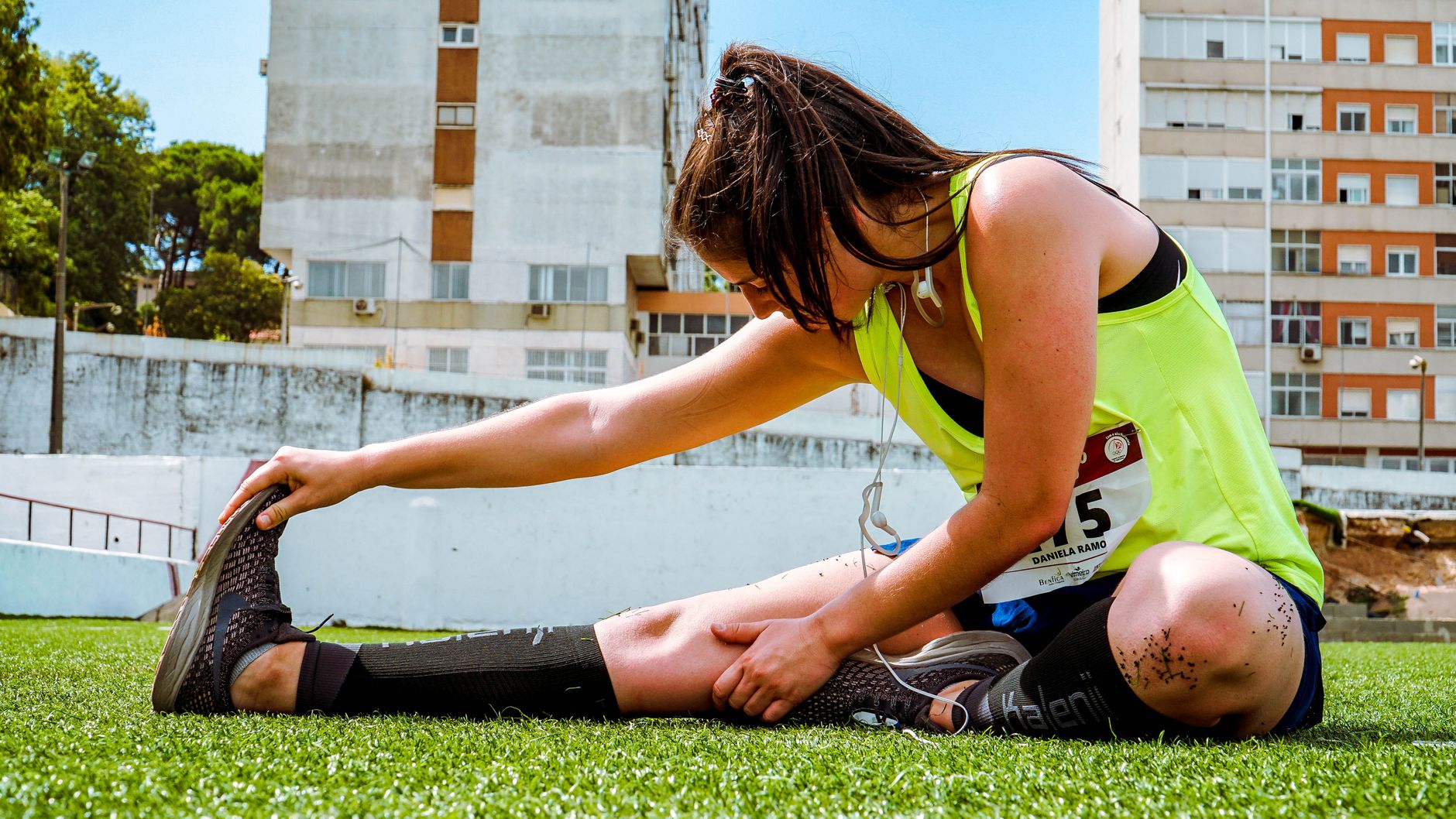
IT band syndrome in runners responds best to a two-part approach: targeted hip and glute strengthening—specifically the hip abductors and external rotators—combined with smart training load management. Research consistently shows that foam rolling the IT band itself provides only temporary relief because the ITB is fascial tissue, not muscle; the real fix lies in correcting the hip weakness and movement patterns that cause excessive lateral knee friction. Most runners see significant symptom reduction within 6-8 weeks when they address both factors, not just rest or symptom management.
What causes IT band syndrome in runners—and why foam rolling won’t fix it
The iliotibial band is a thick fascial structure running from the hip to the lateral knee, not a muscle that can be stretched or “released.” IT band syndrome occurs when this band repeatedly rubs against the lateral femoral condyle during the flexion-extension cycle of running, creating inflammation and sharp lateral knee pain. The root cause isn’t tightness in the ITB—it’s hip abductor weakness, primarily in the glute medius, that allows the femur to rotate inward excessively during single-leg stance. Biomechanics studies from 2023-2024 show a strong correlation between reduced hip abduction strength and increased ITB strain at the knee, with runners experiencing IT band pain demonstrating 15-25% less hip abductor strength compared to matched controls.
Training load errors amplify this mechanical vulnerability. Sudden mileage increases exceeding 10% per week, back-to-back hill sessions, and sustained running on cambered roads all increase lateral knee stress in runners with weak hip stabilizers. Hills demand greater hip abduction force to control pelvic drop, while cambered surfaces create asymmetric loading that exaggerates femur internal rotation on the downhill leg. Even runners with adequate baseline hip strength can develop IT band syndrome when training spikes outpace the adaptation window for stabilizing muscles.
Foam rolling the IT band may provide short-term neurological desensitization—essentially distracting your nervous system from pain signals—but it doesn’t change the underlying mechanics. The ITB’s tensile strength and fascial architecture mean it won’t lengthen meaningfully under roller pressure. Research tracking runners who rely solely on foam rolling shows recurrence rates above 60% once normal mileage resumes, because the hip weakness and movement faults remain unaddressed.
The five exercises proven to strengthen hip stabilizers and reduce ITB friction
Each of these movements targets the glute medius, tensor fasciae latae (TFL), and hip external rotators that control femur position during the stance phase of running. Perform these 3-4 times per week, emphasizing slow eccentric control—the lowering phase—where strength adaptations occur.
1. Side-lying hip abduction: Lie on your side with hips stacked, bottom leg bent for stability. Lift the top leg 30-45 degrees, keeping the foot flexed and slightly externally rotated (toes pointing forward or slightly down, not up). Lower with 3-second eccentric control. Perform 3 sets of 15 reps per side. This directly loads the glute medius in its primary plane of action. Avoid hiking the hip upward—the pelvis should remain level.
2. Single-leg glute bridges: Lie supine, one foot planted, opposite leg extended. Drive through the planted heel to lift hips until knee-hip-shoulder form a line. Lower over 3 seconds. Perform 3 sets of 12 reps per leg. This challenges glute max and medius simultaneously while mimicking the single-leg loading pattern of running. Keep hips level—no dropping or rotating toward the extended leg.
3. Clamshells with resistance band: Lie on your side with knees bent 90 degrees, band around thighs just above the knees. Keeping feet together, open the top knee against band resistance, pause, then lower slowly. Perform 3 sets of 20 reps per side. Clamshells isolate the posterior glute medius and external rotators without requiring balance, making them ideal for early-stage rehab when hip fatigue is high.
4. Single-leg deadlifts: Stand on one leg holding a light dumbbell (5-15 lbs) in the opposite hand. Hinge at the hip, lowering the weight toward the floor while the free leg extends behind for balance. Return to standing using glute and hamstring control. Perform 3 sets of 10 reps per leg. This exercise integrates hip stability with the posterior chain strength needed for propulsion, and the contralateral load challenges frontal-plane control.
5. Lateral band walks: Place a resistance band around ankles or just above knees. Maintain a quarter-squat position and step laterally, keeping tension in the band throughout. Take 10-12 steps in each direction for 3 sets. Lateral walks train the glute medius in a dynamic, weight-bearing context that closely mimics running’s demands for pelvic stabilization during single-leg stance transitions.
A 2024 physical therapy study tracking 120 runners found that this five-exercise protocol, performed consistently for 6-8 weeks, reduced pain recurrence rates to under 20% when combined with gradual return-to-running progressions. The key variable was adherence to eccentric tempo and training frequency—runners who rushed reps or skipped sessions saw slower improvement and higher recurrence.
How to progress these exercises through your return-to-running timeline
Weeks 1-2: Complete running rest. Perform the five exercises with isometric holds (3-5 seconds at peak contraction) and slower tempos (4-second eccentrics). Focus on form mastery and neuromuscular recruitment. Pain should decrease noticeably during daily activities. If lateral knee pain persists at rest, consult a physical therapist—this may indicate bursitis or other complications.
Weeks 3-4: Begin walk-run intervals on flat, even terrain if you’ve had 48 hours pain-free during daily activities. Start with 1 minute running, 4 minutes walking, for 20-30 minutes total. Add eccentric-emphasis variations to your strength work (5-second lowering phases on glute bridges and single-leg deadlifts). Continue all five exercises at full volume. Any sharp pain during running means you’re not ready—regress to walking only.
Weeks 5-6: Progress to continuous easy running for 20-30 minutes if intervals remain pain-free. Introduce single-leg plyometric work: step-downs from a 6-inch box (3 sets of 10 per leg), focusing on controlled eccentric loading. Maintain strength exercises 3× weekly—this is not the time to taper rehab volume. You can begin reintroducing your normal easy mileage, but keep runs on flat surfaces and avoid cambered roads.
Weeks 7-8: Reintroduce hills and tempo efforts if you’ve completed two weeks of easy running without lateral knee discomfort. Start with short hill repeats (30-45 seconds) on moderate grades, focusing on cadence and hip engagement rather than stride length. Continue strength work at maintenance frequency (2× weekly). Most runners can return to their pre-injury training structure by week 8-10, though high-mileage athletes (50+ miles per week) may need 10-12 weeks for full volume restoration.
Throughout this progression, pain is the ultimate guide. Post-run soreness that resolves within an hour is acceptable; sharp mid-run pain or soreness lasting into the next day requires stepping back one progression phase. Research shows runners who respect pain signals and prioritize strength work over mileage targets have 70% lower re-injury rates compared to those who rush the timeline.
Should you stop running completely—or can you modify training during rehab?
The decision hinges on pain severity and timing. Sharp lateral knee pain that appears mid-run and forces you to stop or alter your gait requires complete running rest for 7-10 days. This acute inflammatory phase benefits from unloading the ITB while you begin the strength protocol. Use this window for cross-training that doesn’t replicate the knee flexion angle where friction peaks—pool running maintains aerobic fitness without impact and allows varied stride patterns that reduce repetitive stress.
Mild IT band discomfort that appears only post-run or after 30+ minutes of easy running allows modified training during rehab. Cut weekly mileage by 50%, eliminate all hills and cambered surfaces, and shorten your stride by 5-10% to reduce peak hip adduction at footstrike. Research from 2025 gait analysis studies shows that increasing cadence by 5-10% (about 8-15 steps per minute for most runners) decreases ITB strain by limiting the degree of hip drop during stance phase. Run on flat, predictable surfaces—trails with technical terrain or roads with steep crowns both increase lateral knee stress.
Cycling presents a nuanced cross-training option. While it maintains cardiovascular fitness, poor bike fit—especially saddle height forcing excessive hip internal rotation—can aggravate IT band symptoms. If you cycle, ensure proper setup: saddle height allowing 25-30 degrees of knee flexion at the bottom of the pedal stroke, and cleats positioned to allow natural foot angle rather than forcing internal tibial rotation.
Red flags requiring immediate professional evaluation: pain at rest, visible swelling around the lateral knee, pain that migrates into the knee joint itself (suggesting possible meniscus or cartilage involvement), or symptoms that worsen despite 2 weeks of rest and strength work. These indicate either a misdiagnosis or complications beyond typical IT band syndrome. A physical therapist or sports medicine physician can perform clinical tests (Ober’s test, hip abduction strength assessment) to confirm the diagnosis and rule out differential issues like lateral meniscus tears or popliteus tendinopathy, which mimic ITBS but require different treatment approaches.
How to adjust your training plan to prevent IT band syndrome recurrence
Long-term IT band health requires embedding hip strength maintenance and load management rules into your training structure. Even after symptoms fully resolve, runners with a history of ITBS remain biomechanically vulnerable without ongoing attention to both factors.
Load management rules for ITBS-prone runners: Cap weekly mileage increases at 10%, calculated as total volume, not individual run distance. Back-to-back hill sessions stress hip abductors before they’ve recovered from the prior workout—space hill repeats or long climbs by at least 48 hours. Avoid sustained running on cambered roads; if your route has crowned pavement, switch sides of the road every 10-15 minutes to balance loading. When resuming speed work post-injury, reintroduce intervals on a track or flat rail-trail before returning to road tempo runs, which often incorporate rolling terrain.
Hip and glute strength maintenance: Continue 2 weekly sessions of the five core exercises even after returning to full training. You can reduce volume (2 sets instead of 3) once you’ve reached 8-10 weeks pain-free, but eliminating strength work entirely invites recurrence. Treat these sessions like easy runs—non-negotiable components of a balanced program, not optional “extras.” Runners training for marathons or high weekly mileage (40+ miles) benefit from adding a third strength session during peak training blocks, when cumulative fatigue degrades movement quality.
Footwear and surface considerations: Overly cushioned maximalist shoes may mask weak hip stabilization by reducing ground-feel feedback that normally cues stabilizer engagement. Neutral shoes with moderate cushioning and 4-8 mm heel-to-toe drop encourage better hip mechanics by promoting midfoot landing and natural pelvic control. This doesn’t mean switching to minimalist shoes abruptly—transition gradually over 4-6 weeks if you’ve been running in high-drop or maximal cushion models. Surface variation also matters: mixing road running with groomed trails (not technical single-track) challenges stabilizers in varied planes without the repetitive stress of pure road mileage.
Gait analysis for high-mileage or recurrent cases: Runners logging over 40 miles per week or those experiencing multiple ITBS episodes within a season benefit from formal video gait analysis by a certified running coach or physical therapist with biomechanics training. Persistent compensations—excessive contralateral pelvic drop, overstriding, or asymmetric arm carriage—often require external feedback to correct, as they’re difficult to self-assess mid-run. One 2024 study found that runners with recurrent ITBS who underwent gait retraining (6-8 sessions focusing on cadence and pelvic control) had 85% symptom-free rates at 12-month follow-up, compared to 60% for strength-only interventions.
What the latest research says about IT band syndrome recovery timelines
A 2025 systematic review analyzing outcomes from over 400 runners with ITBS found median symptom resolution of 6-8 weeks when athletes followed structured hip-strengthening protocols combined with intelligent load management. Early-stage cases—those with symptoms present less than 3 weeks—recovered significantly faster, with 75% returning to pre-injury mileage within 5 weeks. The critical factor was intervention timing: runners who began targeted hip strengthening within the first week of symptoms averaged 6.2 weeks to full training resumption, while those who delayed structured rehab beyond 3 weeks required 9.4 weeks on average.
Chronic IT band syndrome, defined as symptoms persisting beyond 6 months, presents a different timeline. These cases often involve compensatory movement patterns and secondary weakness in adjacent muscle groups (hip flexors, hamstrings, quadriceps). Research from 2024 tracking chronic ITBS patients showed 12-16 weeks as typical for return to previous training volume, with 20-30% requiring formal physical therapy beyond self-directed exercise protocols. The longer symptoms persist before intervention, the more neuromuscular re-education becomes necessary alongside strength work.
Recurrence rates depend heavily on whether runners address the underlying causes. Studies tracking runners 12 months post-recovery found that 70-80% who maintained hip strength exercises (minimum 2× weekly) and adhered to load management principles remained symptom-free at that follow-up. In contrast, runners who ceased strength work once pain resolved experienced recurrence rates near 45%, typically within 8-12 weeks of resuming normal training. This data reinforces that ITBS treatment isn’t a temporary fix—it’s a permanent training adjustment for biomechanically vulnerable runners.
Emerging evidence from 2025-2026 explores blood flow restriction (BFR) training as an adjunct for stubborn cases that plateau during standard rehab. BFR involves performing hip strengthening exercises with a tourniquet cuff restricting venous return, creating a hypoxic environment that stimulates strength gains at lower loads. Early case series show promising results for chronic ITBS patients who struggled with traditional high-load protocols, though this approach requires supervision from trained clinicians and isn’t yet standard care. For most recreational runners, consistent execution of the core five exercises with proper load management remains the evidence-based foundation.
The research consensus is clear: IT band syndrome resolves predictably when runners treat it as a strength deficit and training error, not just an inflammation problem to rest away. Time off provides symptom relief but doesn’t change the mechanics that caused the issue—hip weakness and load mismanagement remain until you actively correct them. Runners who understand this distinction and commit to the 6-8 week protocol rarely face prolonged recovery or chronic recurrence.
Frequently Asked Questions
How long does IT band syndrome take to heal in runners?
Most runners see significant improvement in 6-8 weeks with a structured hip-strengthening program and reduced training load. Early-stage cases (symptoms under 3 weeks) often resolve faster, while chronic IT band pain persisting beyond 6 months may require 12+ weeks of targeted rehab. The key factor is consistent hip abductor strengthening, not time off alone—runners who rest without addressing glute weakness see higher recurrence rates.
Can I keep running with IT band pain, or should I stop completely?
It depends on pain severity. Sharp, mid-run lateral knee pain requires 7-10 days of complete running rest to reduce inflammation. Mild soreness that appears only post-run allows modified training: cut weekly mileage by 50%, eliminate hills and cambered roads, and shorten your stride. If pain worsens during a run or occurs at rest, stop immediately and consult a physical therapist—continuing through severe pain risks prolonged recovery and compensation injuries.
What exercises actually fix IT band syndrome in runners?
The five most effective exercises target hip abductor and glute medius weakness: side-lying hip abduction, single-leg glute bridges, clamshells with a resistance band, single-leg deadlifts, and lateral band walks. Perform 3 sets of 15 reps, 3-4 times per week, focusing on slow eccentric control. Research shows this approach reduces lateral knee friction and pain recurrence more effectively than foam rolling or stretching the IT band itself, which is fascial tissue that doesn’t lengthen meaningfully.
Does foam rolling the IT band help runners with IT band syndrome?
Leave a Reply