

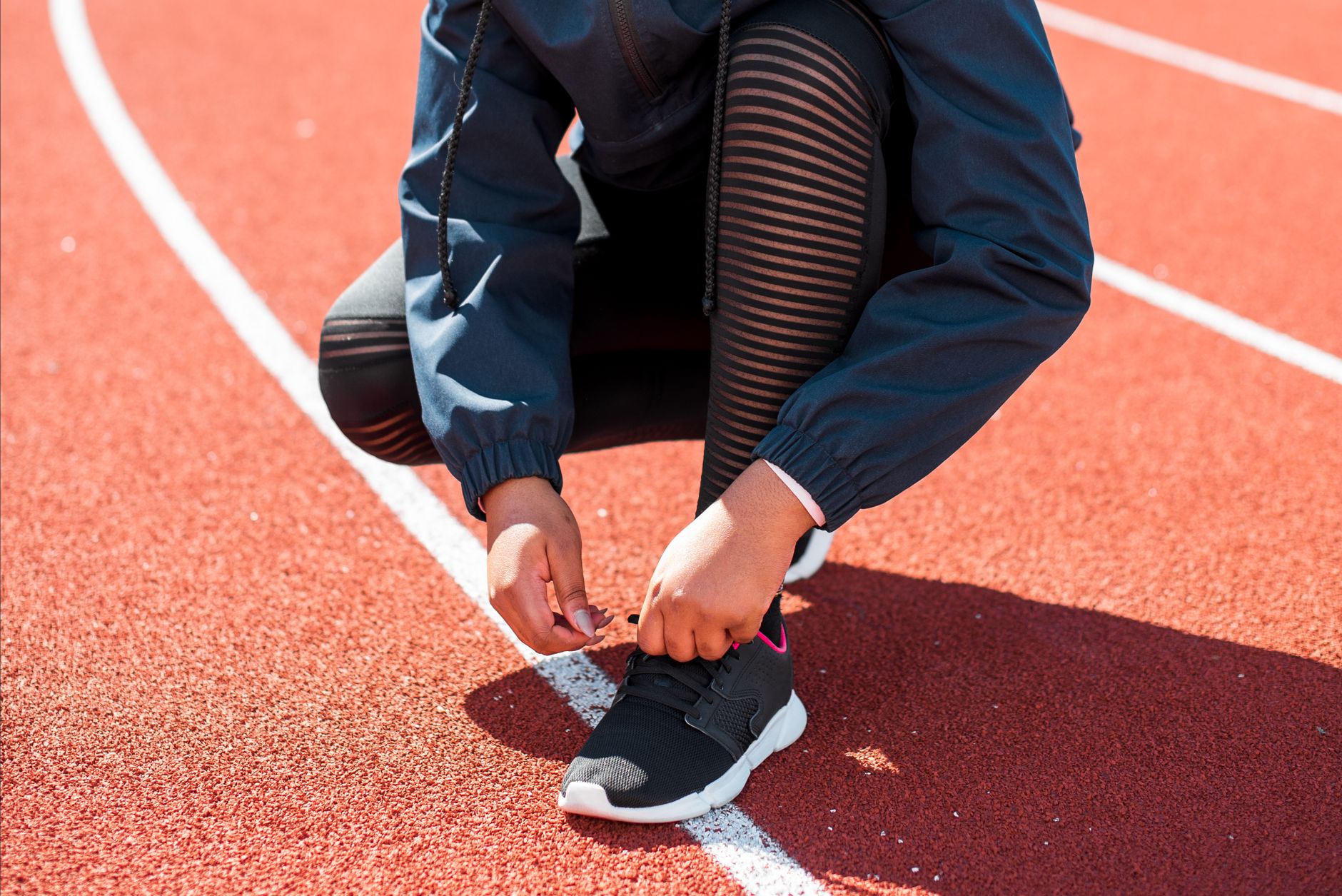
The best running shoes for beginners in 2026 prioritize three factors above all else: proper fit with a thumb’s width of toe space, neutral cushioning in the 28–32 mm stack-height range, and a stable platform that doesn’t attempt to “correct” your gait. Research shows that most new runners do well in straightforward daily trainers rather than motion-control designs, and that rotating pairs every 300–500 miles reduces injury risk more than any single shoe feature.
What features should a beginner look for in running shoes?
Four features matter most when you’re selecting your first pair of running shoes: fit geometry, cushioning depth, trainer weight, and forefoot flexibility. A 2024 British Journal of Sports Medicine study tracking 800+ recreational runners found that shoes failing any of these four checkpoints correlated with higher injury rates in the first 12 weeks of training, independent of price or brand.
Fit means a thumb-width gap (12–15 mm) between your longest toe and the shoe’s front, plus a locked heel that doesn’t slip during a brisk walk. Your midfoot should feel snug without compression—if you can slide a finger under the laces at the arch, they’re too loose.
Cushioning in the 28–32 mm stack-height range provides adequate impact attenuation for beginners whose running economy and leg-spring stiffness are still developing. Thicker isn’t always better; midsole stacks above 35 mm can feel unstable until your proprioception adapts. Research on impact forces shows that 30 mm of modern EVA or TPU foam reduces peak ground-reaction force by 18–22% compared to minimal shoes.
Weight between 280 and 320 grams per shoe (men’s US size 9) balances durability with responsiveness. Heavier trainers (340 g+) often add unnecessary structure; lighter options (under 260 g) sacrifice midsole longevity and aren’t ideal for building base mileage.
Flexibility at the forefoot—the shoe should bend naturally where your toes hinge—ensures your foot’s natural roll-through isn’t blocked. Stiffer racing geometries can overstress the Achilles tendon and calf in runners who haven’t built the strength for them yet.
Do beginners need neutral or stability running shoes?
Most beginners—roughly 70–80% based on 2023 gait-analysis data from running specialty retailers—will thrive in neutral shoes with no corrective posting or guide rails. Stability shoes add medial-side foam density or a plastic shank to limit inward foot roll (overpronation), but recent biomechanics consensus has moved away from prescriptive motion control unless a runner has existing injury history or severe overpronation confirmed by a physical therapist or video gait analysis.
Overpronation is a natural motion; your arch collapses slightly and your ankle rolls inward to absorb shock. It becomes a problem only when excessive (beyond 10–12 degrees from vertical) and paired with pain—medial shin splints, posterior tibial tendonitis, or patellofemoral tracking issues. If you have no injury history and your knees track straight over your toes during a single-leg squat, start with a neutral shoe.
Decision flowchart for beginners:
- No pain or injury history → Neutral daily trainer
- History of medial knee/ankle pain → Get gait analysis before assuming stability fixes it; often strength deficits or training load are the root cause
- Confirmed severe overpronation (PT or running-store assessment) → Mild stability shoe with a small medial post, not a rigid motion-control design
The stability-shoe market has shifted toward “guided” designs (shallow rails rather than dense wedges) that allow natural motion while gently discouraging collapse. These are less likely to cause discomfort than older, aggressive posts, but they still aren’t necessary for the majority of new runners.
How should running shoes fit for someone new to the sport?
Running shoe fit differs from casual-sneaker sizing because your feet swell 4–8% during even a 5K run, and repetitive toe-box impact at 170+ steps per minute amplifies any tightness. Check fit using four specific touchpoints, ideally after a short easy run or in the evening when feet are naturally more swollen.
1. Toe space: Press your thumb against the shoe’s front while standing. You should have 12–15 mm—roughly a thumb’s width—between your longest toe (often the second toe, not the big toe) and the material. This prevents black toenails and subungual hematomas on downhill runs.
2. Heel lock: Walk briskly or jog in place. Your heel should stay anchored; any vertical slip means you’ll develop blisters within two miles. If the heel cup is too wide, try the next half-size down or a different brand—heel shapes vary significantly (Nike and Saucony tend narrow; Altra and Brooks offer roomier heels).
3. Midfoot snugness: Lace the shoes using the two-finger rule—you should just be able to slide two fingers under the laces at the arch when standing. Too loose and your foot slides forward on downhills; too tight and you risk nerve compression (numbness in the forefoot after 20+ minutes).
4. Width: Many beginners need a wide (2E for men, D for women) or extra-wide fit but don’t realize it because casual shoes are often cut generously. If the shoe’s upper creases or bulges at the ball of your foot, or if your pinky toe touches the sidewall, go up a width. Trail runners and those with high-volume feet should prioritize brands offering true wide geometries, not just “roomy toe boxes.”
Fit varies by a half-size or more across brands, so never order online based solely on your dress-shoe size. Runner’s Digest gear reviews for every runner include fit notes and width recommendations for popular models.
Our picks: best beginner running shoes by category for 2026
Rather than name specific 2026 models that may change by the time you read this, we’ll describe the profiles that work best for new runners and note where to find current options. Runner’s Digest maintains updated comparison tables with specs, pricing, and user reviews for the season’s top trainers.
Best neutral daily trainer
Profile: 29–31 mm stack height, 8–10 mm heel-to-toe drop, 290–310 g weight, $120–$145 price range. Look for a shoe with a wide base for stability, a breathable engineered-mesh upper, and durable rubber covering at least 60% of the outsole. The midsole should use EVA or TPU foam that feels responsive but not harsh—when you press your thumb into it, it should rebound within a second. This category includes the workhorses you’ll log most of your easy miles in, from 5K training through half-marathon prep.
Best for wide feet
Profile: Offered in 2E/4E (men’s) or D/2E (women’s) widths with a true anatomical last, not just extra mesh. Stack height 28–32 mm, weight under 320 g, and a toe box that doesn’t taper aggressively. Runners with bunions, Morton’s neuroma, or simply high-volume feet should prioritize this fit over any other feature. Several brands now design their neutral trainers on wide lasts by default; check the manufacturer’s fit guide for “relaxed” or “universal” designations.
Best cushioned option for heavier or older beginners
Profile: 34–36 mm stack, stable platform (often with a slightly wider midsole), 320–340 g weight. These max-cushion daily trainers reduce peak impact forces by an additional 8–10% compared to standard cushioning, which matters for runners over 200 pounds or those returning to the sport after years off. The trade-off is a taller ride that feels less ground-connected, but biomechanics research shows adaptation occurs within 6–8 runs. Look for a rockered forefoot geometry (slight upward curve) to offset the stack height and maintain a smooth heel-to-toe transition.
For all three categories, consult up-to-date retail partners or visit expert running guides and training tips for model-specific recommendations that reflect 2026 updates in foam compounds and fit adjustments.
When should a beginner replace their running shoes?
Replace your running shoes every 300–500 miles, with the range depending on three variables: your body weight (heavier runners compress midsoles faster), your footstrike pattern (heel strikers wear outsoles unevenly), and the surface you run on (asphalt degrades shoes 15–20% faster than rubberized tracks). A 2025 meta-analysis of running injuries found that continuing to train in shoes beyond 500 miles increased risk of stress fractures and tendinopathies by 40%, even when the shoes looked cosmetically fine.
Three signs it’s time to replace:
- Visible midsole creasing—horizontal wrinkles or compression lines in the foam that don’t disappear when you pick up the shoe. This indicates permanent deformation; the foam has lost its rebound capacity.
- Uneven outsole wear exceeding 3 mm side-to-side—measure the rubber depth at the lateral and medial heel. If one side is noticeably lower, your gait is no longer centered and you’re compensating with altered mechanics upstream at the knee and hip.
- Loss of cushion feel—press your thumb firmly into the midsole and release. Fresh foam rebounds in under a second; dead foam stays compressed or rebounds sluggishly. If the shoe feels “flat” or you notice more impact shock in your shins and knees on familiar routes, the midsole is spent.
Track mileage in a training log, running watch, or app like Strava. Many beginners underestimate shoe age because they spread miles across several months. A shoe used for 15 miles per week will hit 400 miles in roughly 26 weeks—about six months—even if it looks barely worn. Rotating between two pairs extends lifespan and allows midsole foam to fully decompress between runs, but each pair still needs replacement on its own mileage clock.
Frequently Asked Questions
Should I buy expensive running shoes as a beginner?
No. Research shows injury rates and comfort are similar across the $100–$180 price range for beginners. Prioritize proper fit and neutral cushioning over premium materials or brand prestige. Many $120–$140 models offer the same midsole foam and geometry as flagship shoes. Invest in professional fitting at a running specialty store instead of paying for carbon plates or advanced stability tech you don’t yet need.
Can I use the same shoes for treadmill and outdoor running?
Yes. The same neutral trainer works for both surfaces. Treadmill belts reduce impact by 10–15% compared to asphalt, but you don’t need separate shoes. The exception: if you’re running trails with roots, rocks, or mud, a trail-specific shoe with lugged outsole and protective toe rand is worth adding after your first few months. Start with one versatile road shoe and expand your rotation only when training volume exceeds 20 miles per week.
How do I know if I overpronate and need stability shoes?
Most beginners don’t need stability shoes. Overpronation—excessive inward foot roll—is normal to a degree. Only 15–20% of runners require medial-post support. If you have a history of medial shin splints, posterior tibial tendonitis, or knee pain, get a gait analysis at a running store or from a physical therapist. Video your stride from behind on a treadmill at easy pace. Mild pronation without pain means a neutral shoe is fine.
What is the difference between daily trainers and racing flats for beginners?
Daily trainers have 28–35 mm of cushioning, weigh 280–320 g, and prioritize durability and comfort for easy mileage. Racing flats are lighter (under 230 g), less cushioned (20–24 mm stack), and designed for speed work or race day. As a beginner, you should train exclusively in daily trainers for at least your first 6–12 months. Racing flats increase injury risk when your musculoskeletal system isn’t adapted to higher ground-reaction forces.
Is it better to buy running shoes in-store or online?
In-store for your first pair. A running specialty retailer will measure both feet (they often differ by up to half a size), assess your gait on a treadmill, and let you test multiple models. Once you know your size and preferred model, online purchases for subsequent pairs are fine—but confirm the retailer’s return policy allows worn-shoe returns if fit issues emerge within the first 20–30 miles.
Do I need to break in new running shoes before a long run?
Modern running shoes require minimal break-in—1 to 3 short runs (3–5 miles each) is enough. Midsole foams like EVA and TPU reach optimal compression after 15–25 miles. Never debut brand-new shoes on a run longer than 10K or on race day. If shoes feel uncomfortable after 30 miles, they’re likely the wrong fit or model, not under-broken-in. Return them and try a different option.
Leave a Reply