

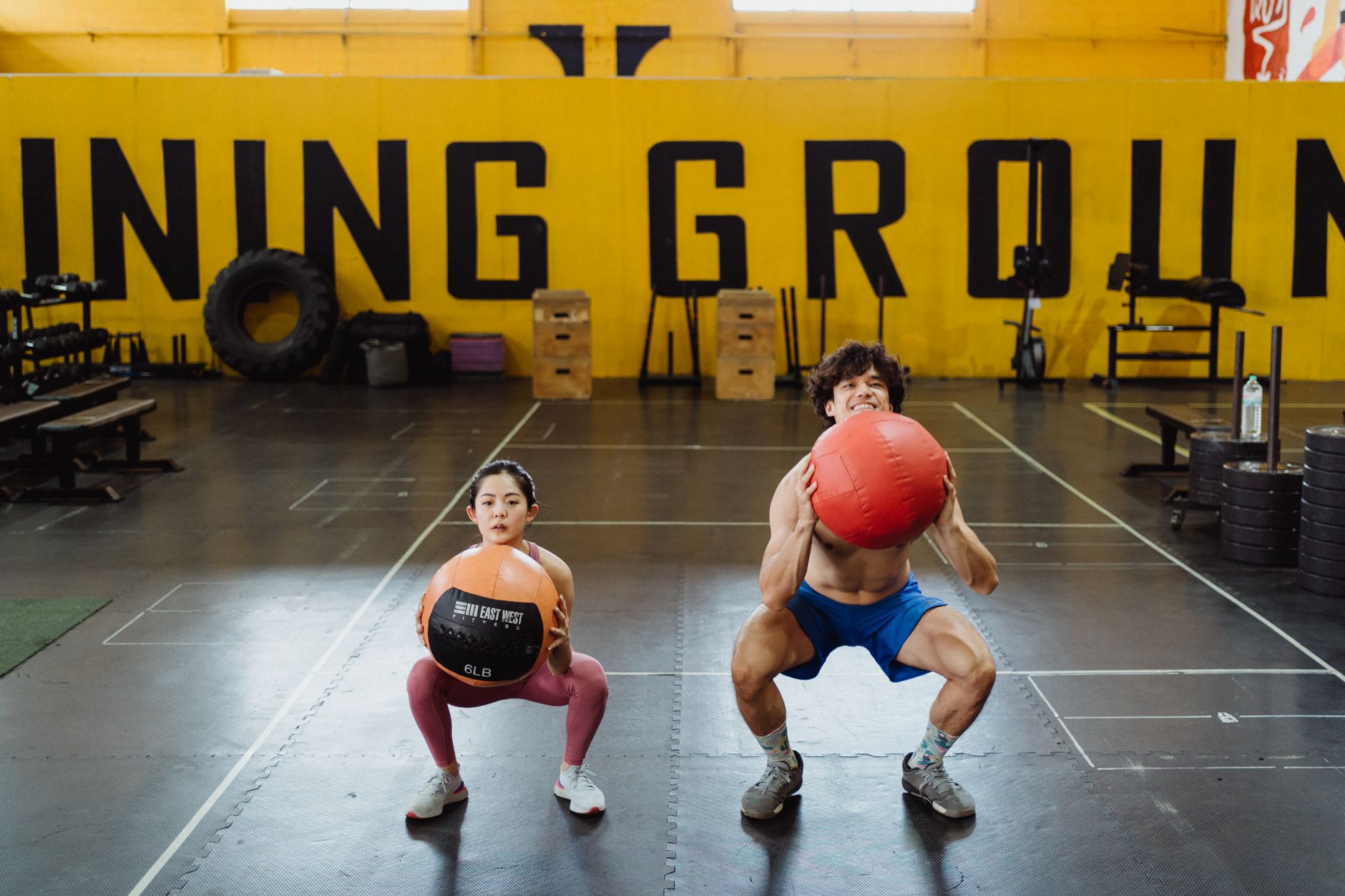
Why do runners need strength training at all?
Research shows that runners who perform structured strength training twice weekly improve their running economy by 2-8% and reduce injury incidence by up to 50% compared to run-only training. A 2026 British Journal of Sports Medicine meta-analysis confirmed that strength work enhances force absorption, optimizes muscle recruitment patterns, and preserves biomechanical efficiency during late-race fatigue—when form breakdowns typically occur.
The mechanism is straightforward: running is a series of single-leg hops where your body absorbs 2-3 times your body weight with every footstrike. Without adequate strength, your tissues accumulate micro-damage faster than they can repair, and compensatory movement patterns emerge. Glutes stop firing properly. Calves take on excessive load. Core stability falters during mile 20 of a marathon.
Studies in the Journal of Strength and Conditioning Research document that runners who strength train maintain better pelvic alignment, demonstrate more consistent stride mechanics under fatigue, and generate greater propulsive force during the toe-off phase. These adaptations don’t just prevent injury—they make you faster.
Key benefits backed by research:
- Running economy gains: 2-8% improvement in oxygen cost at race pace
- Injury reduction: Up to 50% lower incidence of common overuse injuries
- Power output: Enhanced force production during propulsion phase
- Fatigue resistance: Better form maintenance in late-race scenarios
What makes a strength exercise ‘transfer’ to running performance?
A strength exercise transfers to running performance when it builds single-leg stability, hip-dominant loading patterns, eccentric muscle control, and posterior chain recruitment—the exact demands running places on your body. Not all strength work is equal: exercises that build mass without improving running-specific movement patterns add weight without performance benefit.
Sports biomechanics research defines functional transfer through movement specificity. Running requires you to stabilize on one leg for roughly 0.2 seconds per stride while absorbing impact forces, generating propulsion, and maintaining torso stability against rotational forces. Exercises that mimic these demands—unilateral (single-leg) movements, hip hinge patterns, and anti-rotation core work—produce measurable improvements in gait mechanics and efficiency.
Contrast this with traditional bilateral lifts like back squats or leg presses. While these build general strength, they don’t address the single-leg balance demands of running or train the eccentric (lengthening) muscle actions critical for downhill running and late-stage fatigue control. The most effective runner strength exercises share four characteristics:
- Single-leg emphasis: Addresses the unilateral nature of running stance phase
- Posterior chain focus: Targets glutes, hamstrings, and calves—the primary movers in running
- Eccentric loading: Builds tissue resilience against the repetitive impact of footstrike
- Functional range of motion: Trains movements in ranges actually used during running stride
The distinction matters because runners have limited recovery capacity. Every strength session competes with run training for adaptation resources. Exercises that lack transfer waste that capacity on gains that don’t show up on race day.
The six strength exercises with proven transfer to running
Six foundational movements address the primary limiters in recreational runners: hip stability, eccentric quad and calf strength, glute activation, and core anti-rotation capacity. Each exercise in this framework has been validated through EMG (electromyography) studies showing targeted muscle activation patterns and running economy research demonstrating performance improvements.
These exercises collectively strengthen the movement patterns that matter most: single-leg balance during stance phase, hip extension power during toe-off, eccentric control during foot contact, and torso stability against rotational forces. Research shows that addressing these specific capacities produces greater performance gains per training hour than general strength programs not tailored to running demands.
The framework prioritizes exercises with the highest transfer coefficient—measurable improvements in running mechanics, economy, or injury resistance. Below, each movement is detailed with specific cueing, loading parameters, and the biomechanical rationale for its inclusion.
Single-leg Romanian deadlifts
This hip-hinge movement targets the posterior chain—hamstrings and glutes—while demanding single-leg balance, directly mimicking the stability and propulsion requirements of running stance phase. Scandinavian research demonstrates that eccentric hamstring strengthening reduces hamstring strain risk by 51%, and the single-leg variation addresses the unilateral loading pattern of running that bilateral deadlifts miss.
Execution cues:
- Stand on one leg holding a dumbbell (15-25 lbs for most recreational runners) in the opposite hand
- Hinge at the hip while maintaining a neutral spine, not rounding the lower back
- Lower the weight toward the ground as your non-working leg extends behind you for balance
- Feel the stretch in your hamstring at the bottom, then drive through your planted heel to return to standing
The single-leg demand forces your glute medius to stabilize your pelvis against lateral shift—the same stabilization required to prevent hip drop during running. Start with 3 sets of 8 reps per leg, focusing on controlled descent and balance before adding load.
Bulgarian split squats
This unilateral squat variation loads the quad and glute of your front leg while your rear foot rests on an elevated surface 12-18 inches high. Research shows that bilateral strength imbalances greater than 10% correlate with higher injury rates in runners, and Bulgarian split squats directly expose and correct these asymmetries.
Execution cues:
- Position your front foot far enough forward that your shin stays vertical during the descent
- Keep your torso upright and lower until your front thigh reaches parallel (90° knee flexion)
- Drive through your front heel to stand, minimizing push from your rear leg
- Start with bodyweight or light dumbbells (10-20 lbs per hand)
The movement pattern closely mimics the single-leg loading of running stride while building quad strength that protects against patellofemoral pain. Unlike bilateral squats, you can’t compensate with your stronger leg—each side must carry its own load. Perform 3 sets of 8-10 reps per leg.
Eccentric calf raises
Eccentric calf training—where you emphasize the lowering phase—builds soleus and gastrocnemius strength critical for Achilles load management and propulsion efficiency. Scandinavian protocols using eccentric calf work reduce Achilles tendinopathy incidence by targeting the tissue remodeling needed to handle repetitive loading.
Protocol:
- Stand on a step edge with the balls of your feet, heels hanging off
- Rise onto both toes, then lift one foot
- Lower slowly on the single leg over 3-4 seconds, allowing your heel to drop below step level
- Use both feet to rise back up, then repeat the single-leg eccentric lowering
The eccentric emphasis is critical—this is when your Achilles and calf complex absorbs the greatest load during running. Research shows that eccentric training stimulates collagen remodeling and tendon stiffness improvements that isometric or concentric-only training doesn’t achieve. Perform 3 sets of 12-15 reps per leg.
Single-leg glute bridges
This isolation exercise targets glute max activation, addressing the “glute amnesia” common in desk-bound runners whose hip extensors become underactive from prolonged sitting. EMG studies show 2-3x greater glute activation in single-leg variations compared to double-leg bridges, and improved hip extension power directly enhances stride propulsion.
Execution cues:
- Lie on your back with one foot planted near your glutes, the other leg extended straight
- Drive through your planted heel to lift your hips until your body forms a straight line from knee to shoulder
- Hold for 2 seconds at the top, squeezing your glute
- Lower with control and repeat for 10-12 reps before switching legs
Many runners compensate for weak glutes by overloading their hamstrings during propulsion, increasing hamstring strain risk. Single-leg glute bridges retrain proper hip extension mechanics. If you feel this predominantly in your hamstrings rather than glutes, reduce range of motion and focus on the glute squeeze at the top. Build to 3 sets of 12 reps per leg.
Anti-rotation planks (Pallof press variation)
Traditional planks build static core endurance, but anti-rotation variations train your torso to resist rotational forces—the stability demand of single-leg running stance when your opposite arm swings forward. Research ties core endurance to improved running economy in fatigued states, when postural control typically degrades.
Protocol:
- Anchor a resistance band at chest height
- Stand perpendicular to the anchor point, holding the band with both hands at your chest
- Press the band straight out in front of you and hold for 5-10 seconds, resisting the rotational pull
- Your torso should stay square—don’t let your shoulders rotate toward the anchor
- Return to chest and repeat for 8-10 reps, then switch sides
The isometric hold at extension forces your obliques and transverse abdominis to fire against rotation, exactly as they must during running to prevent excessive torso twist. This builds the core stability that preserves efficient arm and leg mechanics when your form fatigues. Perform 2-3 sets per side.
Lateral band walks
This exercise activates your glute medius—the hip abductor that prevents hip drop and knee valgus (inward collapse) during single-leg stance. Biomechanics research shows that glute medius weakness correlates with excessive hip adduction and knee valgus during running, both strong predictors of IT band syndrome and patellofemoral pain.
Execution cues:
- Place a mini-band loop just above your knees
- Assume a quarter-squat position with feet hip-width apart
- Step laterally 10-15 steps in one direction, maintaining tension on the band
- Keep your hips level—don’t let them sag toward your stepping leg
- Return in the opposite direction
You should feel this burn in the outside of your hips, not your quads. If you don’t feel glute medius engagement, try a lighter band with more deliberate hip stabilization rather than simply stepping faster. Research shows that just 2-3 sets of lateral band walks performed twice weekly significantly reduces hip drop angles during running within 6 weeks. Perform 2-3 sets of 10-15 steps each direction.
How often should runners strength train—and when in the training cycle?
Runners should strength train twice weekly to maintain strength gains and injury protection without compromising run-specific adaptations. Separate strength sessions from high-intensity run workouts by at least 6 hours, or place them on easy-run days, to allow proper neuromuscular recovery for both training stimuli.
Timing within your training cycle matters. During base-building phases, emphasize higher volume (3 sets × 10-12 reps at moderate load) to build foundational strength and tissue resilience. As you transition into race-specific training—especially marathon-specific workouts—shift to lower volume and slightly heavier loads (2 sets × 6-8 reps) to maintain strength without adding fatigue that could compromise key run sessions.
NSCA periodization guidelines recommend this phased approach:
Base-building phase (8-16 weeks):
- Frequency: 2x/week
- Volume: 3 sets × 10-12 reps
- Intensity: Moderate load (leaving 2-3 reps in reserve)
- Goal: Build tissue capacity and movement patterns
Race-specific phase (8-12 weeks):
- Frequency: 2x/week early, 1x/week final 3-4 weeks
- Volume: 2 sets × 6-8 reps
- Intensity: Moderate-heavy load (leaving 1-2 reps in reserve)
- Goal: Maintain strength while prioritizing run-specific fitness
Taper period (2-3 weeks pre-race):
- Frequency: 1x/week or skip entirely in final week
- Volume: 1-2 sets × 6-8 reps
- Intensity: Maintenance load
- Goal: Preserve strength without adding fatigue
The twice-weekly frequency is supported by meta-analyses showing that this is the minimum dose for continued strength adaptation while remaining the maximum most runners can recover from alongside run training. More frequent strength work risks interfering with the specific neuromuscular adaptations from quality run workouts.
A sample twice-weekly strength routine for distance runners
This 30-35 minute session pairs complementary exercises in circuit format to maximize efficiency while allowing adequate recovery between sets of the same movement. Complete a 5-minute dynamic warm-up—leg swings, hip circles, glute bridges, and light band walks—before beginning the strength work.
Circuit A (complete 3 rounds, resting 60-90 seconds between rounds):
- Single-leg Romanian deadlifts: 8-10 reps per leg
- Bulgarian split squats: 8-10 reps per leg
Circuit B (complete 3 rounds, resting 60-90 seconds between rounds):
- Eccentric calf raises: 12-15 reps per leg
- Single-leg glute bridges: 10-12 reps per leg
Circuit C (complete 2-3 rounds, resting 45-60 seconds between rounds):
- Anti-rotation plank (Pallof press): 8-10 reps per side (5-second hold each rep)
- Lateral band walks: 10-15 steps each direction
The pairing structure lets one muscle group recover while you work another—single-leg deadlifts primarily load hamstrings and glutes, while Bulgarian split squats emphasize quads. This allows you to maintain quality throughout the session without extended rest periods.
Load progression: Start with weights that allow you to complete all prescribed reps with 2-3 reps still “in reserve.” When you can complete all sets and reps with good form, increase load by 5-10% at your next session. For bodyweight exercises (glute bridges, calf raises initially), progress by adding reps (up to 15), then add external load via dumbbells or a weighted vest.
Rep scheme adjustments:
- Strength phase: 3 sets × 8-10 reps, 60-90 sec rest
- Endurance phase: 2-3 sets × 12-15 reps, 45-60 sec rest
- Maintenance phase: 2 sets × 8-10 reps, 60 sec rest
Note that traditional barbell squats and deadlifts are absent from this program. While these compound lifts build general strength, they generate more systemic fatigue and require longer recovery than the six targeted movements above—making them less practical for runners who need to preserve energy for run-specific training. The exercises listed offer superior transfer with lower recovery cost.
What strength training won’t do for your running
Strength training reduces injury risk and preserves running form under fatigue, but it won’t replace mileage for aerobic development or directly improve VO2max. It complements run-specific training rather than substituting for it—no amount of squats will build the mitochondrial density, capillary networks, or aerobic enzyme activity that only consistent running develops.
Realistic expectations for strength work:
Strength training will:
- Reduce injury incidence by 40-50% when performed twice weekly
- Improve running economy by 2-8%, allowing you to run a given pace at lower metabolic cost
- Enhance late-race form maintenance and force production under fatigue
- Correct bilateral strength imbalances that precede injury
- Build tissue resilience against repetitive loading stress
Strength training won’t:
- Directly increase your VO2max or lactate threshold
- Make you significantly faster in isolation from run training
- Replace weekly mileage or long run progression
- Compensate for inadequate run volume or poor training structure
A common misconception is that heavy lifting will “bulk up” runners and slow them down. Research consistently shows that at the twice-weekly frequency and moderate loads recommended for runners, minimal hypertrophy occurs—typically less than 2-3% increase in lean mass. The adaptations are primarily neuromuscular: improved motor unit recruitment, better intermuscular coordination, and enhanced rate of force development. Elite distance runners globally incorporate strength work without compromising their power-to-weight ratios.
The value proposition is clear: strength training doesn’t make you faster by improving your aerobic system—it makes you faster by allowing you to stay healthy, maintain better form, and apply force more efficiently. That’s a different pathway to performance than high mileage or interval work, and one that becomes increasingly important as runners age or increase training volume. For more context on integrating all training components, see our expert running guides.
Frequently Asked Questions
How quickly will strength training improve my running performance?
Most runners notice improved late-race form and reduced soreness within 4-6 weeks of twice-weekly strength work. Measurable performance gains—such as improved running economy or faster race times—typically emerge after 8-12 weeks of consistent training, according to meta-analyses in the Journal of Strength and Conditioning Research. Injury-reduction benefits appear earlier, often within the first month, as movement patterns and tissue resilience improve.
Should I strength train on the same day as my hard running workouts?
Ideally, separate strength sessions from high-intensity run workouts by at least 6 hours, or place them on easy-run or rest days. Research shows that performing strength work immediately before or after hard running efforts can compromise neuromuscular performance and delay recovery. If scheduling forces same-day training, complete your quality run workout first, then strength train 6+ hours later to preserve running-specific adaptations.
Do I need a gym membership to do effective runner strength training?
No. The six exercises outlined—single-leg deadlifts, Bulgarian split squats, calf raises, glute bridges, planks, and lateral band walks—can all be performed at home with minimal equipment: a single dumbbell or kettlebell (15-35 lbs), a resistance band, and a stable surface for step-ups or split squats. Bodyweight variations of each exercise are effective for beginners, and adding modest load over time maintains progressive overload without requiring a full gym setup.
Can strength training actually prevent common running injuries?
Yes. A 2026 British Journal of Sports Medicine meta-analysis found that runners performing structured strength training twice weekly experienced up to 50% lower injury incidence compared to run-only training. Specific benefits include reduced Achilles tendinopathy risk (via eccentric calf work), lower rates of IT band syndrome (through glute medius strengthening), and fewer hamstring strains (from eccentric posterior chain exercises). Strength training improves tissue load tolerance and corrects biomechanical imbalances that precede injury.
Will lifting weights make me slower or bulkier as a distance runner?
No. At the twice-weekly frequency and moderate loads recommended for runners, minimal hypertrophy (muscle growth) occurs—typically less than 2-3% increase in lean mass. Research consistently shows that runner-specific strength training improves running economy by 2-8% without adding significant body mass. The exercises target neuromuscular efficiency and force production, not muscle size. Elite distance runners globally incorporate strength work without compromising their power-to-weight ratios.
How much weight should I use for these exercises?
Start with a load that allows you to complete 3 sets of 8-10 controlled repetitions with good form, leaving 2-3 reps “in reserve” at the end of each set. For most recreational runners, this means 15-25 lbs for single-leg deadlifts, bodyweight or 10-20 lbs for Bulgarian split squats, and bodyweight for calf raises and glute bridges initially. Progress load by 5-10% every 2-3 weeks as movements become easier, prioritizing form over absolute weight.
Should I strength train differently during marathon training versus base building?
Yes. During base-building phases, emphasize higher volume (3 sets × 10-12 reps) to build foundational strength and tissue resilience. As you enter race-specific marathon training, shift to lower volume and slightly heavier loads (2 sets × 6-8 reps) to maintain strength without adding fatigue that could compromise key workouts. Some runners reduce to once-weekly strength sessions in the final 3-4 weeks before a goal race to prioritize recovery and taper.
Leave a Reply