

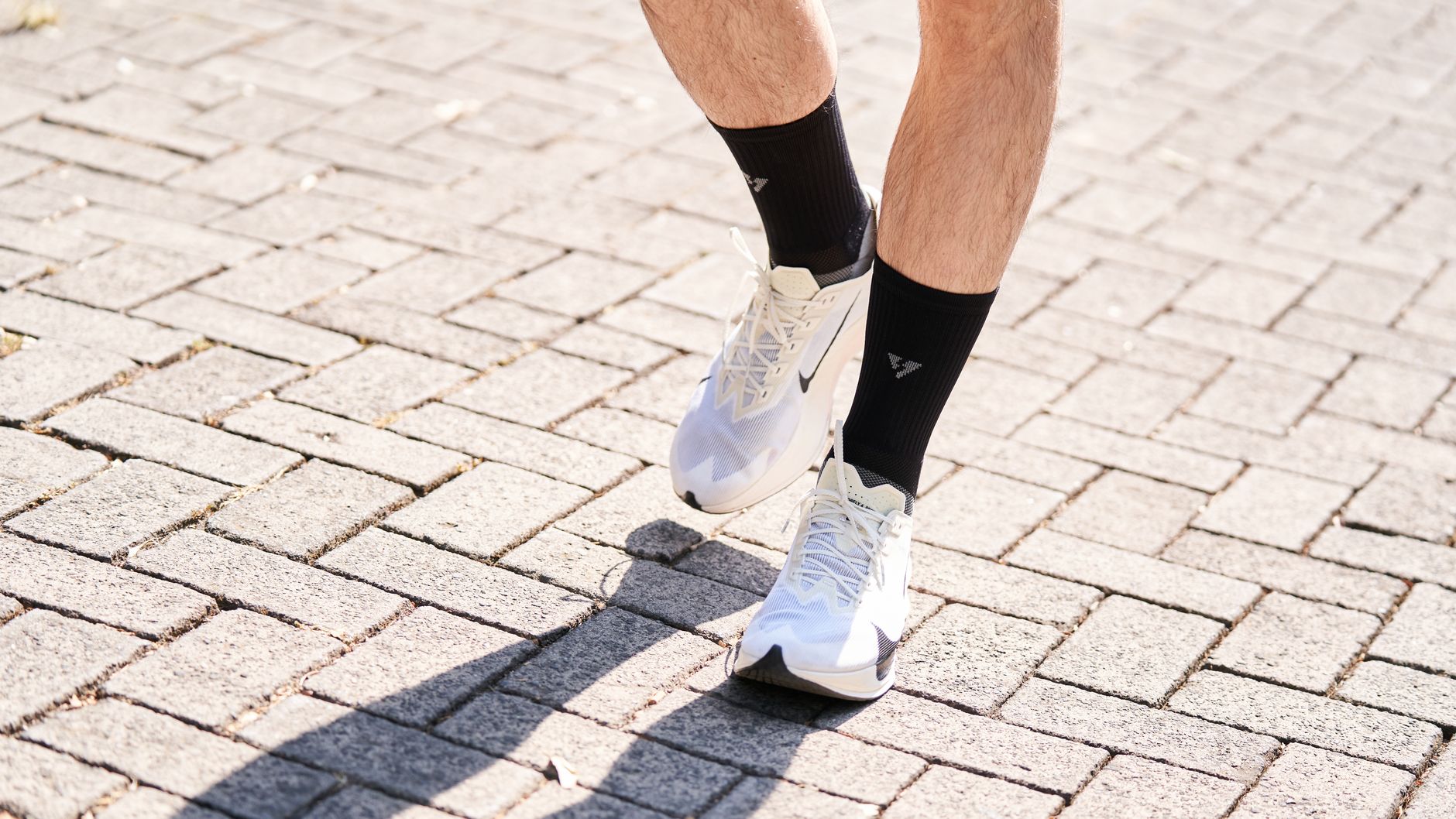
The best compression socks for recovery in 2026 deliver 15–20 mmHg graduated compression at the ankle (tapering to 8–10 mmHg at the calf), use moisture-wicking nylon/spandex blends, and are worn for 2–4 hours immediately post-run. Research shows this protocol reduces delayed-onset muscle soreness by 12–18% at 24–48 hours and accelerates lactate clearance through enhanced venous return.
How do compression socks aid running recovery?
Graduated compression socks improve recovery through three physiological mechanisms: enhanced venous return (moving deoxygenated blood back to the heart faster), reduced muscle oscillation damage during the inflammatory phase, and accelerated clearance of lactate and metabolic waste products. A 2024 meta-analysis in the Journal of Sports Sciences demonstrated that 15–20 mmHg graduated compression worn for 2–4 hours post-effort reduced perceived muscle soreness by 12–18% when measured 24–48 hours after hard workouts.
The key distinction is when you wear compression. Recovery socks are designed for static, post-run wear—you put them on after crossing the finish line or stepping off the treadmill, then sit, elevate, and let the graduated pressure do its work. Race-day compression sleeves (calf-only, no foot coverage) are worn during activity and have mixed evidence for performance benefit. The recovery window is where compression delivers measurable results.
Most of the physiological benefit occurs in the first four hours after a hard effort. During this window, your muscles are clearing metabolic byproducts, repairing microtears, and reducing inflammation. Graduated compression mechanically assists this process by preventing blood from pooling in the lower legs and maintaining pressure that pushes fluid back toward the heart and lymphatic system.
Graduated vs. uniform compression: which design recovers faster?
Graduated compression applies the highest pressure at the ankle (typically 15–20 mmHg) and tapers progressively as it moves up the calf (8–10 mmHg at the top). This mimics the natural pressure gradient your muscles create when walking and enhances the “muscle pump” effect even when you’re resting. Uniform compression applies the same pressure along the entire sock, which can restrict circulation if the pressure is too high or the fit is uneven.
Research consistently favors graduated designs for recovery. Uniform compression may feel supportive, but it lacks the directional flow benefit that drives venous return. When evaluating products, check the manufacturer’s mmHg specs—reputable recovery socks will list graduated pressure ranges (e.g., “20 mmHg at ankle, 15 mmHg at mid-calf, 10 mmHg at top”). Generic “compression socks” without listed gradients are often marketing products with minimal physiological effect.
What compression level should runners choose for post-run wear?
Runners should choose 15–20 mmHg graduated compression for recovery wear—this is Class I medical compression and the evidence-backed range for healthy athletes without circulatory conditions. Research shows this level enhances venous return and reduces soreness without restricting blood flow. Higher compression (20–30 mmHg or Class II) is designed for clinical conditions like chronic venous insufficiency and can impede circulation if worn too long by runners who don’t have swelling or edema.
Compression below 15 mmHg offers negligible physiological benefit beyond placebo. Many athletic “compression” garments fall into the 8–12 mmHg range, which may feel snug but lacks the pressure needed to meaningfully affect venous return or lactate clearance. If you’re investing in recovery socks, verify the manufacturer lists a minimum of 15 mmHg at the ankle.
| mmHg Level | Use Case | Recommended Wear Duration | |—————-|————–|——————————-| | 8–12 mmHg | Light support, travel, long days on feet | All day if comfortable | | 15–20 mmHg | Running recovery, post-race wear | 2–4 hours post-effort | | 20–30 mmHg | Clinical edema, physician-prescribed | As directed; may restrict if worn by healthy athletes | | 30+ mmHg | Severe venous disease, post-surgical | Medical supervision required |
Higher is not better when it comes to compression level. The goal is to assist—not override—your body’s natural circulatory rhythm. If socks feel painful, cause numbness, or leave deep indentations that don’t fade within 10 minutes, they’re too tight. Size up or choose a lower compression class.
Best compression socks for road marathon recovery in 2026
For road marathoners, the priority is consistent graduated compression, moisture management, and a fit that stays in place during the 2–6 hour post-race recovery window. Here are four models that balance evidence-backed design with real-world durability:
CEP Recovery Pro+ Socks deliver 20–25 mmHg at the ankle with a precise taper to 10 mmHg at the calf. The blend is 85% polyamide, 15% spandex, with reinforced arch support and a padded Achilles zone. These are medical-grade compression garments manufactured in Germany, which means consistent pressure gradients across sizes. Calf height reaches just below the knee. Price: approximately $65. Best for runners who want clinical-grade recovery and don’t mind the investment.
2XU Compression Performance Run Socks offer 18–24 mmHg graduated compression in a 70% nylon, 25% elastane, 5% polyester blend. The toe box uses flat-lock seams to reduce post-run blistering, and mesh ventilation panels at the foot arch improve breathability in warm conditions. These sit at mid-calf height (crew length). Price: $45. Best for humid climates and runners who wear socks for 3–4 hours in moderate temperatures.
Zensah Tech+ Recovery Compression Socks provide 15–20 mmHg graduated compression with moisture-wicking fibers and an anatomical left/right foot design. The material is 80% nylon, 20% spandex, machine-washable, and retains compression through 30+ wash cycles. Price: $40. Best for recreational marathoners seeking reliable recovery without premium pricing.
Swiftwick Pursuit Twelve delivers 18–22 mmHg compression in a merino wool blend (60% merino, 30% nylon, 10% spandex), making it ideal for cool-weather marathons or runners who prioritize natural temperature regulation. The 12-inch calf height offers full coverage for larger calf circumferences. Price: $50. Best for fall and winter marathon recovery or runners sensitive to synthetic fabrics.
After a marathon, put compression socks on within 30 minutes of finishing—ideally before you sit down for your post-race meal. Wear them for 2–6 hours on race day (you can remove them to shower, then put them back on). For the next 48–72 hours, wear them for 2–3 hours daily, especially after walking or light activity. Combine compression with elevation (legs propped on pillows), hydration (1.5× the fluid you lost via sweat), and 20–25 grams of protein within 30 minutes of finishing. Check out our post-marathon recovery timeline for a week-by-week blueprint.
Best compression socks for trail and ultra runners
Trail and ultra runners need compression socks that deliver recovery benefits while accommodating the unique demands of technical terrain and multiday efforts. Key differences from road-specific models: thicker cushioning at the sole and toe box (protection from roots and rocks), higher calf coverage (brush and debris protection), odor resistance for multiday wear, and compression that fits larger, more developed calf musculature.
Darn Tough Run Full Cushion Compression Socks combine 15–20 mmHg graduated compression with merino wool’s natural odor resistance and moisture management. The blend is 60% merino, 35% nylon, 5% spandex, with reinforced heel and toe boxes that survive technical descents. Calf height is over-the-calf (OTC), offering full coverage for trail environments. Price: $55. These carry Darn Tough’s lifetime warranty. Best for multi-day ultras where you’ll wear the same pair for 24+ hours.
CEP Outdoor Merino Compression Socks deliver 20–25 mmHg compression in a merino/synthetic blend designed for variable trail temperatures. The extra cushioning at the forefoot and heel absorbs impact on rocky descents, and the taller calf height (knee-length) accommodates larger circumferences common in ultra runners. Price: $60. Best for 50K–100K efforts where you want clinical-grade compression with natural fiber temperature regulation.
Salomon Exo Pro Compression Socks offer 18–22 mmHg graduated compression with a focus on durability and grip. The sole uses a textured weave that reduces slippage inside trail shoes during technical scrambles. Material is 75% polyamide, 25% elastane. Crew height. Price: $48. Best for mountainous ultras with significant elevation gain where foot stability inside the shoe matters as much as post-run recovery.
For ultra runners, the wear protocol shifts slightly. Put compression socks on during aid-station breaks if your crew can assist, or immediately after finishing each stage of a multi-day event. Wear for 2–4 hours, remove to sleep (overnight wear doesn’t add benefit and may restrict repair cycles), then repeat after the next effort. Larger calf circumferences require careful sizing—measure at the widest point and compare to the brand’s size chart, as ultra runners often need L or XL even if they wear M in road-specific models.
How long should you wear compression socks after a hard workout?
Wear compression socks for 2–4 hours immediately after hard workouts—this is the window where research shows the greatest reduction in delayed-onset muscle soreness and perceived fatigue. Put the socks on within 30 minutes of finishing your run, while metabolic byproducts are still circulating and muscle inflammation is peaking. This timing maximizes the venous return benefit and accelerates lactate clearance.
After a marathon or ultra, extend the initial wear period to 4–6 hours on race day. For the next 48–72 hours, wear the socks for 2–3 hours daily, particularly after walking or active recovery sessions. Studies show the cumulative effect of repeated short-duration wear outperforms single long-duration sessions. Your body clears the bulk of lactate and inflammatory markers within 72 hours; compression support beyond that window offers diminishing returns.
Overnight wear is not recommended. While some manufacturers suggest sleeping in compression socks, research hasn’t demonstrated additional recovery benefit, and prolonged static compression may interfere with the natural muscle repair cycles that occur during deep sleep. Remove the socks before bed unless a sports medicine physician has prescribed overnight wear for a specific condition (e.g., post-surgical edema).
Contraindications—when not to wear compression socks:
- Peripheral artery disease or poor circulation (compression can worsen restricted blood flow)
- Active skin infections, open wounds, or severe blisters on the lower leg
- Numbness, tingling, or sharp pain while wearing the socks (indicates excessive compression or improper fit)
- Diabetes with neuropathy (reduced sensation makes it harder to detect pressure damage)
Always remove compression socks immediately if you experience discomfort, skin discoloration (white, purple, or mottled appearance), or swelling that worsens rather than improves. Proper compression should feel snug but never painful.
Material, fit, and durability: what to look for beyond compression rating
Fabric composition determines how well compression socks perform across multiple wears and varying conditions. The gold-standard blend is 70–80% nylon (or polyamide), 15–25% spandex (or elastane), and 5–10% merino wool or moisture-wicking polyester (CoolMax, Dri-FIT). Nylon provides durability and abrasion resistance; spandex delivers the elastic recovery that maintains compression over time; merino or polyester handles moisture and temperature regulation.
Avoid 100% synthetic blends without ventilation panels if you run in humid climates—these trap heat and moisture, leading to post-run blisters during extended wear. Cotton blends lose compression after a few washes and retain moisture, which defeats the recovery purpose. Merino wool (when blended at 50–60% with synthetics) offers the best natural temperature control and odor resistance for multiday events or runners who wear compression socks for 4+ hours.
Fit is non-negotiable. Measure your calf circumference at the widest point and ankle circumference at the narrowest point, then compare to the brand’s size chart. Most compression sock brands use S/M/L/XL with specific centimeter ranges (e.g., M = 34–38 cm calf, 20–23 cm ankle). Socks that are too small cause numbness and restrict circulation; too large and you lose the graduated pressure gradient that drives recovery. When in doubt, contact the manufacturer—reputable brands offer fit consultations for runners between sizes.
Toe seam construction matters for extended wear. Flat-lock seams (where the fabric edges are sewn flat against each other) reduce friction and blister formation, especially if you’re wearing the socks for 3–4 hours post-run. Bulky raised seams at the toe box create pressure points that worsen when combined with the compression gradient.
Durability benchmarks:
- Compression retention: socks should maintain at least 90% of their rated mmHg pressure after 30 wash cycles
- Reinforced heel and toe: double-layer knit or extra padding extends lifespan on technical terrain
- Elastic degradation: quality spandex rebounds fully after each wear; cheap elastic stays stretched
Wash compression socks inside-out in cold water, air-dry flat (never use a dryer—heat degrades spandex). Replace socks when you notice visible sagging at the ankle or calf, or when the fabric no longer rebounds snugly after washing. Most runners get 6–12 months of regular use (2–3 times per week) from mid-tier models, 12–18 months from premium brands.
Do compression socks replace other recovery strategies?
No. Compression socks are one tool in a comprehensive recovery stack, not a standalone solution. They accelerate the biochemical timeline for lactate clearance and reduce perceived soreness, but they do not replace the foundational recovery pillars every runner needs: adequate sleep, protein intake, hydration, and rest days.
The most effective post-run recovery protocol combines:
- Compression (15–20 mmHg for 2–4 hours) to enhance venous return and reduce muscle oscillation damage
- Protein intake (20–25 grams within 30 minutes) to initiate muscle protein synthesis and repair microtears
- Hydration (1.5× the fluid lost via sweat) to restore plasma volume and support metabolite clearance
- Sleep (7–9 hours) when the majority of muscle repair, hormone regulation, and glycogen resynthesis occurs
- Active recovery (easy spin, walk, or swim 24 hours post-effort) to flush residual lactate without adding training stress
- Ice baths or contrast therapy if tolerated—evidence is mixed, but some runners report reduced soreness; don’t force it if it increases discomfort
Compression does not reduce overtraining injury risk, prevent stress fractures, or substitute for scheduled rest days. Think of compression socks as an accelerator—they shorten the window between hard efforts and feeling fresh again, but only if you’re also managing training load, nutrition, and sleep. Runners who rely solely on compression while ignoring sleep debt or proper fueling will still accumulate fatigue and underperform.
If you’re looking for a complete approach to smarter training and evidence-backed performance gains, explore our training plans and recovery strategies that integrate compression into a broader framework of load management and periodization.
Frequently Asked Questions
Do compression socks actually speed up running recovery?
Yes, when used correctly. Meta-analyses show 15–20 mmHg graduated compression worn for 2–4 hours post-run reduces delayed-onset muscle soreness by 12–18% at 24–48 hours and improves perceived recovery. The mechanism is enhanced venous return and faster lactate clearance. Compression is not a replacement for sleep, nutrition, or rest days, but it measurably accelerates the biochemical recovery timeline when combined with those fundamentals.
How long should I wear compression socks after a marathon?
Wear compression socks for 2–6 hours immediately after finishing, ideally putting them on within 30 minutes of crossing the line. For the next 48–72 hours, wear them for 2–3 hours daily, particularly after walking or light activity. Overnight wear is not necessary and may inhibit natural repair. Always remove the socks if you experience numbness, tingling, or discomfort.
What’s the difference between 15–20 mmHg and 20–30 mmHg compression?
15–20 mmHg (Class I medical compression) is the research-backed range for running recovery in healthy athletes. It enhances circulation without restricting blood flow. 20–30 mmHg (Class II) is designed for clinical conditions like chronic venous insufficiency and can impede circulation if worn too long by runners without swelling. For post-run recovery, stick with 15–20 mmHg unless a sports medicine physician prescribes otherwise.
Can I wear compression socks during a run instead of after?
You can, but the evidence for performance benefit during running is mixed. Compression sleeves (calf only, no foot) may reduce muscle oscillation and perceived exertion on long runs, but they don’t improve VO2 max or race times. Post-run recovery wear (full sock, graduated compression) is where the strongest evidence exists. If you want to wear compression during a run, use sleeves; save the 15–20 mmHg recovery socks for after.
Do compression socks help with shin splints or plantar fasciitis?
Compression socks may reduce inflammation-related pain and improve circulation around the affected area, but they do not address the root biomechanical causes of shin splints (often training load errors, footwear, or gait issues) or plantar fasciitis (typically tight calves, weak arches, or overstriding). Use compression as a supplementary recovery aid while addressing the underlying training and movement patterns with a physical therapist or running coach.
How do I know if my compression socks are too tight?
Properly fitted compression socks feel snug but not painful. Warning signs of excessive compression include numbness, tingling, skin discoloration (white or purple), increased pain, or visible indentations that don’t fade within 10 minutes of removal. If you experience any of these, remove the socks immediately and size up or choose a lower compression level. Always measure your calf and ankle circumference against the brand’s sizing chart before buying.
What’s the best fabric for compression socks in warm weather?
Look for nylon/spandex blends with moisture-wicking polyester (CoolMax, Dri-FIT) or merino wool, which regulates temperature better than cotton. A typical high-performing blend is 70–80% nylon, 15–20% spandex, and 5–10% merino or polyester. Avoid 100% synthetic socks without ventilation panels if you live in humid climates. Flat-lock toe seams and mesh zones at the foot arch improve breathability and reduce post-run blisters when wearing socks for extended recovery periods.
Leave a Reply